The Seoul Metropolitan Government announced Thursday that it is providing lunch to elementary school students during the summer break through a new program called "Seoul Ai Deundeunhan Kki" (Seoul Children's Hearty Meal).
The program is an "integrated care service" that offers children healthy, balanced lunches at community child centers and neighborhood care centers, alongside nutrition education, play, reading and hands-on activities. Seoul Mayor Oh Se-hoon designated it a flagship initiative of the "Seoul Ai Donghaeng UP Project" announced in April, expanding the vacation care services already offered at those centers.
The program, which began Monday, runs through Aug. 21 for a total of five weeks. The first session, which started this week, drew 402 applicants across 170 centers. The second session, which closed registration Wednesday, filled all 226 participating centers with 700 applicants. The program runs Monday through Friday in weekly sessions — five sessions in total — and families can sign up for whichever weeks align with their child's actual vacation schedule.
Any child between the ages of 6 and 12, or any elementary school student, who needs lunch during the break can use the program at a nearby community child center or neighborhood care center. The fee is 10,000 won per weekly session, based on five weekdays. Children from dual-income households, single-parent families and other situations where care gaps arise during vacation are given priority, with spots allocated by application order when eligibility is equal. For the first and last sessions, which may run fewer than five days depending on when school breaks fall, the fee is prorated at 2,000 won per day of operation.
To support balanced nutrition and healthy eating habits, the program applies a monthly standard menu developed by nutrition experts through the Children's Meal Management Support Center, and provides seasonal fruit twice a week in partnership with the city's "Yaedeurla Gwail Meokja" (Let's Eat Fruit, Kids) initiative.
That fruit initiative is a public-private social contribution program run jointly by the Seoul Metropolitan Government and wholesale fruit market corporations at Garak Market. For this summer's program, additional sponsorship from Seoul Cheonggwa, Donghwa Cheonggwa, Jungang Cheonggwa, Daea Cheonggwa and Huimang Nanuum Market will supply fruit to all participating centers.
Beyond the meals themselves, centers also run their own specialized programs before and after lunch. These range from basic hygiene education — proper handwashing and toothbrushing — to physical play, reading breaks and virtual reality experiences, all designed to support children's creative development as part of the broader integrated care service.
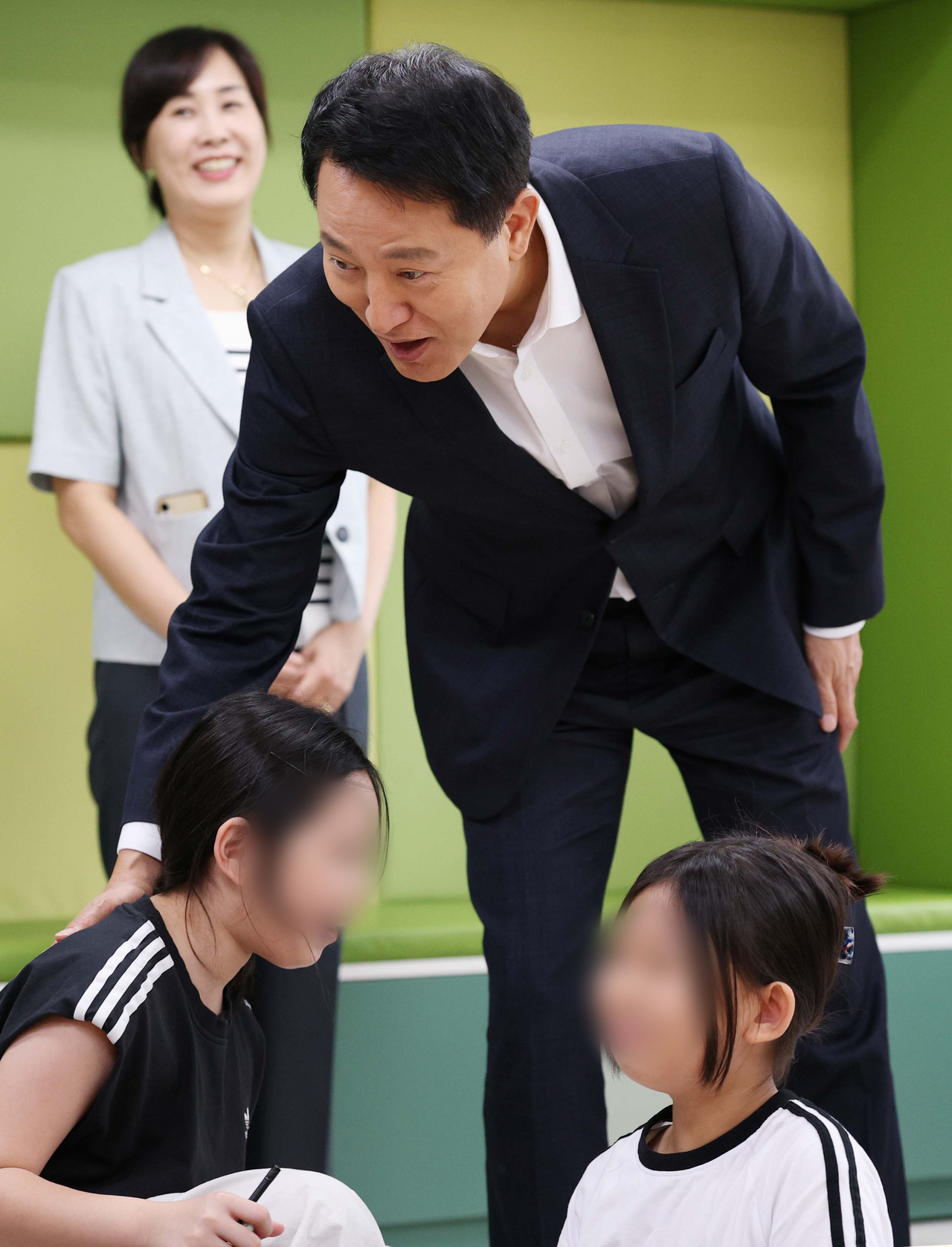
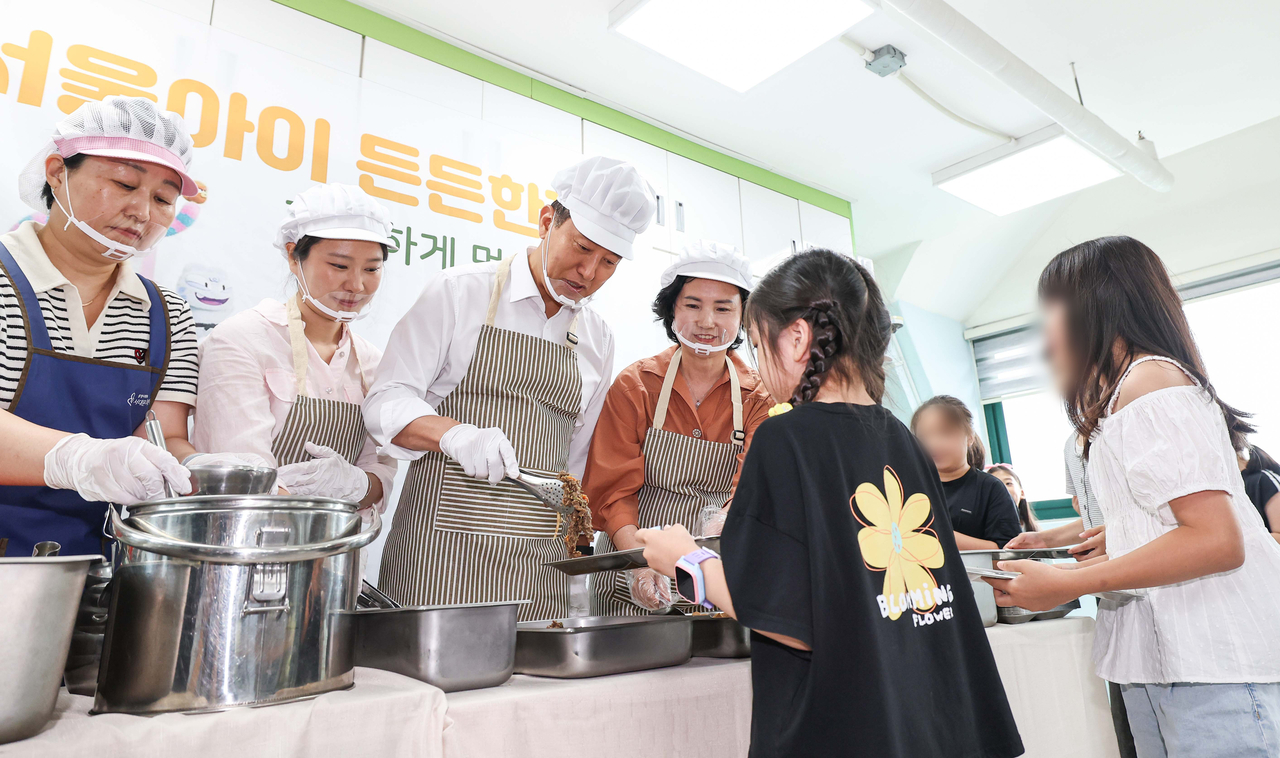
In connection with the launch, Oh visited the Gajaeul Community Child Center in Seodaemun-gu on Thursday morning. He inspected how the center was providing healthy meals and safe care during the break, helped serve lunch, and spent time listening to children and center staff taking part in the program.
Also present were members of the inclusive growth subcommittee of the G3 Seoul Planning Committee: Jung Soon-dool, a professor in the Department of Social Welfare at Ewha Womans University; Kim Mi-jeong, former chair of the Citizens Together campaign committee; and Seomun Min-kyung, also a former chair of the Citizens Together campaign committee.
Oh said the city "is carefully listening to the diverse hardships and difficulties parents face — from birth and child-rearing through care after the school years — and is proactively introducing and implementing stronger, more comprehensive care policies." He added that the city would "continuously expand the Seoul Children's Hearty Meal program so that not a single child in need of a healthy meal and safe care during the break is left behind, and build a Seoul where children are happy and parents can feel at ease."
The Seoul Ai Donghaeng UP Project strengthens gap-filling care on top of basic care services, with a total budget of 1.88 trillion won allocated from 2026 through 2030. In addition to the lunch program, it includes expanded support for a "Seoul-style grandparent care allowance," more dedicated after-school pickup childcare workers, and enhanced elementary school gap-care covering mornings, evenings, weekends and emergency short-term needs. The project also raises the per-meal subsidy at neighborhood care centers and community child centers — from 9,000 won to 10,000 won at the former and from 9,500 won to 10,000 won at the latter — so that meal quality at those centers can match school cafeteria standards.
cook@heraldcorp.com