Minister of Unification Jeong Dong-young on Thursday identified two upcoming diplomatic events as "pivotal moments" for the prospect of US-North Korea talks: a US-China summit expected in September and the Asia-Pacific Economic Cooperation summit scheduled for November in Shenzhen, China.
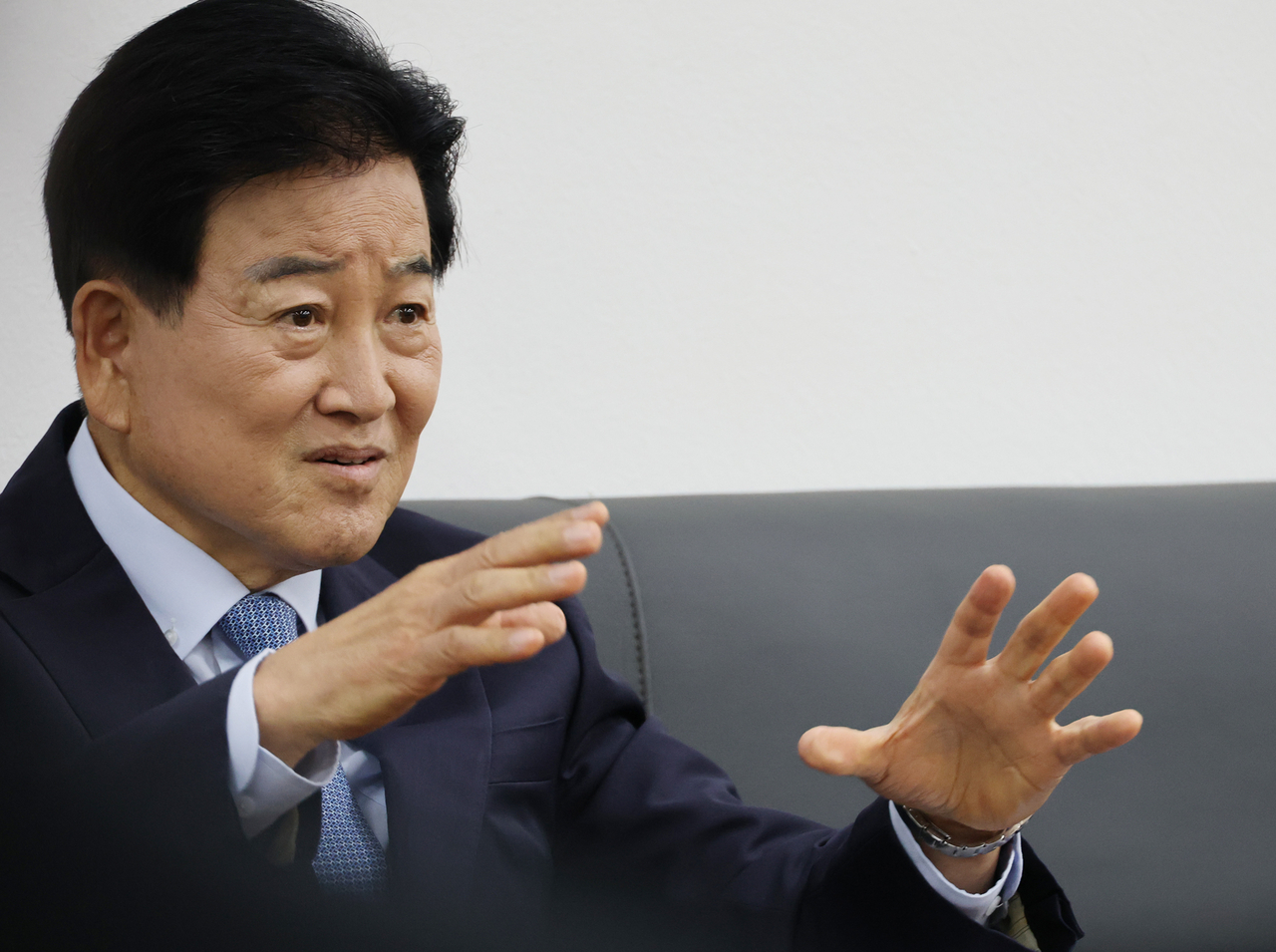
Jeong made the remarks at a press briefing at Government Complex Seoul marking his first anniversary in office. "I still believe there is demand — strategic demand — on both the US and North Korean sides for dialogue," he said.
"We should not be mere observers of that process," Jeong said. "We must do everything we can to make it happen." He cited Chinese President Xi Jinping's planned visit to the United States in September and the anticipated US-China summit at the White House, as well as President Donald Trump's expected visit to China for the APEC summit in Shenzhen in November, as the key windows of opportunity.
Jeong stressed the need for South Korea to act proactively. "If we want something to happen at those moments, we cannot stand still in August and September," he said. "Nothing will happen if we don't move."
Jeong also cited "reform of the peace strategy" as one of seven major reforms his ministry has pursued over the past year. He said the government had in effect abandoned the previous administrations' positions — denuclearization first, nuclear dismantlement first, and CVID (complete, verifiable and irreversible denuclearization). "We have reframed the goal from North Korea's denuclearization to the realization of a nuclear-free Korean Peninsula," he said. "We are working to flesh out a strategy that prioritizes halting North Korea's nuclear program as a way to lead toward peace."
Asked whether this shift reflects the position of the government as a whole, Jeong said it was consistent with the policy of peaceful coexistence as two states oriented toward unification. "Is a denuclearization-first position even realistic?" he said.
He added that even the United States and China had in effect abandoned the denuclearization-first stance. "Even Victor Cha, who can be considered a hawkish scholar on North Korea, has said denuclearization first has failed," Jeong said. "Looking at reality, the previous governments' calls for denuclearization first were largely driven by domestic politics."
Jeong also expressed anticipation about Michelle Steel, who has been appointed as the new US ambassador to South Korea. "Her role is important," he said, adding that he understood she would take up her post in late July. "I expect there will be an opportunity to meet her soon after she arrives."
Meanwhile, Jeong referenced a youth protest at Olympic Park, saying the energy of young people should serve as a driving force for transforming the armistice system. "The independence movement was led by youth, and the democratization movement was led by people in their 20s — but there is no such core driving force for a peace regime," he said. "That is why, when I saw young people expressing anger at Olympic Park over the ballot shortage, I felt hope."
"I felt that the energy of youth is still alive," he said. "If we can channel that energy into a movement for transitioning to a peace regime, it will give strength to our government. If young people — if the public — are calling for an end to this outdated armistice system, and if that is the aspiration of the great Korean people, then the president who speaks for that aspiration gains strength, and so does the government. I believe we can persuade and lead the United States, China, Russia and North Korea."
moone@heraldcorp.com