![People Power Party lawmaker Yoon Sang-hyun [Yoon's office]](https://wimg.heraldcorp.com/news/cms/2026/07/21/news-p.v1.20260721.1a13c59a88194f9dbda3733b736979c8_P2.jpg)
With the law establishing the Incheon High Court having cleared the National Assembly floor, anticipation is growing in the region ahead of the court's planned opening in March 2028. About 4.3 million residents of Incheon and surrounding areas are expected to have their appellate cases heard locally.
A transitional provision in the current law governing court establishment and jurisdiction stipulates that cases pending before the Seoul High Court's Incheon out-of-court panel as of Feb. 28, 2028, will remain under that court's jurisdiction. Critics have warned that this could mean a significant number of cases continue to be heard in Seoul even after the Incheon High Court opens.
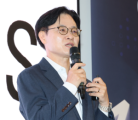
In response, People Power Party lawmaker Yoon Sang-hyun, who represents Incheon's Dong-gu and Michuhol-gu B district, on Tuesday introduced an amendment to the law on court establishment and jurisdiction. The amendment would transfer cases currently pending before the Seoul High Court — if they fall within the Incheon High Court's jurisdiction — to the Incheon High Court once it opens.
Yoon also introduced an amendment to the Civil Mediation Act to align the jurisdiction of mediation cases with that of their corresponding civil litigation cases. The change aims to address confusion and inconvenience caused when mediation and litigation proceedings involving the same dispute are handled by different courts.
Both amendments are intended to strengthen the institutional foundation for faster and fairer trials by improving public access to the judiciary and reducing unnecessary procedural confusion. "The Constitution of the Republic of Korea guarantees every citizen the right to a speedy trial," Yoon said. "We will continue to improve the system so that people can use judicial services more conveniently and everyone can receive a prompt and fair trial."
bigroot@heraldcorp.com