We see the world through food. Welcome to Midam — stories with flavor. The day humans first mastered fire, the first chef was born. For more than a million years, they have woven culture into cuisine. These are the stories of chefs: the oldest artists in the pursuit of great food.
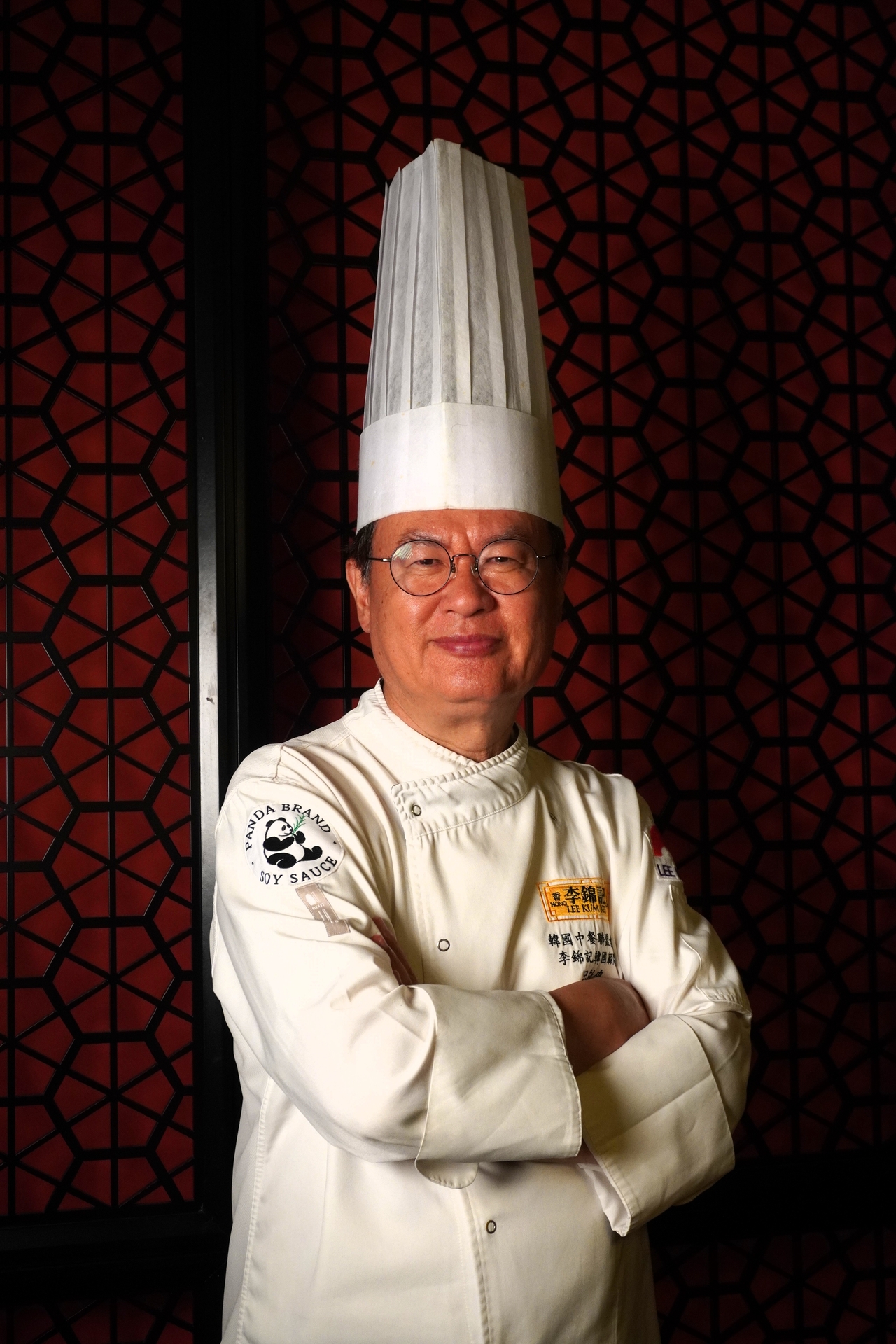
"To find a great teacher is a blessing so rare it cannot be earned in three lifetimes. From a great teacher comes a great student." (得遇良師 三生有幸. 名師出高徒)
Chef Yeo Gyeong-rae, one of the world's foremost masters of Chinese cuisine, reflected on the single most precious thing in his 50-year culinary life. It was not his glittering career, nor his many awards. His answer was his teachers.
A teacher is not simply someone who passes on knowledge and technique. At times, a teacher is like a parent — awakening a sense of how to live, and serving as a guiding light for one's direction in life. That is why finding a great teacher is a stroke of fortune that cannot be traded for anything.
"The greatest stroke of luck in my life was meeting good teachers," he said. "When I started cooking in the 1970s, there was not a single book to learn Chinese cuisine from. You had no choice but to pick things up by watching your seniors over their shoulders. So meeting a good sunbae — a good teacher — was almost the only chance you had to grow as a chef."
![Chef Yeo Gyeong-rae with his mentor, chef Wang Chun-ryang. [Captured from YouTube channel Yeogane]](https://wimg.heraldcorp.com/news/cms/2026/07/19/news-p.v1.20260719.c713505d8e4441d29200ca3ebaa7713f_P1.jpg)
Yeo says that without the right teachers, the chef he is today would not exist. He grew by learning both technique and philosophy from veteran chefs who helped define Korean Chinese cuisine.
"There are about three teachers in my heart," he said. "From chef Wang Chun-ryang I learned the fundamentals of Chinese cooking. From sunbae Jo Chang-in I learned the attitude one should bring to the kitchen. And chef Wang Jin-hee taught me the direction I should pursue as a chef. Watching them as a young man, I nurtured the dream of becoming like them one day. Without them, there would be no me."
A hungry boy who became a giant of Chinese cuisine
![A young Yeo Gyeong-rae with his father. [Provided by chef Yeo Gyeong-rae]](https://wimg.heraldcorp.com/news/cms/2026/07/19/news-p.v1.20260719.d5c65110aa5f4cecbda7dae103af2801_P1.png)
"Mom, Dad is dead."
In the winter of 1964, five-year-old Yeo Gyeong-rae watched his father die in a traffic accident right before his eyes. His father's face has grown hazy with time, but those words — the ones he spoke to his mother in the immediate aftermath — remain vivid to this day. The memory of that day left a wound that never fully healed.
Poverty defined his childhood. White rice was a luxury he could barely dream of; his family survived on government-rationed flour. At 16, having finished middle school, he knocked on the door of Hoehyeon Banjeom restaurant in Jongno to earn a living. His first paycheck of 6,000 won went home in full, without a single coin kept for himself.
"Many people feel sorry when they hear about my past," he said. "But looking back now, I think the direction of my life was set after my father passed away. I had to earn money, and to do that I had to work harder than anyone else. It wasn't some special choice I made — I simply kept walking the path that lay in front of me."
!["Making Chinese Dishes for 2,000 Won," a cookbook by chef Yeo Gyeong-rae. [Provided by YES24]](https://wimg.heraldcorp.com/news/cms/2026/07/19/news-p.v1.20260719.698e27f27801486f84c68654fa409ea5_P1.jpg)
His first duties were cleaning and deliveries. He wanted to learn to cook, but no one volunteered to teach him. Though he was of ethnic Chinese descent, his Chinese was poor, making it hard to fully understand what his seniors said. He memorized the movements he watched in the kitchen, then wrote them down in a notebook after work, making each technique his own. The story of how he slept by pushing restaurant chairs together because he had nowhere else to go has since become a well-known tale in Korea's Chinese culinary world.
The desperation of those years ultimately forged him into one of the pillars of Korean Chinese cuisine. Since the 2010s, Yeo has served as a vice president of the World Federation of Chinese Catering Industry, representing Korea in international exchanges and dedicating himself to training the next generation. In 2006, he published "Making Chinese Dishes for 2,000 Won," a cookbook of Korean-style Chinese recipes — driven by his hope that no aspiring chef would ever again have to struggle without a book to learn from, as he once had.
'Seek out your own teacher': Yeo's advice to young chefs
![Chef Yeo Gyeong-rae with chef Park Eun-young. [Provided by JS]](https://wimg.heraldcorp.com/news/cms/2026/07/19/news-p.v1.20260719.3375ce8c2c704447af613ee2dab3541e_P1.jpg)
He is no longer anyone's student. He is now the teacher to countless chefs.
Among his most prominent protégés is chef Park Eun-young. Their bond as teacher and student has stretched well past a decade. Park, once the most junior cook in the kitchen, has grown into one of Korea's leading Chinese cuisine chefs — and Yeo has been by her side throughout that journey.
"Eun-young was different," he said. "She was not the type to wait for someone to teach her. She was the type who made you want to teach her. She had a remarkable ability to practice constantly and make everything she learned her own. She was never lazy and always chased something new. When she was the most junior cook, I told her to learn hand-pulled noodles, and she practiced on her own for 30 minutes every single day for more than a month without missing once. That kind of dedication was truly something to admire."
He also offered a few words of advice to younger chefs.
"First, seek out a good teacher. Don't wait — go and find one yourself. Second, never be lazy about learning. You cannot grow if you simply wait for someone to teach you. And finally, I hope young chefs challenge themselves in international competitions. You build your skills through competition, and by experiencing the world stage you broaden both your perspective and your network."
Yeo's final dream: a Korean Chinese cuisine loved by the world
![Chef Yeo Gyeong-rae at work in the kitchen. [Provided by JS]](https://wimg.heraldcorp.com/news/cms/2026/07/19/news-p.v1.20260719.87c64cb575954e1e9f2100e5b4d06216_P1.jpg)
"I want to capture the palates of people around the world with Korea's own Chinese cuisine — what I call 'hanjungchae.'"
Chinese cuisine is divided into distinct regional schools. Shandong cooking is known for its salty, robust flavors; Sichuan for its spice; Cantonese for its delicate emphasis on the natural taste of ingredients; and Jiangsu for its sweet notes and seafood dishes.
Yeo argues that Korea, too, has developed its own Chinese culinary culture. He calls it "hanjungchae" — a term he coined himself.
![Gongbao chicken at Hongbogak. [Provided by Hongbogak]](https://wimg.heraldcorp.com/news/cms/2026/07/19/news-p.v1.20260719.2fe6b19cb4ff48c58e23e3d3569de8fa_P1.jpg)
The most emblematic dish is jjajangmyeon. Korean-style jjajangmyeon traces its roots to the zhajiangmian eaten by Shandong ethnic Chinese who arrived in Incheon in the late 19th century. Over time, Korean cooks transformed it — adding generous amounts of onion for sweetness and thickening the sauce with starch to make it ideal for mixing — until it became the distinctly Korean dish it is today.
Jjamppong, the spicy noodle soup, underwent a similarly Korean evolution. Drawing on the noodle traditions of China's Fujian province and the Japanese Nagasaki dish "chanpon," Korean ethnic Chinese chefs added fine red pepper powder and intense wok heat to create the fiery, distinctly Korean version known today.
Korean Chinese-style naengmyeon followed a comparable path. Rooted in the Chinese liangmian and the Japanese hiyashi chuka, it developed in Korea into its own form — served in cold broth and finished with mustard. It is, in essence, a Korean Chinese cuisine born from the interplay of Chinese, Japanese and Korean food cultures.
![Chinese-style naengmyeon at Hongbogak. [Provided by Hongbogak]](https://wimg.heraldcorp.com/news/cms/2026/07/19/news-p.v1.20260719.1c6a8ac6c5fe439e91c2fd96865c31ac_P1.jpg)
Yeo now dreams of seeing hanjungchae take its place as a recognized culinary genre on the world stage.
"When I visit Taiwan or Hong Kong, I can feel that interest in Korean-style Chinese food has grown considerably compared to before," he said. "Affection for Korean culture as a whole has deepened too. Hanjungchae is lighter and less heavy than other styles of Chinese cuisine. It can absolutely be positioned as healthy food. I think those qualities will be a major strength in taking it global."
No chef is made alone. Yeo Gyeong-rae exists because he had great teachers, and now he is shaping the next Yeo Gyeong-rae. The future of hanjungchae he envisions will ultimately be completed by the hands of new students. After half a century at the stove, his final dream may not be to leave behind his own name — but to leave behind the chefs who will surpass him.
123@heraldcorp.com