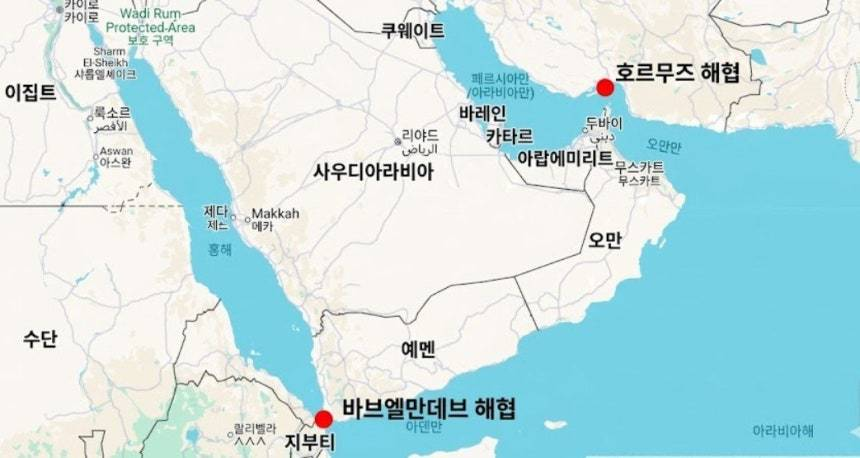
Tensions in the Middle East deepened Friday as the United States and Iran entered a seventh consecutive day of confrontation over the Strait of Hormuz.
The US moved to significantly expand its military posture — broadening airstrike targets deeper into Iranian territory, redeploying fighter jets to the Middle East and notifying Israel of plans to send additional aerial refueling tankers.
Iran responded by warning of a "full offensive" and striking civilian infrastructure in pro-US Gulf states, with both sides effectively abandoning the ceasefire MOU they had signed.
US Central Command announced Friday on X, formerly Twitter, that it had launched airstrikes against Iran at 3 p.m. Eastern time, marking the seventh consecutive day of strikes.
Shortly after the announcement, Iran's state-run IRNA news agency reported explosions in several locations, including Sirik — a port city near the Strait of Hormuz that hosts an Iranian naval base — as well as Ahvaz in the southwest and Yazd in central Iran.
When the US resumed airstrikes on July 11, it had focused primarily on military installations and facilities monitoring the Strait of Hormuz. It has since expanded its targets to include civilian infrastructure such as railways, bridges and airports.
IRNA reported that US airstrikes on Friday destroyed several bridges in Hormozgan Province, killing at least eight people and wounding 20.
Amid speculation that the Donald Trump administration is weighing escalation over a diplomatic solution ahead of midterm elections, the US military began moving additional assets into the region.
The US military notified Israeli air bases Friday of plans to deploy additional aerial refueling tankers. It currently has about 30 tankers stationed at Ben Gurion Airport near Tel Aviv and a similar number at Ramon Airport in the south, and intends to send dozens more.
The planned reinforcement is comparable in scale to the buildup that preceded the US-Israeli airstrikes against Iran in late February that started the war.
Aerial refueling tankers are considered a critical asset for long-range strike operations, as they significantly extend the combat range and loiter time of fighter jets.
The Wall Street Journal also reported Friday, citing aircraft-tracking sites and sources, that fighter jets based in Europe were being redeployed to the Middle East, warning of the risk that the expanding conflict could escalate into a larger war. The US military currently has 2,000 troops from the 11th Marine Expeditionary Unit deployed in Iranian waters to blockade the Strait of Hormuz.
Iran matched the US posture with its own show of force. Mohsen Rezaei, a military adviser to Supreme Leader Ayatollah Seyed Mojtaba Khamenei, warned in an interview with state broadcaster IRIB that if US attacks continued for two to three more days, Iran would enter a "phase of full offensive and destructive operations."
Iran also widened its strikes against US-linked targets in Gulf states.
Kuwait's Ministry of Electricity, Water and Renewable Energy said Friday that Iranian strikes hit power plants and desalination facilities in the country, causing equipment damage, fires and harm to power-generation infrastructure. The attacks pose a serious threat to Kuwaiti civilians, as the country relies on desalination plants for roughly 90 percent of its drinking water supply.
Iran's Islamic Revolutionary Guard Corps said it struck a major AI center in Bahrain using ballistic missiles and drones, calling it "a site used for American war crimes," following an earlier attack on a US drone base in the country.
As the US resumed its blockade of Iranian ports, civilian vessels transiting the Strait of Hormuz continued to suffer.
IRNA reported Saturday that two oil tankers exploded in the Strait of Hormuz, triggering large fires. The IRGC said in a statement that the two tankers "were deceived by US intelligence agencies into attempting to pass through a mined zone in the southern Strait of Hormuz," causing the explosions and fires.
The IRGC also said four vessels backed by the US military had attempted to transit the Strait of Hormuz over several hours but were all turned back through a combined missile and drone operation.
CNN, citing data from the vessel-tracking site MarineTraffic, reported that only six ships passed through the Strait of Hormuz in the 24 hours through Friday. Before the war, an average of 110 to 130 ships transited the strait daily; that figure had recovered to between 30 and 50 after the two countries signed a ceasefire MOU last month, before hostilities resumed.
CNN said the data "shows that ships passing through the world's busiest maritime corridor are facing an increasingly heavy burden."
chami@heraldcorp.com