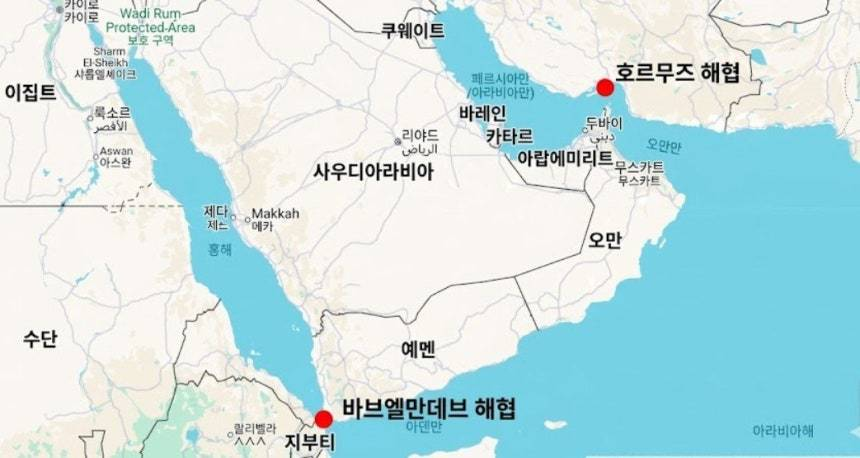
The armed conflict between the United States and Iran is showing signs of spreading beyond the Strait of Hormuz into the Red Sea, as Iran-backed Houthi rebels in Yemen declared a maritime blockade against Saudi Arabia — placing both of the Middle East's major oil shipping lanes under simultaneous threat.
The Houthis announced Monday that they were declaring "a maritime blockade against the criminal Saudi enemy, effective immediately."
The group's target is the Bab el-Mandeb Strait, the narrow waterway connecting the Red Sea and the Arabian Sea, through which more than 3 percent of global oil shipments pass.
The move carries particular weight because Saudi Arabia has been rerouting crude from its eastern oil fields through an overland pipeline to the western port of Yanbu for Red Sea export — a workaround it expanded after the Strait of Hormuz was effectively closed in recent weeks. Analysts warn that an actual Houthi blockade of Bab el-Mandeb could cut global oil supplies by as much as 7 percent.
Markets are reading the declaration as a coordinated strategy between Iran and the Houthis. As the US intensified strikes on military facilities in southern Iran to weaken Tehran's control over the Strait of Hormuz, Iran moved to pressure the alternative export route as well.
There are also concerns that if the Houthis follow through with attacks on vessels, a military response from the US or Gulf allies could quickly expand the front to the Red Sea.
Washington has been ratcheting up pressure on Iran following the deaths and disappearances of US troops in Jordan and Iraq in recent days.
President Donald Trump warned Monday on social media that "every time Iran kills one of our soldiers, they will pay many times over," signaling the prospect of severe retaliation.
US airstrikes against Iran entered their ninth consecutive day Monday, and the Pentagon continued to deploy additional strategic assets to the Middle East.
Both sides have widened their targeting to civilian infrastructure, including desalination plants and bridges, raising the intensity of the conflict. Major energy facilities have not yet been directly struck, but some US media outlets have concluded that the fighting has already crossed what were previously considered red lines.
Nevertheless, a full-scale war carries heavy costs for both Washington and Tehran, and diplomatic efforts to find a way out are continuing in parallel.
Reuters, citing a senior Iranian official, reported that mediating countries had proposed a 10-day ceasefire between the US and Iran, and that Iran had asked Pakistan to resume its mediation role, according to Pakistani sources.
Iranian Foreign Ministry spokesperson Esmail Baghaei confirmed that Tehran had received several proposals from mediators including Qatar, but said "we are not at a stage where we can disclose the specifics."
US Secretary of State Marco Rubio also left the door open for talks, telling reporters Monday that "the door to diplomacy with Iran remains open."
Experts say that even as military exchanges continue, the costs of escalation weigh on both sides, and ceasefire negotiations through mediating countries are emerging as the single biggest variable in how the crisis unfolds.
sjy@heraldcorp.com