
"I am a Gayby. A Gayby is a child born and raised by LGBTQ+ parents, or a child they have adopted. I hope this lovely word, which originated in the English-speaking world, helps people feel that queer families are not merely a social issue but are in fact wonderfully creative, warm and humorous communities. For me, the word Gayby is not just a label that defines an identity — it proves that we have a home. Even if there are still places in the world where people are afraid to accept that fact."
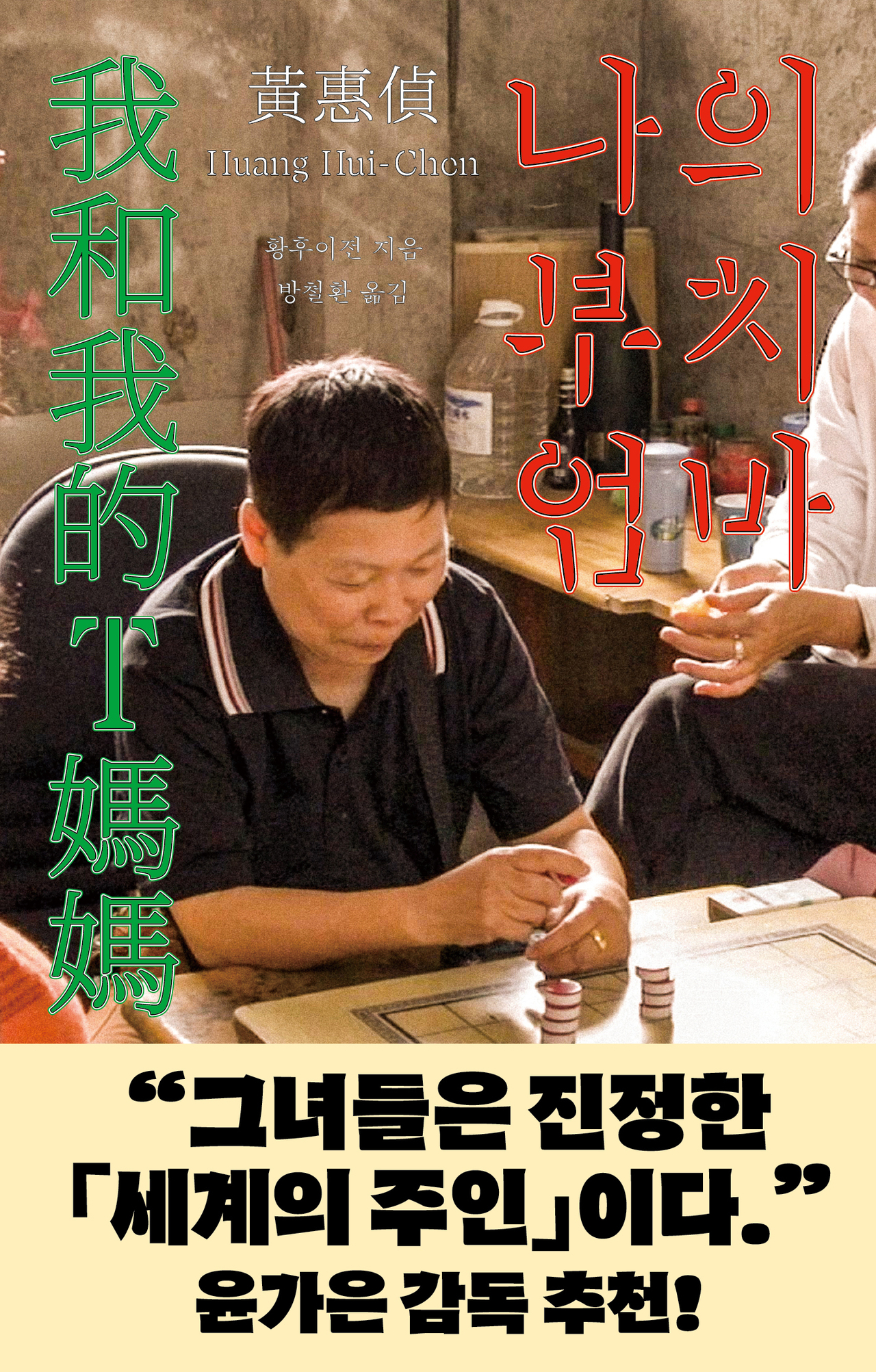
Taiwanese writer Huang Hui-chen introduces herself as a "Gayby" in the preface to "My Butch Mother," recently published in Korean translation. She calls her mother a "Butch mom" — a mother who loves women.
Huang realized at age seven that her mother loved women. But the greater shock for the young girl was her father's sexual abuse. Even amid wounds and fear too heavy to bear, she believed that keeping the secret — carrying it to her grave without ever speaking of it — was the only way to protect her family from further pain.
Yet the wounds did not heal on their own. The secret made it impossible for her to love herself. Resentment grew — not only toward her father, but also toward her mother, who had never asked.
The book is an essay drawn from two decades of documentation behind the author's documentary film "Small Talk," which won the Teddy Award at the Berlin International Film Festival, the NAFF Award at the Seoul International Women's Film Festival, and the Best Documentary prize at the Taipei Film Festival.
When Huang first told her mother she wanted to make a film about her story and their family, her mother's initial reaction was: "Who would come to watch our family's story?" Her mother believed that the painful, unbearable twists of her own life had to be kept thoroughly hidden so as not to make others uncomfortable — and that her story was not worth telling.
As an adult, however, Huang came to realize that both she and her mother had been wrong. She learned that being able to speak openly and calmly about one's own happiness and unhappiness is what allows everyone to flourish. She argues that the real shame belongs not to those who carry wounds, but to a society that has built up the idea that wounds must be concealed — or else they become something to be embarrassed about.
"As the child of a lesbian, I sometimes experienced pain — but that pain came not from my mother being gay, but from the discrimination of others," Huang writes. She goes on to embrace her own fate: "I consider myself lucky to be a member of a queer family. With this, life becomes broader, and I will become a better person."
In practice, it was not her absent father but her mother and other women who raised and sustained her. Tracing the narrative of women who survived by standing in solidarity with one another, Huang confesses: "I am grateful to these women. In the journey of coming to know them, I came to know myself."
The book begins from the perspective of a daughter with a lesbian mother, tracing a relationship in which love and hatred, the comprehensible and the incomprehensible, are all tangled together. The process of breaking free from the shell that had long constrained her — and finally accepting her mother as a full human being — offers a vision of reconciliation that applies not only to families with LGBTQ+ members, but to all human relationships.
The book invites readers to ask whether what matters more than the tired myth of the "normal family" is the mature willingness to try to understand one another and to wish for each other's peace.
"My Butch Mother" / by Huang Hui-chen, translated by Bang Cheol-hwan / Umjikssi
pink@heraldcorp.com



