![Interior of the Korea Pavilion, a multipurpose cultural exhibition space [World Heritage Committee website]](https://wimg.heraldcorp.com/news/cms/2026/07/16/news-p.v1.20260716.f75d08dafc7a49e0891a612d886d368e_P1.jpg)
A rich lineup of events is set to captivate travelers as Busan prepares to host the 48th UNESCO World Heritage Committee session this summer. The gathering marks the first time the meeting has been held in South Korea since the country joined the World Heritage Convention in 1988 — a milestone 38 years in the making. With South Korea serving as chair, the country takes on a meaningful role in deliberations over the inscription and preservation of world heritage sites. Across Busan and cities throughout the country, a wide array of side events drawing on history and cultural heritage will run alongside the main session, offering travelers festivals, exhibitions, performances, night-view tours and on-board maritime experiences.
Korea Pavilion brings the best of K-heritage together
![Interior of the Korea Pavilion, a multipurpose cultural exhibition space [World Heritage Committee website]](https://wimg.heraldcorp.com/news/cms/2026/07/16/news-p.v1.20260716.3275ab18cec14a6f8929ce2d90f42db1_P1.jpg)
The Korea Pavilion — officially the "K-Heritage House" — serves as the central venue for events marking the 48th UNESCO World Heritage Committee session. The multipurpose cultural exhibition space opens Monday and runs through July 29 at BEXCO Exhibition Hall 1, halls 2B, 3A and 3B. A total of 35 organizations will participate, presenting 45 exhibition and hands-on programs related to South Korea's World Heritage sites, intangible heritage and Memory of the World inscriptions.
![Interior of the Korea Pavilion, a multipurpose cultural exhibition space [World Heritage Committee website]](https://wimg.heraldcorp.com/news/cms/2026/07/16/news-p.v1.20260716.9c37cfb66325446f8d437967c8f4bf07_P1.jpg)
The exhibition space is divided into four zones, each offering a different window into Korea's heritage. The Heritage Archive zone features representative World Heritage sites such as the Gaya Tumuli and the Baekje Historic Areas, along with 20 Memory of the World inscriptions held by the National Archives of Korea; a dedicated Busan section highlights the city's historical significance as the wartime provisional capital. The Living Heritage zone covers intangible heritage including Gukhaeng Suryukjae and Yeongsanjae rituals, a joint public demonstration of traditional craftsmanship by master artisans, and a K-food pavilion introducing traditional markets and Korean food culture.
![Interior of the Korea Pavilion, a multipurpose cultural exhibition space [World Heritage Committee website]](https://wimg.heraldcorp.com/news/cms/2026/07/16/news-p.v1.20260716.2826b206ba1243b48425f579eccdd1f4_P1.jpg)
The Heritage Future zone looks ahead, pairing immersive digital media art with an educational experience center called "Yeoijigyo" that uses virtual reality and augmented reality technology to reimagine heritage for the digital age. Rounding out the pavilion, the Collaboration Zone houses promotional booths for World Heritage cities across 31 municipalities and a store selling design-inspired cultural products, giving visitors a relaxed way to engage with the festival atmosphere.
A one-time grand opening ceremony at BEXCO
![K-Heritage House opening ceremony [World Heritage Committee website]](https://wimg.heraldcorp.com/news/cms/2026/07/16/news-p.v1.20260716.f37254289b0044f6a3b9306c9f67498b_P1.jpg)
The K-Heritage House opening ceremony will be held once, on Monday, to mark the Korea Pavilion's launch. Starting at 9:20 a.m. at the BEXCO outdoor plaza, a royal gate guard changing ceremony will kick off the proceedings, followed by a guard march, daego drum and chwita brass-and-percussion music, and a formal declaration before the pavilion doors open. Dignitaries, World Heritage Committee delegates and members of the general public will enter together for the occasion.
A standing royal gate guard program will run daily through July 29. Guard duty reenactments take place at 9:30 a.m. and 2:30 p.m., while a photo opportunity with a mascot-costumed gate guard is held at 11:30 a.m. A Royal Promenade program runs daily at 1 p.m. and 4 p.m., giving visitors a chance to encounter a re-creation of a royal procession inside the exhibition hall.
A feast of traditional arts on stage
![Bongsan Talchum mask dance [Korea Tourism Organization]](https://wimg.heraldcorp.com/news/cms/2026/07/16/news-p.v1.20260716.46ce5750e43f4556aa2b72db6c6ed335_P1.jpg)
Performances complement the exhibitions throughout the event. The K-Heritage Stage inside the Korea Pavilion at BEXCO will host traditional arts performances on a different theme each day from Monday through July 29. Admission is free and no advance reservation is required — visitors can simply show up. The program opens Monday with Yeongsanjae and Bukcheongsajannoleum, and continues with Bongsan Talchum mask dance, Baekje court music featuring the oaksa ensemble and transverse flute, the South Coast Byeolsingut ritual dance "Ollimchum & Subushinawi," the Miryang Baekjung Nori dance, Eunyul Talchum and seonbi scholar music, Ogwangdae mask play, Jindo Dasiraegi, and Jinju Geommu sword dance, among others.
![Miryang Arirang 'Nal Jom Boso' outdoor special performance [World Heritage Committee website]](https://wimg.heraldcorp.com/news/cms/2026/07/16/news-p.v1.20260716.68de97433ce246618bc66faa22704399_P1.jpg)
An outdoor special performance of Miryang Arirang, "Nal Jom Boso," will be staged at the BEXCO outdoor plaza at 6 p.m. on July 24. The Miryang Arirang Arts Troupe and the Miryang Baekjung Nori Preservation Society will reinterpret the traditional Arirang through contemporary rhythms and choreography in a song-and-dance theatrical production, carrying a message of intergenerational communication and harmony.
Exhibition and performances on Joseon royal record culture
!['Joseon's Records and Culture, Passed Down Through the Ages' exhibition hall [World Heritage Committee website]](https://wimg.heraldcorp.com/news/cms/2026/07/16/news-p.v1.20260716.54f1a8641b574a60bf0206bcfb308bab_P1.jpg)
A special exhibition exploring the historical and global significance of Joseon's documentary culture through South Korea's UNESCO Memory of the World inscriptions will also run during the period. The Busan Museum special exhibition "Joseon's Records and Culture, Passed Down Through the Ages" is free and open from 9 a.m. to 6 p.m. every day except Monday through Aug. 30, with an audio guide available.
!['Joseon's Records and Culture, Passed Down Through the Ages' exhibition hall [World Heritage Committee website]](https://wimg.heraldcorp.com/news/cms/2026/07/16/news-p.v1.20260716.0eea320f22c34d09b9a206d65ebece45_P1.jpg)
The first part of the exhibition marks the first time the Joseon Dynasty Annals from all four major archive repositories — Jeongjoksan, Odaesan, Jeoksangsan and Taebaeksan — have been displayed together publicly. The second part introduces the royal portraits of Kings Yeongjo and Cheoljong, which were temporarily relocated to Busan during the Korean War, alongside royal household items and the national treasure "Donggwoldo," a painting of the eastern palace complex. The third part brings the era to life through "Choryang Waegwan-do," a depiction of the Dongnae-bu area, and "Joseon Tongsinsa Haengnyeoldo," a Memory of the World inscription depicting the procession of the Joseon diplomatic mission to Japan.
Exploring Busan's night scenery and historic sites

A history tour program called "1023, Stories of That Night" will take participants through the night scenery and historic sites of Busan's wartime provisional capital with a cultural heritage guide. The program runs Friday through Saturday, with three sessions per day. Each session accepts up to 20 participants on a first-come, first-served basis, for a total of 120 spots, and is open to anyone with an interest in history tours. The participation fee is 10,000 won per person, fully refunded as 10,000 won in Onnuri gift vouchers after the tour. Registration is open through Thursday on the "Busan Wartime Provisional Capital Heritage Night" website.
Two tour routes are available. Route A departs from Busan Station and passes through the UN Memorial Cemetery in Korea and Uam-dong Somak Village before ending at Yeongdo Bridge. Route B starts at the Busan Modern and Contemporary History Museum, passes through the 40 Stairs and the Provisional Capital Memorial Hall, and also concludes at Yeongdo Bridge. As spots fill on a first-come, first-served basis, early booking is advised.
World heritage on the silver screen
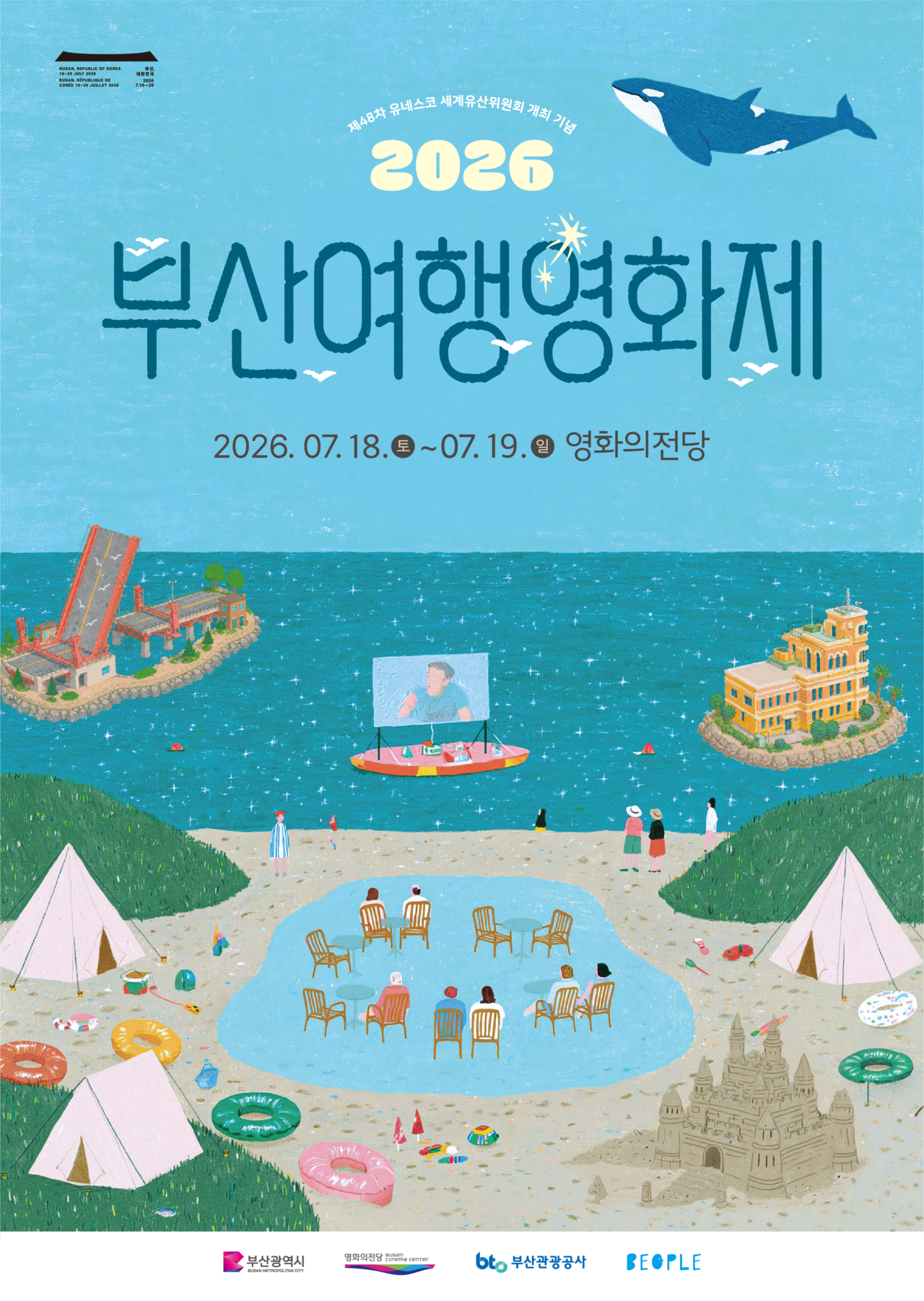
The Busan Travel Film Festival, themed around "travel" and showcasing world heritage sites through cinema, runs at the Busan Cinema Center on Saturday and Sunday. This year's theme is "World Cultural Heritage on Screen!" The opening film is "The Fall: Director's Cut" and the closing film is "Buckwheat Season, A Lucky Day, and Spring Spring." Indoor and outdoor screenings will be accompanied by film-related programs.
The outdoor event space will feature performances of Dadaepo Huriso-ri and a road musical set in wartime provisional capital Busan, along with hands-on programs including a promotional booth for the 48th UNESCO World Heritage Committee session.
Joseon Tongsinsa vessel voyage and procession reenactment
![Joseon Tongsinsa vessel voyage event [World Heritage Committee website]](https://wimg.heraldcorp.com/news/cms/2026/07/16/news-p.v1.20260716.36388a4fb14d4f4c9e6eedb9f49c7c17_P1.jpg)
A comprehensive program recreating the historical journeys of the Joseon naval forces and the Joseon Tongsinsa — the diplomatic mission to Japan that symbolized peaceful diplomacy and is inscribed as a Memory of the World — will unfold across both sea and land. The National Research Institute of Maritime Cultural Heritage will stage traditional voyage events using a replica Joseon Tongsinsa vessel.
The Yeosu event, "History of the Sea, Future of the Islands," runs Friday and Saturday from 10 a.m. to 5 p.m. at Yeosu Expo Port and the Odongdo area. The Tongyeong event, "Revival of the Samdo Sugun Tongjeyeong (Three Provinces Naval Command)," takes place Tuesday and Wednesday from 9:30 a.m. to 5:30 p.m. at Pier 1 of Tongyeong Port passenger terminal. Port arrival ceremonies at each location will be held on the first day of each event from 10 a.m. for one hour and 30 minutes, while on-board museum tours and boarding experiences will run twice daily from 10 a.m. to 3:30 p.m.
![Joseon Tongsinsa procession reenactment event [World Heritage Committee website]](https://wimg.heraldcorp.com/news/cms/2026/07/16/news-p.v1.20260716.d6cd7759c9b94f769c581af7bf91fc66_P1.jpg)
On land, a large-scale street parade reenacting the Joseon Tongsinsa procession will march through central Busan at 6 p.m. on July 26. A grand procession comprising a main delegation, a flag corps and a chwita brass-and-percussion band will move through the streets to traditional music, conveying the spirit of coexistence embodied by the Joseon Tongsinsa, a Memory of the World inscription.
Thematic exhibitions and photo shows also on offer
![Busan Modern and Contemporary History Museum annex [World Heritage Committee website]](https://wimg.heraldcorp.com/news/cms/2026/07/16/news-p.v1.20260716.4054b0a5f78842a0a0ba2817e799c0c5_P1.png)
A thematic exhibition spotlighting the value of the 11 "Busan Wartime Provisional Capital Heritage" sites — selected for UNESCO's tentative World Heritage list — is also on offer. The exhibition at the Busan Modern and Contemporary History Museum runs through Sept. 27, every day except Monday. Organized around three themes — "Maintaining Government," "Wartime Life" and "International Cooperation" — it traces Busan's identity as a city that practiced survival and humanitarian spirit amid war.
Events extend to Seoul as well. A photo exhibition titled "Moments of World Heritage: Adding a Gaze to Time," jointly organized by the Cultural Heritage Administration and National Geographic Apparel, will open at Changdeokgung Palace in Seoul. The exhibition runs Monday through Aug. 2 at the west annex of Injeongjeon Hall within Changdeokgung.
Full schedules and registration details are available on the World Heritage Committee website.
terry@heraldcorp.com