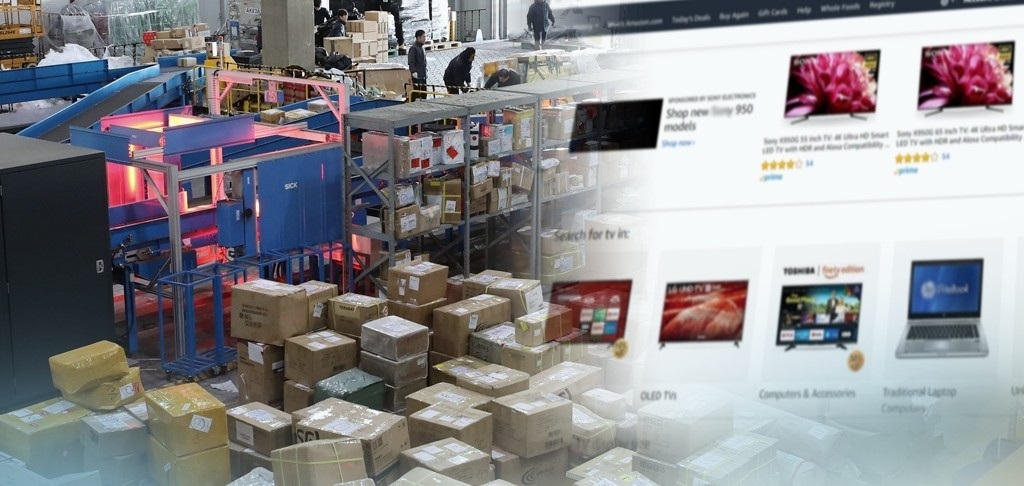
As purchases of health supplements through overseas online shopping platforms continue to grow, so do concerns about cross-border food products containing harmful ingredients banned from entering the country.
Particularly alarming is the repeated detection of pharmaceutical and narcotics-related substances in popular cross-border purchases, which has emerged as a serious threat to consumer safety.
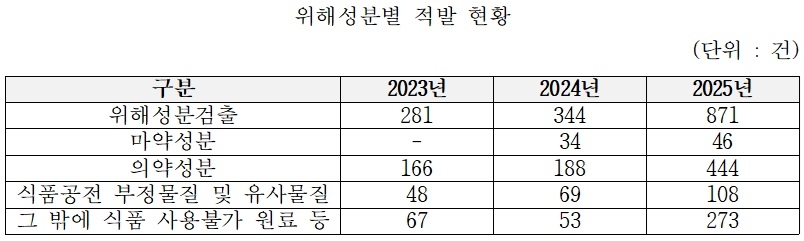
According to data submitted to Democratic Party of Korea lawmaker Seo Young-seok of the National Assembly's Health and Welfare Committee by the Ministry of Food and Drug Safety, detections of harmful ingredients in cross-border food purchases rose from 281 cases in 2023 to 344 in 2024 and 871 in 2025 — an approximately 3.1-fold increase over three years. The non-compliance rate soared over the same period, from 9.1 percent to 10.1 percent and then to 14.5 percent.
Breaking down detections by type, pharmaceutical substances accounted for the largest share.
Detections of pharmaceutical substances rose from 166 cases in 2023 to 444 in 2025 — roughly a 2.6-fold increase. Those 444 cases represented more than half of the 871 total harmful ingredient detections in 2025, meaning roughly one in every two flagged products contained a pharmaceutical substance.
A total of 17 pharmaceutical substances were detected every year for three consecutive years, including melatonin, L-dopa, 5-hydroxytryptophan (5-HTP) and lithium.
Detections of narcotics-related substances have also been rising.
No narcotics-related detections were recorded in 2023, but the figure climbed to 34 cases in 2024 and 46 in 2025.
Among the narcotics-related substances identified, 10 compounds — including cannabis-derived CBD, THC, CBN, CBD variants, CBG variants, HHC variants, delta-8-THC, THC variants, mitragynine and kratom — were detected for two consecutive years beginning in 2024.
As detections of harmful and narcotics-related substances have grown each year, the number of import-blocking requests the Ministry of Food and Drug Safety has filed with the Korea Customs Service has also surged.
The ministry's requests to block customs clearance for hazardous food products increased from 363 cases in 2023 and 400 in 2024 to 918 in 2025.
"Many consumers buy cross-border food products believing they are health supplements or ordinary food items, but in practice the number of cases where pharmaceutical and even narcotics-related substances are detected is growing," Seo said. "This is not a matter of placing the burden of safety on individual consumers — the government must build a system that leaves no gaps, from the point of entry from abroad all the way through to retail and sales."
thlee@heraldcorp.com