The Gangwon Special Self-Governing Provincial Assembly reviewed marine environment management, fishing village health and population policy, and support for young fishers at the sixth session of the Agriculture, Forestry and Fisheries Committee's Marine and Fisheries Bureau briefing, held Wednesday as part of the 347th extraordinary session.
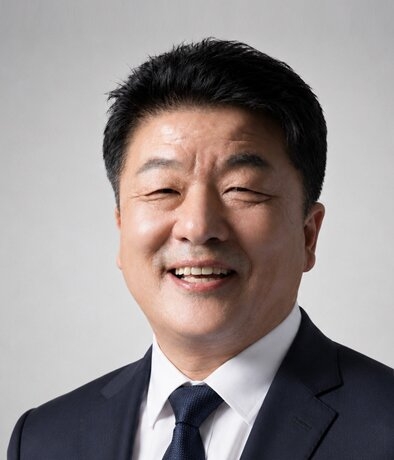
Lee Dong-ho (Democratic Party of Korea, Donghae 1) questioned officials on the collection and disposal of marine waste and called for a more proactive response — including the possible introduction of marine environment cleanup vessels — to address not only coastal litter but also floating debris at sea.
According to Lee, marine environment cleanup vessels are specialized ships designed to improve ocean conditions. Their functions include directly collecting large marine waste, supporting oil-spill response operations, operating marine waste reporting centers, and promoting awareness of ocean conservation. Seventeen such vessels are currently in service nationwide — six in South Jeolla Province, four in South Gyeongsang Province and two in Incheon, among others — but Gangwon Province has none.
Lee also reviewed the operation of village health clinics in fishing communities, noting that only one clinic is currently running in Donghae, and raised the need for expansion given the program's effectiveness.
The village health clinic is a pilot project aimed at revitalizing fishing communities. The single clinic now operating in Daejin village in Donghae provides home-visit and health management services staffed by retired nurses.
Lee then turned to the young fisher settlement support project, questioning whether the current eligibility standard — which limits operating-cost subsidies to fishers under 40 — is appropriate, and called for improvements to boost the program's effectiveness, including raising the age threshold.
The young fisher settlement support project provides 900,000 to 1.1 million won ($737) per year for three years to fishers under 40. The definition of "youth" varies across laws and local governments: the relevant national statute — the Act on the Fostering and Support of Successor and Young Farmers and Fishers — sets the ceiling at under 40, while Gangwon Province's own youth framework ordinance defines youth as those aged 18 to 45.
Lee also reviewed the performance of the return-to-fishing school and the Gangwon Return-to-Fishing and Rural Living Support Center, programs designed to attract urban residents to fishing villages. He said Gangwon, which has relatively few returning fishing households, needs to actively pursue policies to draw in new residents through new program development and deregulation.
According to statistics released by the Ministry of Statistics, the number of households that returned to fishing nationwide last year stood at 586, up 31 households, or 5.6 percent, from 555 the previous year. South Jeolla Province recorded the highest number at 232 households. Gangwon Province came in with 20 households, behind South Chungcheong Province (152), North Jeolla Province (74), South Gyeongsang Province (45) and North Gyeongsang Province (21).
Finally, Lee reviewed the species and release volumes under the aquatic seed purchase and release program, which aims to boost fishers' incomes and restore marine resources, and called for its expansion. He also asked officials to explore using the release process as an ocean education program for students.
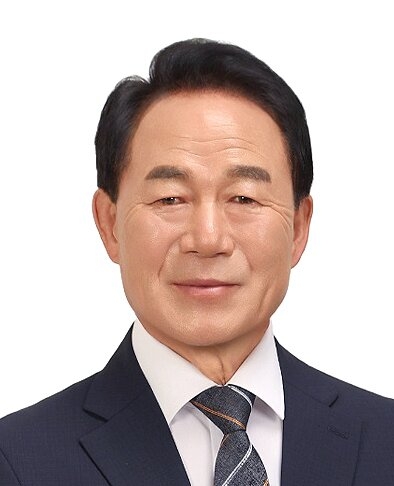
Choe Jong-su (People Power Party, Pyeongchang 2), a member of the same committee, examined staffing vacancies in the Marine and Fisheries Bureau, the distribution of biodegradable fishing gear, and the effectiveness of the fishing village New Deal project.
Choe first questioned the bureau's personnel management, noting that 15 of its 150 authorized positions are currently vacant, with only 2 vacancies at the main office compared with 13 at field offices. He called for more balanced staffing management across the organization.
Choe then reviewed the distribution of biodegradable fishing gear as a measure to prevent marine pollution, pointing to relatively low uptake rates and limited preference among fishers. He said efforts to improve product quality and strengthen promotion are needed to expand effective distribution.
Finally, Choe cited cases in other regions where large-scale fishing village New Deal projects had delivered poor results despite significant investment, and urged systematic management of the projects now under way in Goseong and Gangneung — covering every stage from the planning phase through post-completion operations and activation — to avoid repeating the same problems.
The fishing village New Deal projects in Goseong and Gangneung are set to receive a combined 37 billion won and are currently in the master-plan development stage.
abc@heraldcorp.com