![Leftover medicine discarded in a trash bin. [Provided by reader]](https://wimg.heraldcorp.com/news/cms/2026/07/15/news-p.v1.20260715.3504a38db0b14f89bedc945115cbd3a8_P1.jpg)
"Looks just like my house."
Bundles of leftover medicine are a common sight in most Korean homes. People hold on to unused pills and capsules to avoid waste, often without realizing the medications have long since expired.
Prescription drugs dispensed in individual packets are especially difficult to resume taking after time has passed. As a result, accumulated stockpiles of household medicine tend to get thrown out all at once.
The problem lies in how people dispose of them. When pharmaceuticals are discarded improperly, residual compounds can leach into soil and waterways, causing contamination and disrupting ecosystems.

Contaminated water can then re-enter the human body and cause adverse health effects. The government requires residents to dispose of unused medicines in designated pharmaceutical waste collection bins, in line with local government guidelines.
Most citizens know that expired or unused medicines must be sorted and disposed of separately. The problem is that awareness rarely translates into action.
Among those who said they had disposed of medicines within the past year, nearly half did so improperly — treating pharmaceutical waste no differently from ordinary trash. Some threw medicines directly into the garbage, while others flushed them down the toilet.
![Leftover medicine. [Provided by reader]](https://wimg.heraldcorp.com/news/cms/2026/07/15/news-p.v1.20260715.f91bbd30239d465093ad5ca79b149e56_P1.png)
A survey on pharmaceutical waste disposal awareness and behavior, conducted by the public-interest Environmental Foundation in July 2025 among 4,068 citizens, found that 93.8 percent of respondents — 3,818 people — knew that leftover and expired medicines must be disposed of separately.
Proper disposal, however, was far from the norm. Among the 2,264 respondents who said they had disposed of pharmaceutical waste within the past year, 48.4 percent had not done so correctly.
The most common disposal method was simply tossing medicines into a standard household garbage bag. About 32.9 percent of respondents said they had thrown medicines straight into the trash, while 7 percent said they had poured them down the sink or flushed them down the toilet. A significant share of people, in other words, were discarding leftover medicine the same way they would a beverage or ordinary household waste.
![A pharmaceutical waste collection bin. [Provided by the Seoul Metropolitan Government]](https://wimg.heraldcorp.com/news/cms/2026/07/15/news-p.v1.20250730.ea07d1803e6f4d8facdc18018b24fe82_P1.jpg)
Flushing medicines down the sink or toilet is dangerous because wastewater treatment facilities do not fully remove all pharmaceutical compounds. Drug residues that reach soil and waterways can affect aquatic organisms and soil ecosystems.
Drinking water is also at risk. Researchers at the National Institute of Environmental Research and Pusan National University published a study in September 2023 finding 30 types of pharmaceutical compounds in raw water samples from 70 water purification plants nationwide, and 17 types in water that had already undergone treatment.
The UN Environment Programme has also noted that pharmaceutical residues entering the environment can cause toxicity in living organisms, disrupt the endocrine system, alter microbial communities and contribute to the selection of antibiotic-resistant strains.
Antibiotic compounds are of particular concern. When they continuously enter the environment, microorganisms are repeatedly exposed to low concentrations, increasing the likelihood that resistant strains will emerge and spread. WHO has also warned that antibiotics released into the environment can accelerate the emergence and spread of antibiotic resistance.
For this reason, medicines must in principle be sorted and deposited in designated collection bins before undergoing specialized incineration. Residents can drop off leftover medicines at dedicated pharmaceutical waste bins located at pharmacies, public health centers, community service centers and apartment complexes across the country. Local post boxes are another option.
![Pharmaceutical waste collected via post box. [Herald DB]](https://wimg.heraldcorp.com/news/cms/2026/07/15/news-p.v1.20250604.a834f9f80b954b3fa7f4a0256226beba_P1.jpg)
Medicines past their expiration date must always be placed in a collection bin. Disposal methods also vary by type. Prescription drugs should be deposited unopened. For standard tablets, the outer paper packaging should be removed, while individual pills and powders should be discarded in their blister or foil packaging. Liquid medicines should be sealed in their containers and placed in the bin as-is.
Respondents who did not use collection bins most often cited poor accessibility. Among those who had disposed of medicines as ordinary household waste, 30.9 percent pointed to difficulty reaching a collection bin, and 24 percent said they did not know where the bins were located.
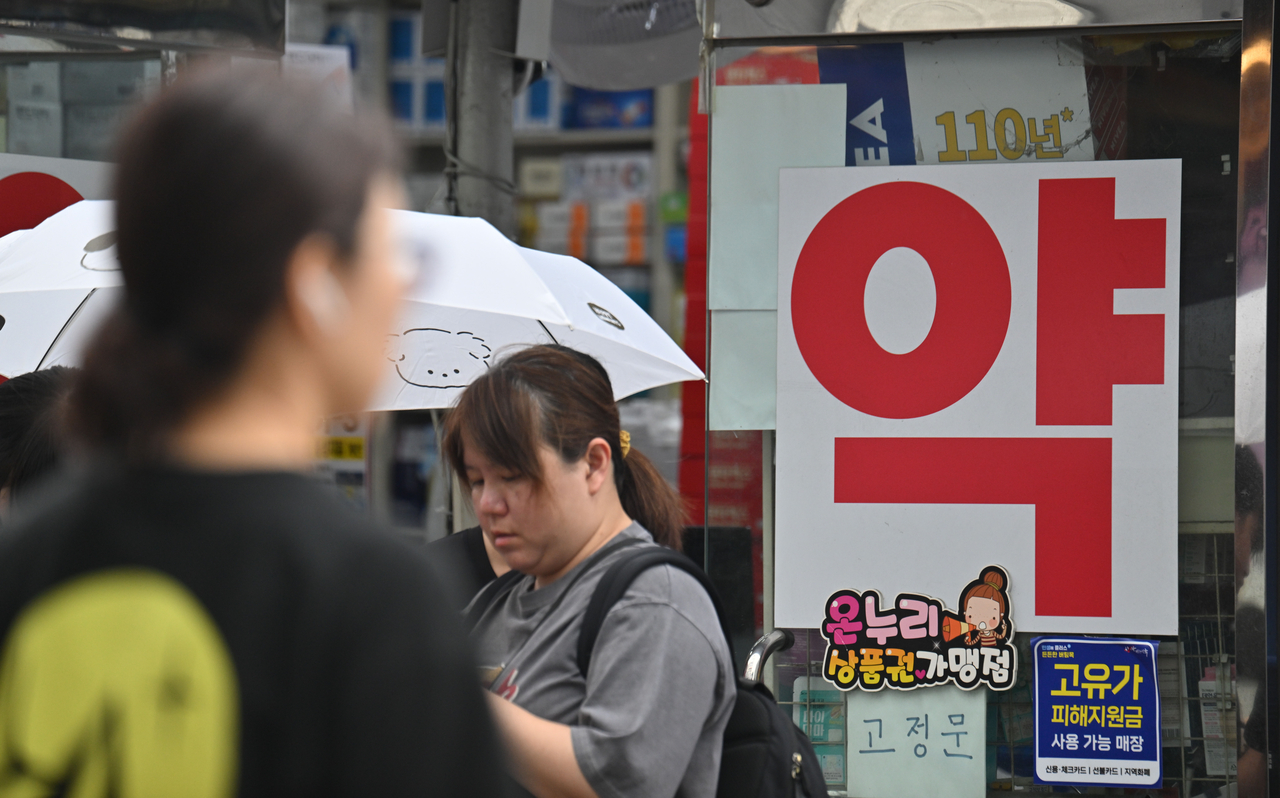
Another 28.9 percent said they lacked information on the correct disposal method. Some residents who said they had thrown medicines into standard garbage bags added that they had done so following official guidance from their local government — a sign that inconsistent municipal guidelines are sowing confusion.
Official disposal methods and collection procedures differ from one local government to the next, compounding the problem. Pharmacies previously collected and stored pharmaceutical waste on behalf of customers in many cases, but collection delays and the growing storage burden on pharmacies have led a significant number to stop accepting waste altogether.
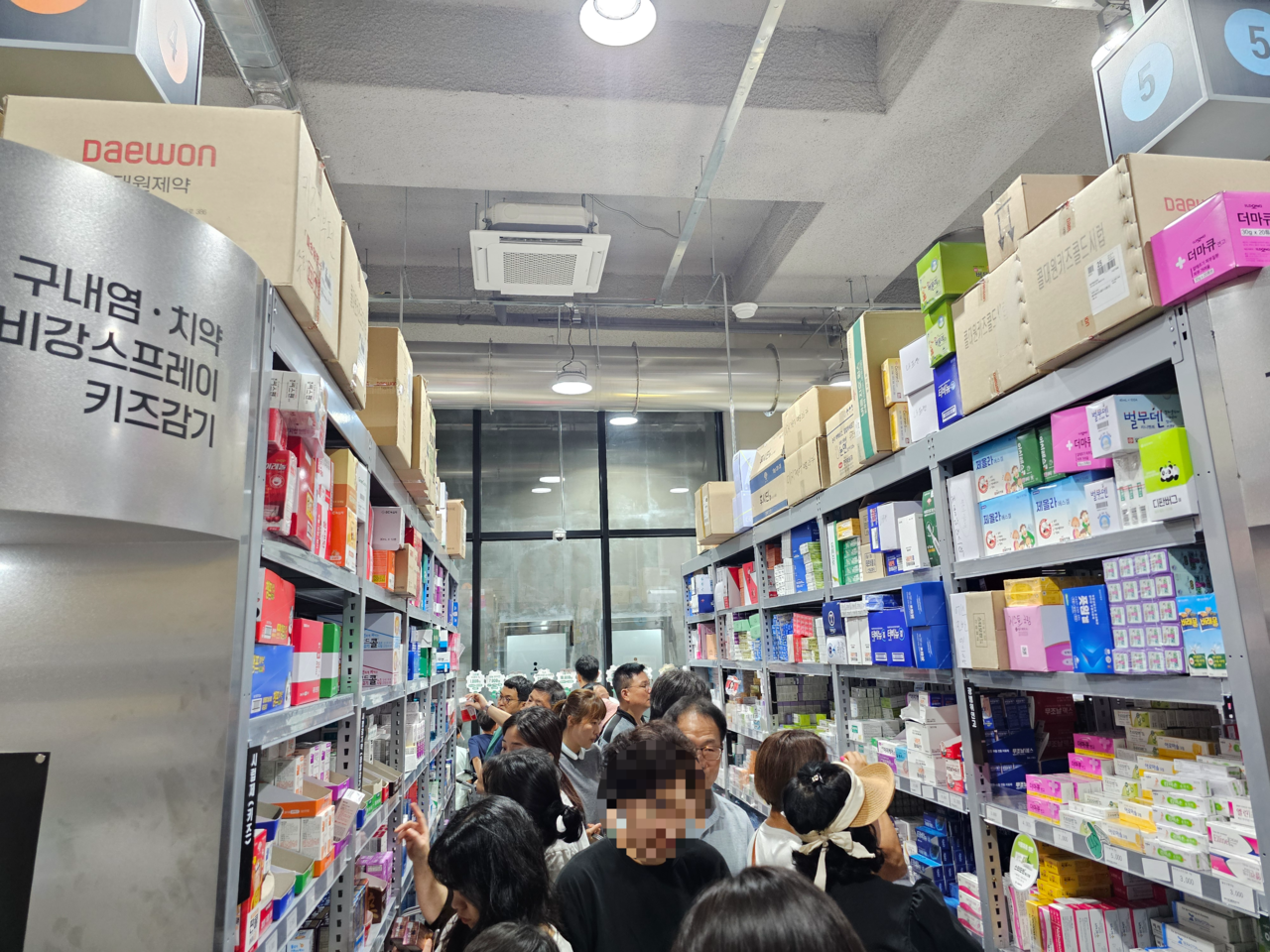
Pharmacies are under no legal obligation to collect pharmaceutical waste. Yet conflicts with customers who expect them to do so are common. Against this backdrop, proposals have emerged to expand the collection network by offering incentives to participating pharmacies.
Calls are also growing to formalize and systematize the management of pharmaceutical waste collection and disposal. In June, a bill amending the Pharmaceutical Affairs Act was introduced in the National Assembly that would allow local government heads to directly operate pharmaceutical waste collection and disposal projects and provide support to institutions, organizations, corporations and pharmacy operators that participate.
Rep. An Sang-hun of the Health and Welfare Committee, who led the bill's introduction, said pharmaceutical waste discharged into drains or mixed with household garbage risks contaminating soil and water and disrupting ecosystems. "We need to establish a guidance system that citizens can easily access, and a stable management framework, so that leftover medicines at home are neither left sitting around nor thrown out like ordinary trash," he said.
woo@heraldcorp.com