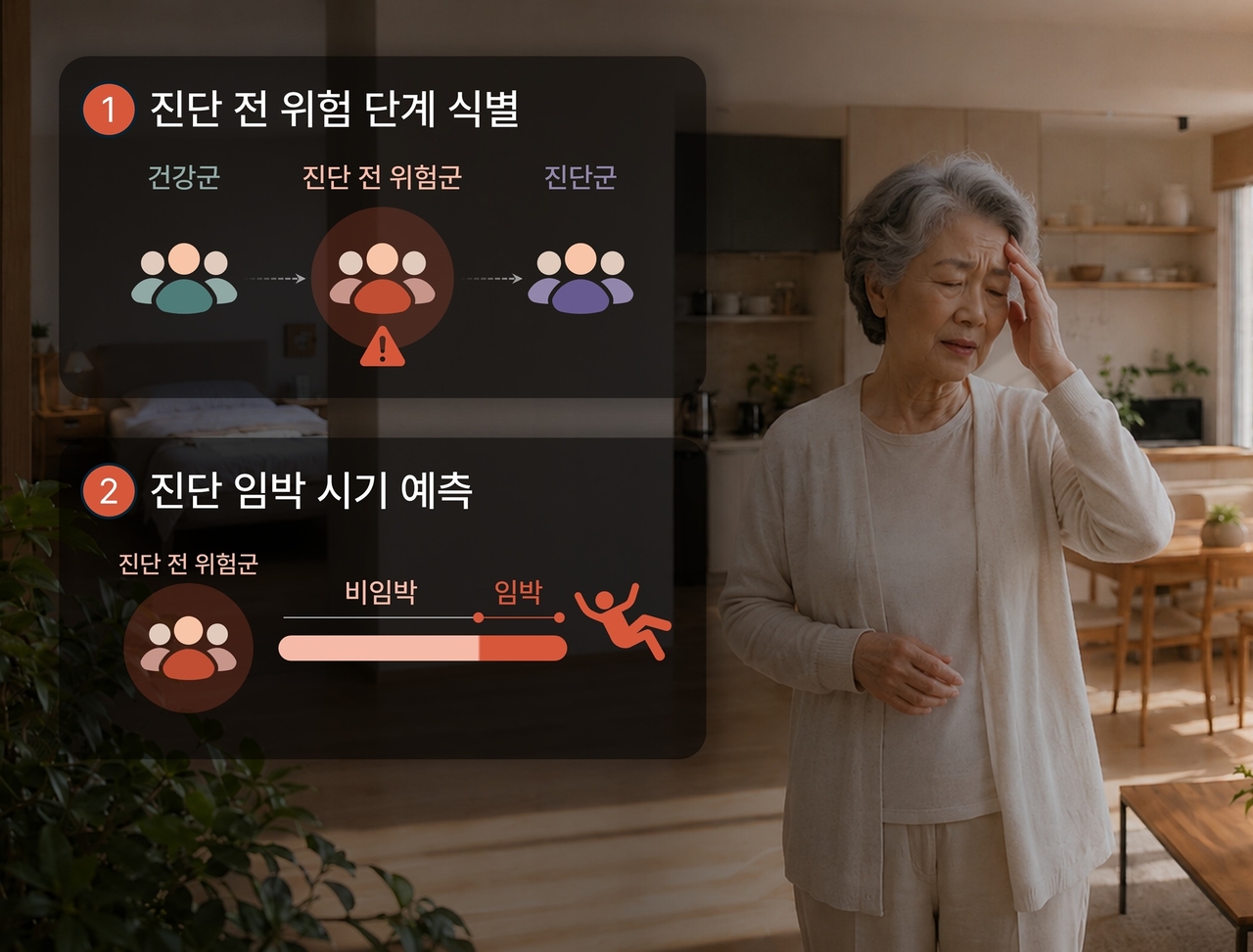
Korean researchers have developed a technology that analyzes the daily lifestyle data of elderly people to detect cerebrovascular disease risk early — using only subtle changes observed at home.
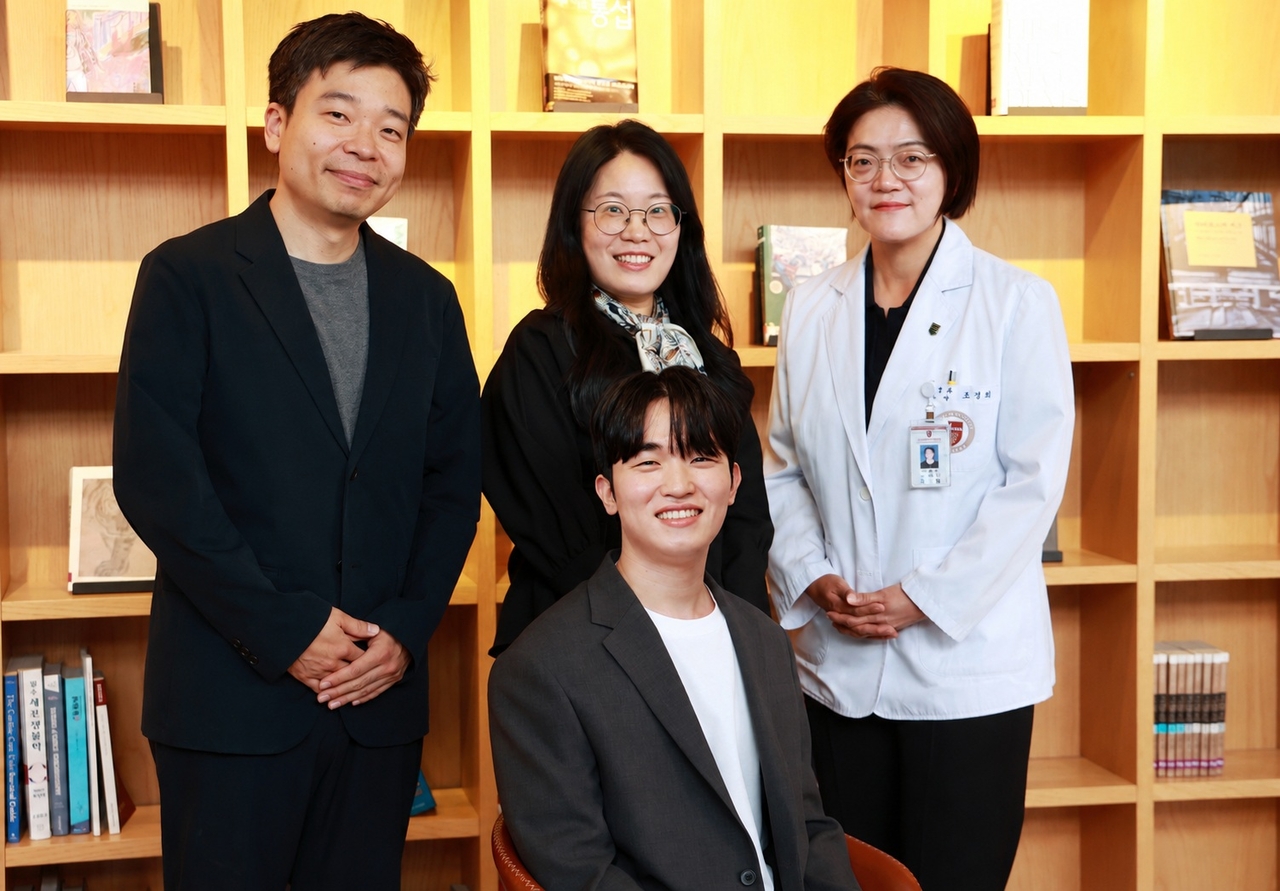
KAIST announced Sunday that a research team led by Im Lisa, a professor in the Department of Civil and Environmental Engineering, developed an AI framework capable of identifying pre-diagnosis risk stages for cerebrovascular disease and assessing imminent risk of diagnosis. The team collaborated with Jeong Jo-un, a professor at Sungkyunkwan University, and Cho Kyung-hee, a neurology professor at Korea University's Anam Hospital.
The key contribution is that the research moves beyond the conventional approach of responding after a disease has been confirmed at a hospital, demonstrating the potential to detect early warning signs through changes in daily activity, sleep and lifestyle rhythms.
The study drew on lifestyle log data from 1,224 elderly individuals collected in real residential settings by Reborn Care Co. The research team analyzed 13,362 lifestyle data samples organized in 14-day units, presenting the possibility of detecting risk signals early from subtle everyday changes rather than waiting until a disease has occurred and requires hospital treatment.
The team succeeded in evaluating how close an individual was to a cerebrovascular disease diagnosis by analyzing how lifestyle patterns shifted over time. The data were divided into an "imminent" window — lifestyle data recorded within four weeks before diagnosis — and a "non-imminent" window covering data from more than 12 weeks before diagnosis. The AI distinguished between the two with an accuracy of 96.53 percent, showing that cerebrovascular disease risk can be assessed from small changes in daily life even before a person visits a hospital.
The analysis found that elderly people in the pre-diagnosis risk stage tended to show irregular lifestyle rhythms during hours that should be winding down for sleep, with continued movement between 10 p.m. and 2 a.m. Late bedtimes and a blurred distinction between daytime and nighttime activity were closely associated with warning signs preceding a cerebrovascular disease diagnosis.
The research also found that as the time of a cerebrovascular disease diagnosis drew closer, activity levels between 6 p.m. and 10 p.m. declined noticeably and periods of inactivity grew longer. Low indoor humidity also emerged as an important factor in assessing imminent risk.
The research team said the study is not intended to predict when cerebrovascular disease will occur or to replace hospital diagnosis, but to serve as a supplementary technology supporting prevention and early medical consultation. Prospective validation in a larger patient population would be needed before clinical application, they added.
"This could be applied in the future to smart homes, senior residential facilities, elderly care services and community health management systems," Im said. "In particular, it could provide supplementary information to help identify early warning signs in elderly people living alone or those who have difficulty accurately describing their own health condition, and to help medical staff or caregivers determine whether a hospital visit or further observation is warranted."
The findings were published in npj Digital Medicine, an international journal in the field of digital healthcare.
nbgkoo@heraldcorp.com