EMS calls reach 38,770 in first half of 2026; homes are top emergency site
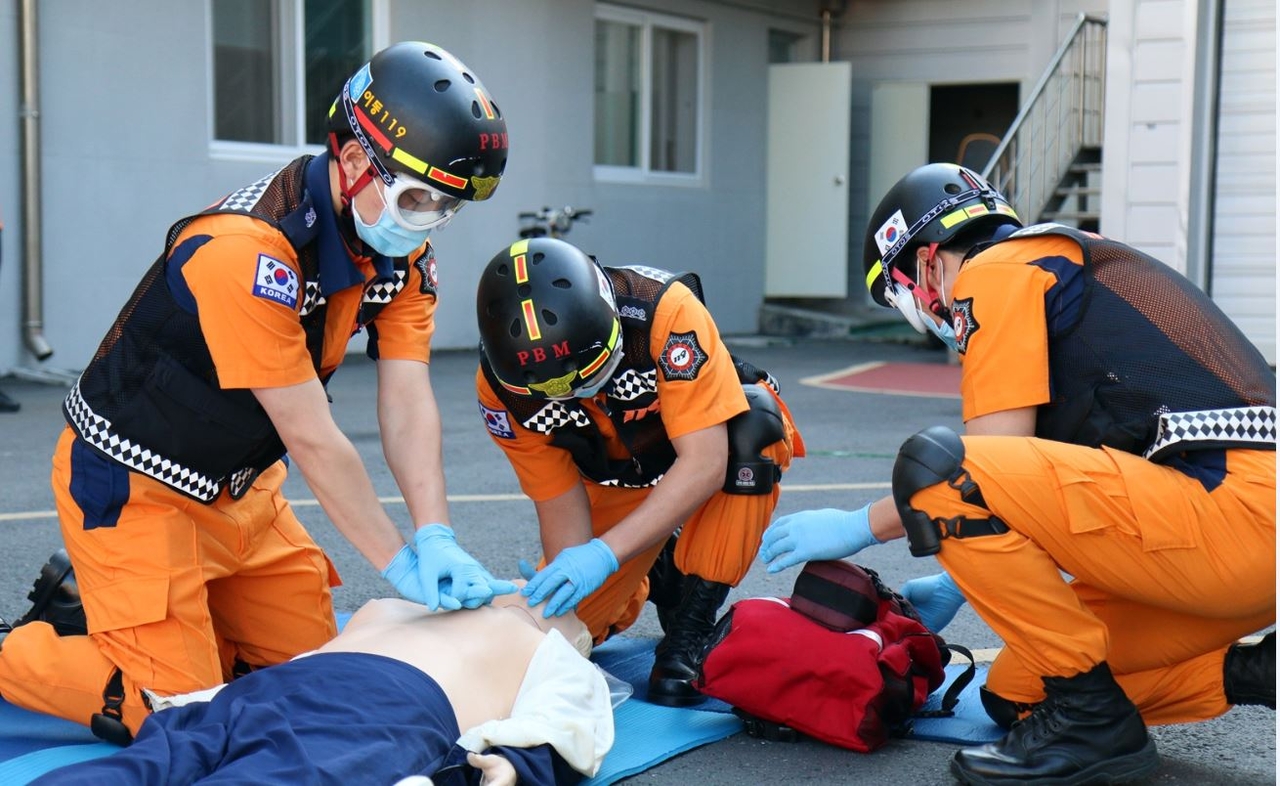
Daejeon's fire department responded to a total of 38,770 emergency medical calls in the first half of this year — an average of 214 a day, or roughly once every six minutes.
According to the Daejeon Fire Headquarters' first-half 2026 emergency medical service statistics, the agency's 36 ambulances transported 21,506 emergency patients to hospitals during the period.
That figure represents an increase of 972 patients, or 4.7 percent, from the first half of last year, with the 36 ambulances serving as the emergency medical safety net for Daejeon's 1.44 million residents.
Particularly notable in the latest statistics is that homes were the most common site of emergency calls. An analysis of patient locations found that 65.6 percent of transported patients — 14,104 people — required emergency assistance due to incidents that occurred at home.
That share is considerably higher than calls from roads (8.5 percent) and other traffic areas (6.7 percent). Officials attributed the trend to a combination of factors, including a growing elderly population, worsening chronic illness and falls inside the home — making the home, which should be the safest of spaces, in practice the most frequent emergency scene for Daejeon's paramedics.
Breaking down calls by patient type, illness cases accounted for 14,985 patients, or roughly 70 percent of the total — far outpacing injury accidents (3,867) and traffic accidents (1,669). The figures suggest that residents are increasingly turning to emergency services for acute medical conditions rather than accident-related injuries.
The number of patients in the four critical emergency categories where response time is most critical — cardiac arrest, cardiovascular disease, cerebrovascular disease and severe trauma — rose 8.8 percent year-on-year to 1,763 in the first half of this year. Cardiovascular disease patients numbered 943, up 13.5 percent from the same period last year. Cerebrovascular disease patients reached 279, a 13.4 percent increase — the two largest gains among the categories. Cardiac arrest cases also rose 2.2 percent to 377, underscoring the growing importance of rapid pre-hospital response for critically ill patients.
In response, the Daejeon Fire Headquarters has been using a pre-hospital triage system known as Pre-KTAS to quickly and accurately assess patient severity and direct patients to the most appropriate emergency facility, securing the critical treatment window. The agency is also conducting specialized paramedic training through its emergency education center and strengthening field response capabilities and advanced first-aid skills through quality management reviews and case feedback, with the aim of improving the overall quality of pre-hospital emergency medical service.
"The most important mission of our emergency medical teams is to protect the golden hour for every citizen," said Kim Mun-yong, chief of the Daejeon Fire Headquarters. "We will continue to strengthen our field response capabilities and expertise so that our 36 ambulances can remain the most reliable emergency medical safety net for Daejeon's 1.44 million residents."
kwonhl@heraldcorp.com