
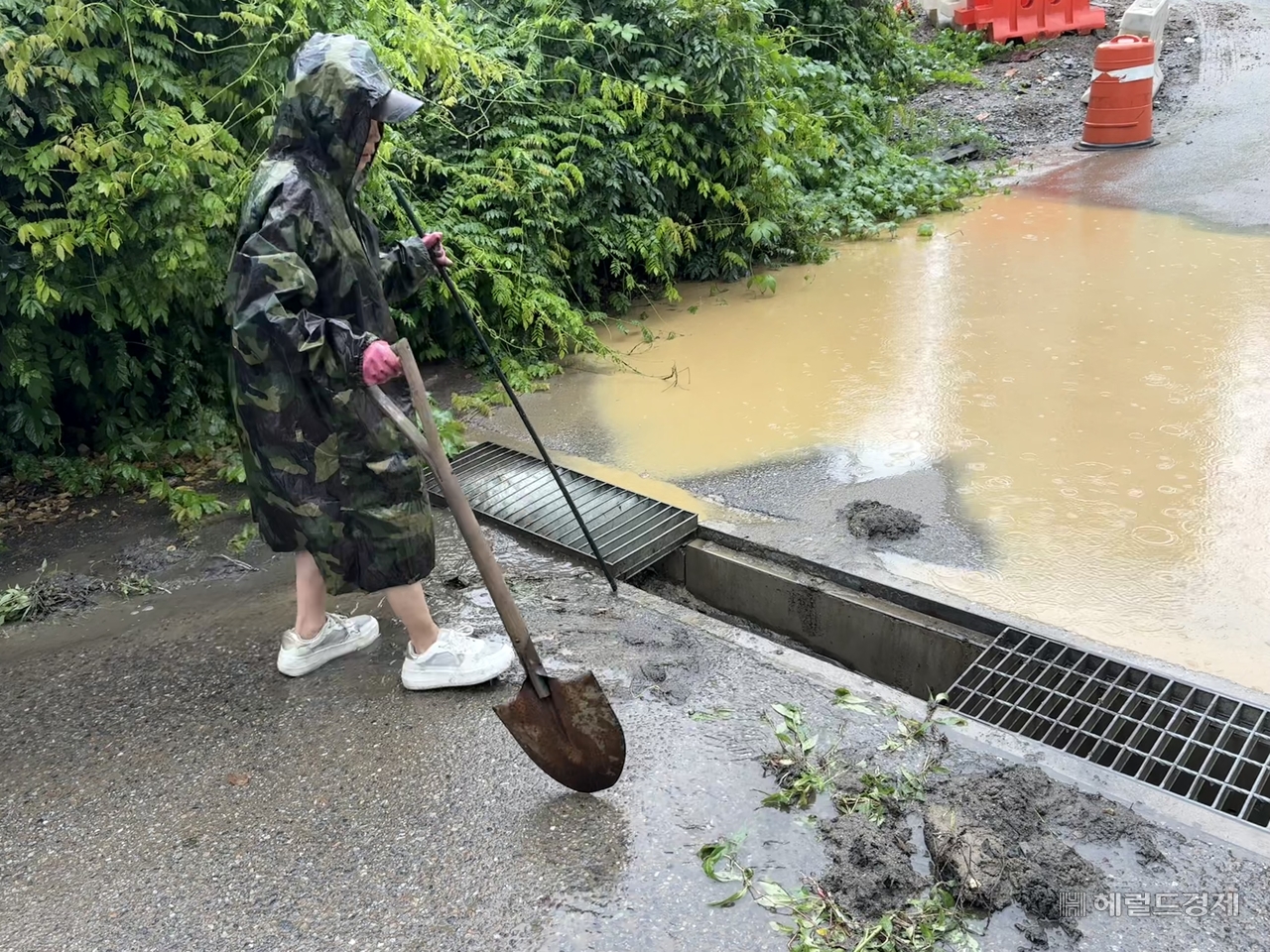
"If this drain gets blocked, water comes straight into my house. Every time it rains, I come out and clear it myself."
Hwang, an 83-year-old resident of Guyong Village — Seoul's last remaining shantytown, in Gangnam-gu — stood in the rain Thursday morning, scooping mud and debris from a drainage ditch as monsoon rains fell.
Wearing only a raincoat, Hwang lifted the metal grate over the drain and worked without pause, clearing out the sediment. Any delay meant water flooding into her home. Even as her hands moved urgently, rainwater had already pooled in front of her, forming a small stream.
"Whenever they say heavy rain is coming, I worry," she said. "They're saying a lot of rain is coming today — that's a real problem."
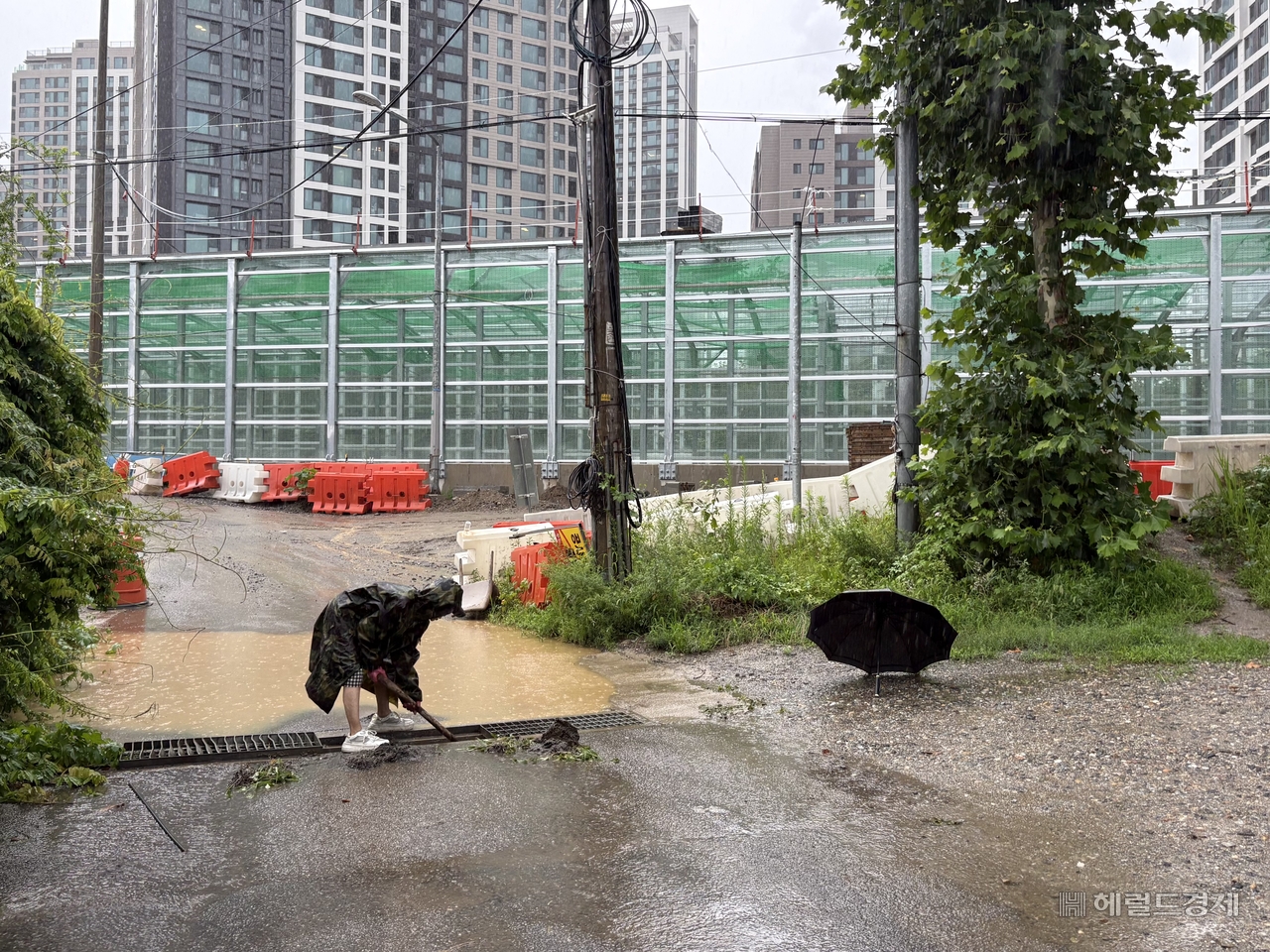
Anxiety was written across the faces of Guyong Village residents Thursday after word spread that monsoon rains would concentrate over the Greater Seoul area. Those living in the lower-lying parts of the settlement moved about with particular urgency.
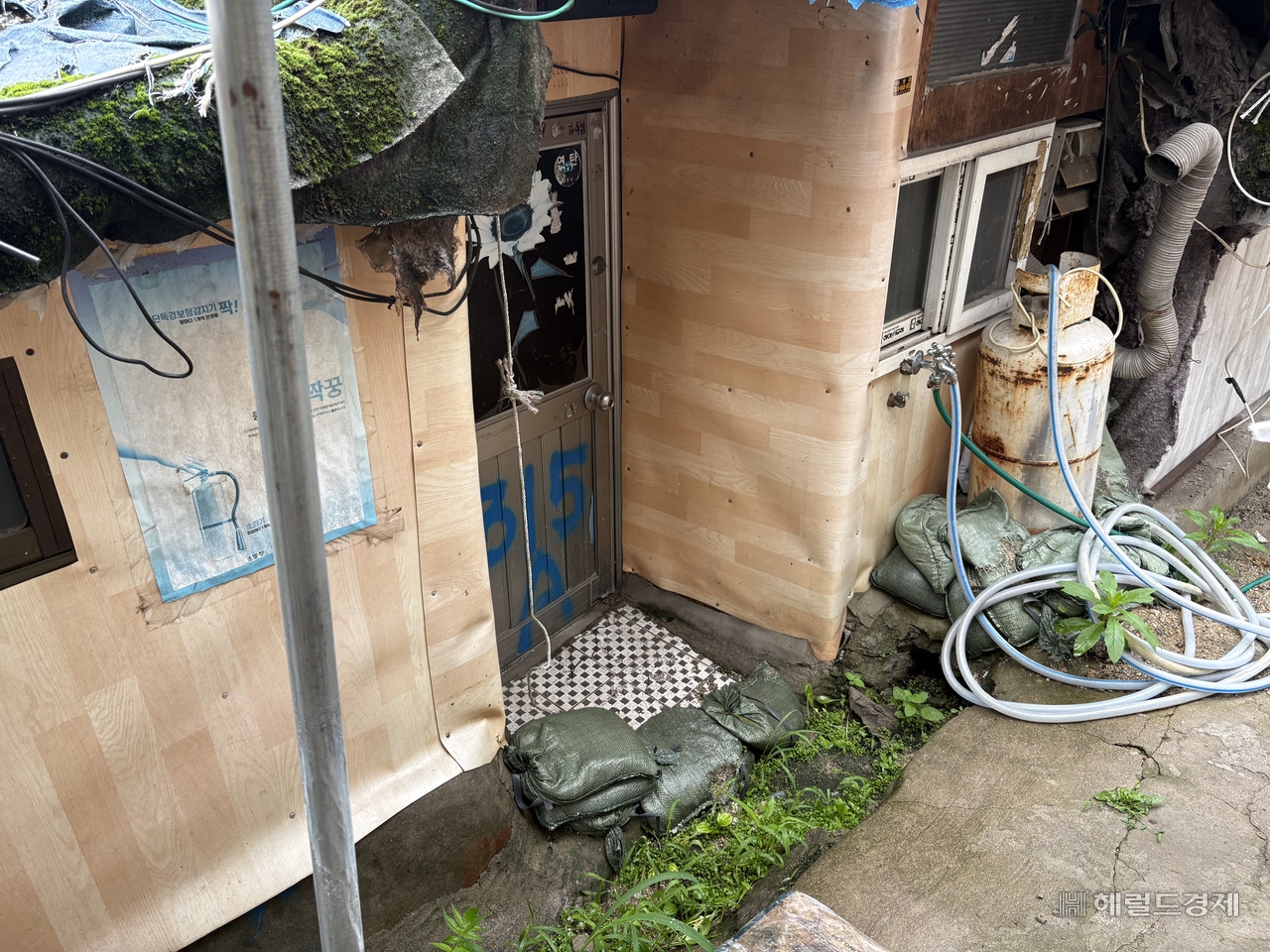
The reason is simple: any hesitation and water will seep inside. The homes in Guyong Village are makeshift, aging structures with no raised thresholds at their entrances. When rainwater pools outside a door, it flows straight in.
"There's no step between the alley and the house," said Kim Byeong-chan, chairman of the Guyong Village Residents' Association. "The rainwater runs right down and into the homes. We stack sandbags to prepare."
"When they forecast heavy rain, we worry," he added. "If the roof leaks, you can't sleep — so even in a run-down place, you put up plastic sheeting on the ceiling and get by."
A resident surnamed Lee, 64, who lost her home in a fire last January and has been living in temporary fire-victim housing, said news of heavy rain sets her on edge. "When I see forecasts of heavy rain, my heart races," she said. "People who have somewhere else to stay go there during the monsoon season."
A resident surnamed Kim in her 70s said flooding and power outages during heavy rain are a recurring fact of life. "In winter, we're scared of fires; in summer, we're scared of the monsoon," she said.
The residents' dread at news of heavy rain stems from lived memory. In August 2022, torrential rains inundated large parts of central Korea — and parts of Guyong Village went under as well.
The flooding displaced 106 residents. Of those, 89 who had nowhere else to go took shelter at a temporary housing facility set up at nearby Guyong Middle School.
The village is vulnerable not only to flooding but also to fire. The aging, makeshift settlement has no modern fire suppression infrastructure.
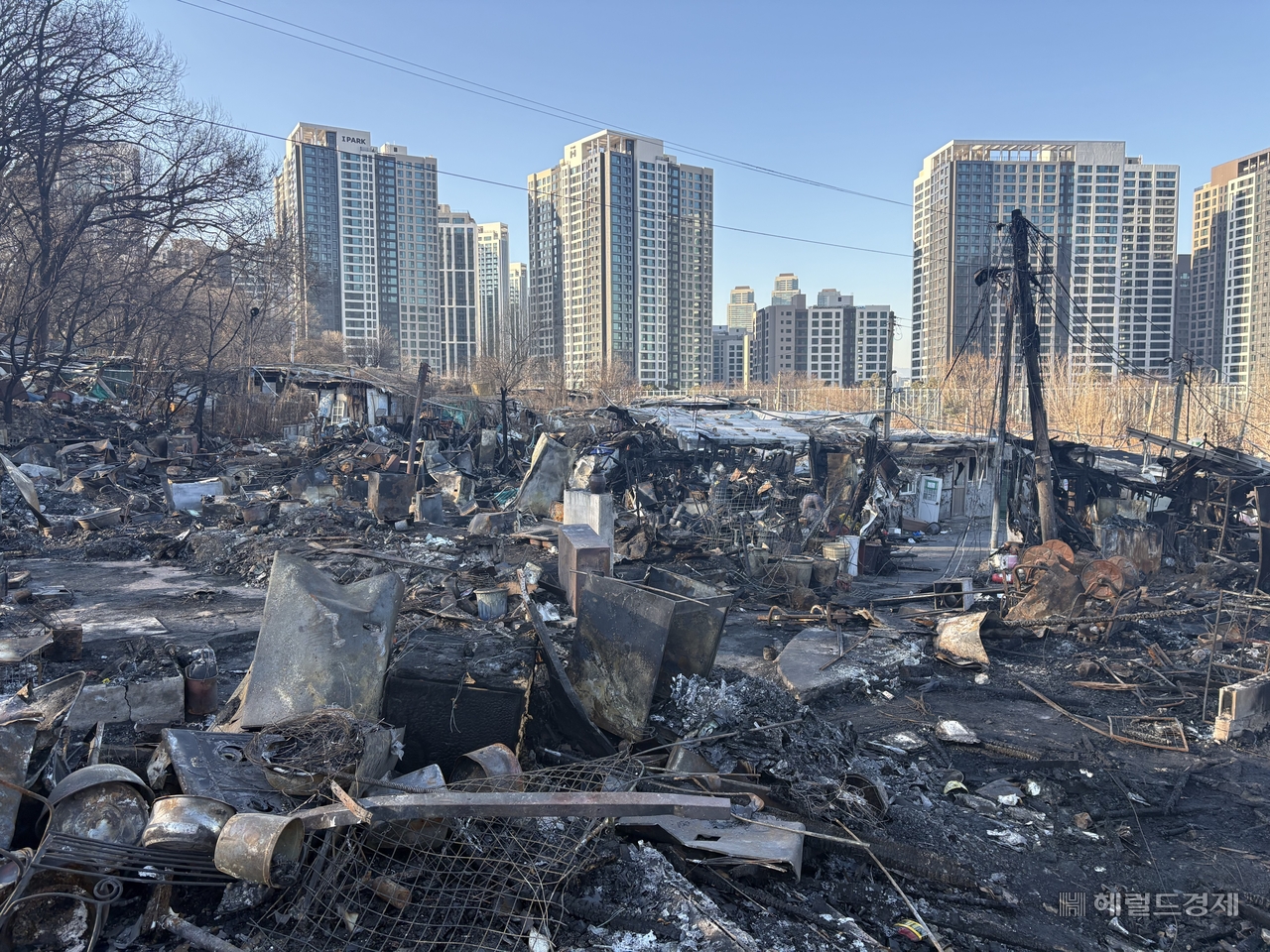
Last January, Guyong Village was hit by a major fire — the latest in a series. Blazes broke out in Districts 4 and 6, burning for eight hours before firefighters brought them under control. No one was killed, but the structures were reduced to ash. A total of 165 households — 258 people — were evacuated, and 129 households comprising 181 people were left homeless.
A similarly large fire struck in 2023, also in District 4, forcing 500 people to evacuate and leaving 62 homeless.
Because the structures in Guyong Village are unauthorized temporary buildings, installing modern fire suppression systems such as sprinklers is effectively impossible under current regulations.
A Gangnam-gu district office official said the area is patrolled around the clock, with regular drainage maintenance and removal of obstructions to guard against flooding. "The Seoul Housing and Urban Corporation is currently responsible for management, and the Gangnam-gu district office provides support," the official said.
Guyong Village traces its origins to the period before the 1988 Seoul Olympics, when a city beautification drive displaced residents who then gathered on the slopes of Guyongsan and built the shantytown that bears its name.
Redevelopment discussions are ongoing, but disagreements over compensation have stalled any progress, leaving the village in limbo.
20ki@heraldcorp.com
shy@heraldcorp.com




