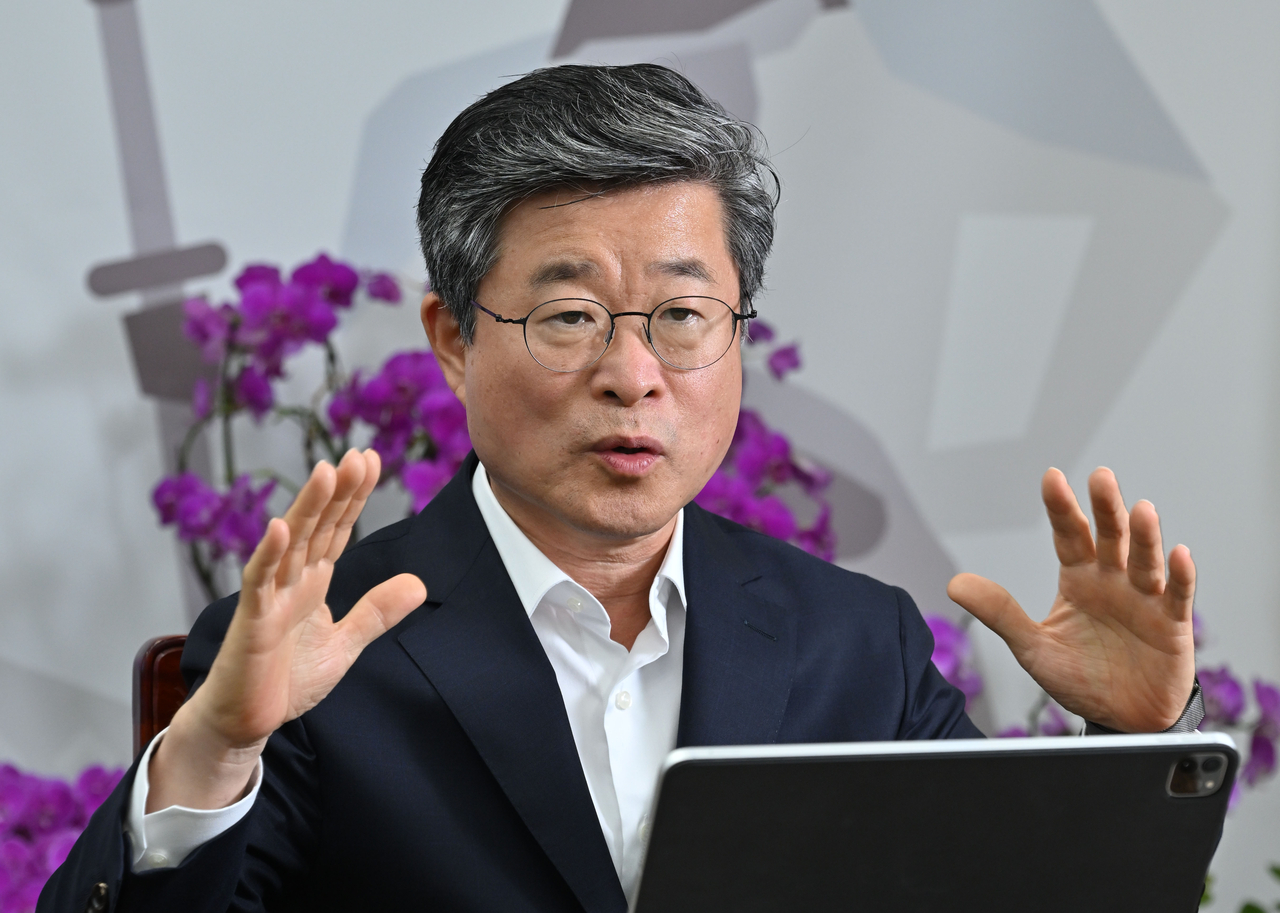
Jung-gu, at the geographic heart of Seoul, has long lagged behind other districts in everyday civic infrastructure. Now, entering its ninth elected term, the district is moving to close that gap with a slate of major cultural and sports projects — rebuilding Jangchung Arena, redeveloping the area around Chungmu Arts Center, and constructing a new public library. Funding will come from a "Jung-gu Balanced Development Fund" built on donations-in-lieu and private capital drawn from ongoing development projects across the district. District Mayor Kim Gil-sung, re-elected to lead Jung-gu, said that if his eighth term started the district's transformation, the ninth term is the time to "complete" it. He added that he would reflect even the smallest resident requests in policy immediately, so that people could feel the change in their daily lives. The Herald Business sat down with Kim on Thursday at the Jung-gu district office to hear his plans for the term ahead. The following is an edited transcript of the interview.
— Redevelopment and reconstruction are moving quickly across Jung-gu. What is your urban renewal plan for improving the residential environment?
The core challenge for Jung-gu as an older urban district is improving substandard housing conditions and supplying homes people actually want to live in. During the campaign I walked through neighborhoods across the district and was troubled to see residents still struggling in poor living conditions. Building on the achievements of the eighth term — including the easing of height restrictions around Namsan — I will push ahead without delay on the Sindang zones 8, 9 and 10 redevelopment, the Jungnim-dong 398 area redevelopment, the urban public housing project near Yaksu Station, and the Namsan Town remodeling, with the goal of laying the groundwork to supply about 14,000 residential units by 2035.
— You pledged to expand everyday civic infrastructure to ease the inconvenience of living in an older urban district. What does that look like?
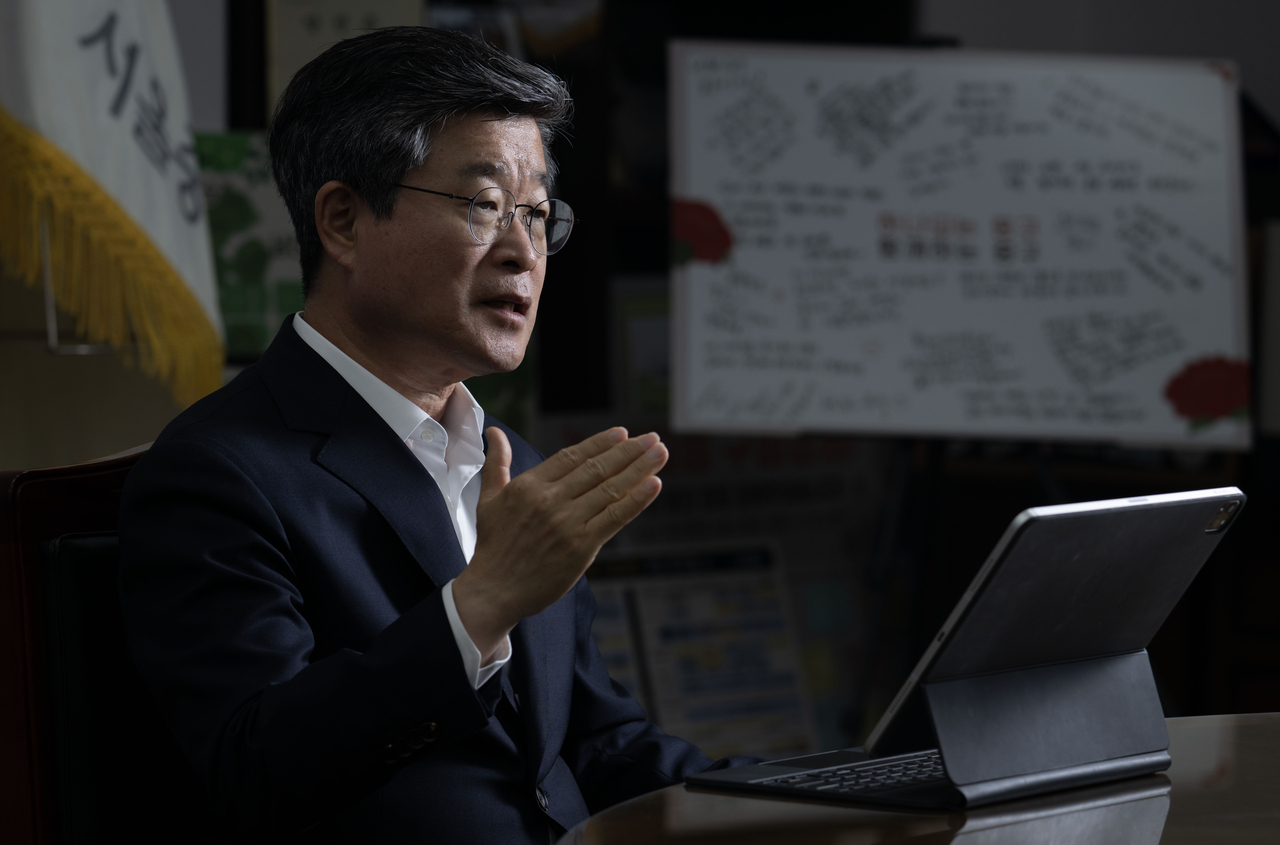
Because Jung-gu is an established urban core rather than a new town, it lacks the cultural and sports facilities and community spaces that newer districts take for granted. In the ninth term I want to build the kind of everyday infrastructure that enriches residents' lives. Rebuilding the aging Jangchung Arena, redeveloping Chungmu Arts Center as a mixed-use complex, constructing a large public library, and expanding administrative community centers in each neighborhood — these projects will raise both the district's competitiveness and residents' quality of life at the same time. For Jangchung Arena and the Chungmu Arts and Sports Center, support from the Seoul Metropolitan Government is essential and will take some time. However, because Seoul Mayor Oh Se-hoon and I are aligned on the direction of urban renewal policy, I believe the collaboration will become an opportunity for Jung-gu and the city to grow together through policy synergy.
— The Jung-gu Balanced Development Fund was presented as a flagship campaign pledge for the ninth term. What is its purpose and how will it be financed?
Funding is the biggest challenge for carrying out large-scale projects. I plan to build the Jung-gu Balanced Development Fund through donations-in-lieu and private capital, creating a structure in which development gains do not stay concentrated in one area but flow back into the lives of all residents. The fund will be financed primarily from cash donations-in-lieu generated by urban renewal redevelopment projects actively under way in the city center, and the money will be used to expand public and infrastructure facilities in the Sindang and Dasan residential areas and the low-rise neighborhoods along the Namsan foothills — areas that have seen comparatively less development. I am currently reviewing how to make the best use of the fund within the existing regulatory framework, and I plan to further expand its resources through future regulatory improvements.
— You pledged public rental housing and a preferential savings program to attract young residents. What kind of city do you want Jung-gu to be for young people?
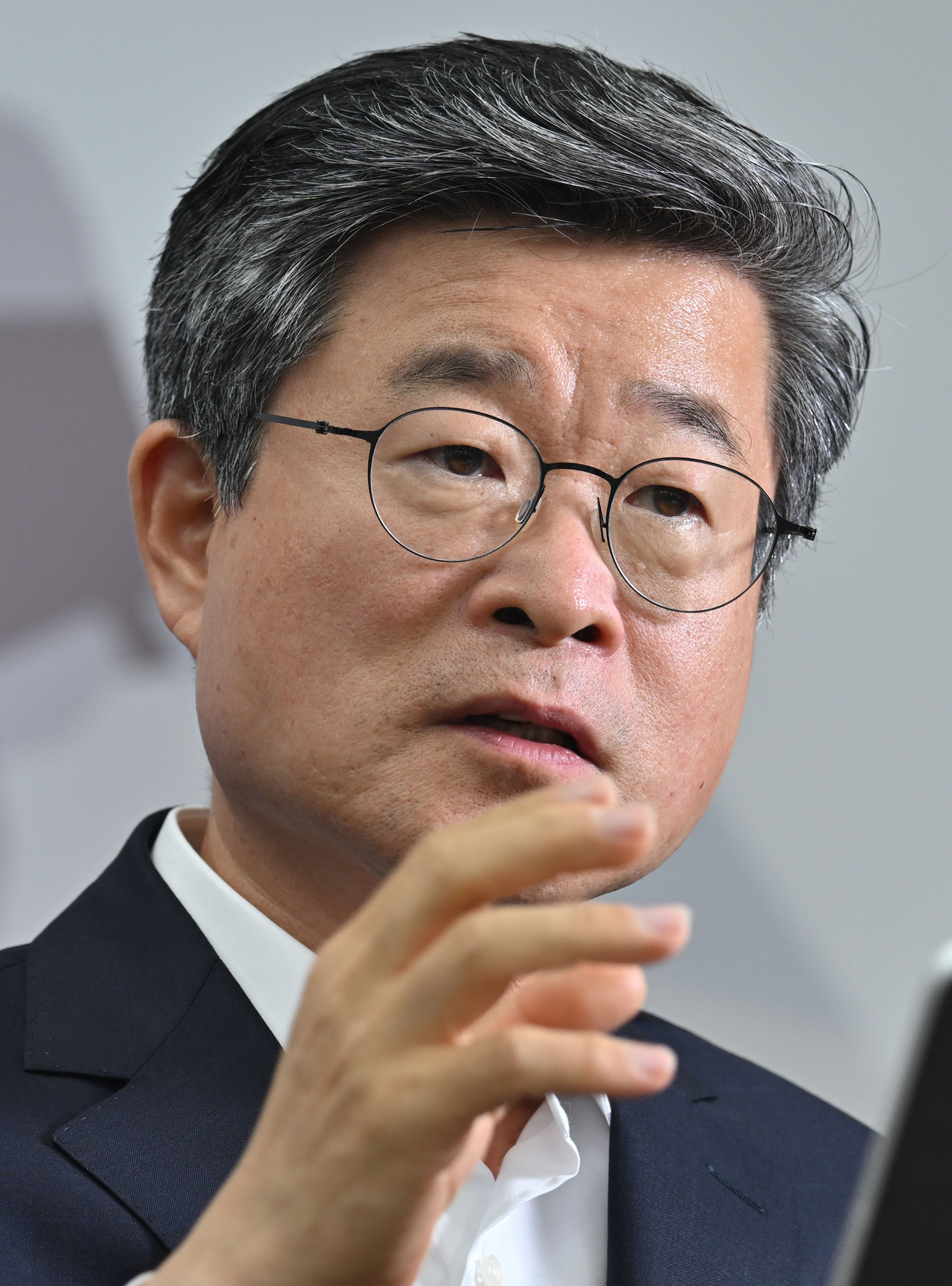
When we talk about Jung-gu's future, young people are the first thing we need to think about. They make up more than 30 percent of Jung-gu's 120,000 registered residents, and when you add the daily working population the number is far larger. The biggest reason people work and spend their days in Jung-gu but cannot actually settle here is that housing prices are high and residential space is scarce. In the ninth term I will focus on creating an environment where young people and newlyweds can put down roots in Jung-gu. First, I plan to develop and supply Jung-gu-style public rental housing for youth — using rental units secured through urban renewal projects and idle public facilities to create 1,000 public housing units in various forms and supply them at below-market prices. I also want to ease the housing burden by supporting jeonse and monthly rent deposits, loan interest and moving costs. Above all, I want to build a structure that helps young people become self-sufficient. Through the Naepyeon preferential savings program — a project to help participants build up 10 million won ($6,620) — along with internships linked to local businesses and Jung-gu-tailored job placement programs, I will help young people plan their futures.
— You have also focused on welfare for elderly residents. Are there new policies or projects being introduced?
About 23 percent of Jung-gu's 120,000 residents are aged 65 or older. I will continue the transportation subsidy for elderly residents, which proved highly effective in the eighth term, and will introduce the new Naepyeon Call Taxi service to make getting around more convenient. I also plan to launch a group supplemental medical insurance scheme to reduce out-of-pocket healthcare costs for elderly residents, and will start the Naepyeon Bapsang and Naepyeon dosirak programs to provide them with one good, nutritious meal a day.
— The rise in foreign tourist numbers has made Jung-gu even more important as a tourism destination. What measures can translate that into local economic vitality?
In the eighth term we focused on developing Myeongdong Square and building a city brand around Jung-gu as the birthplace of Admiral Yi Sun-sin. In the ninth term I will take those eighth-term initiatives further — advancing the Myeongdong Square Phase 2 project, the Namsan foothills forest trail festival, the Yi Sun-sin festival, and the construction of an Admiral Yi Sun-sin memorial hall as part of the broader Yi Sun-sin city brand. I also plan to connect Jung-gu's tourism assets — Myeongdong, Namsan, Euljiro and Dongdaemun — more organically, strengthen the district's tourism competitiveness, and support efforts to ensure that growing visitor numbers translate into a boost for local commercial districts. My goal is not simply a city with many visitors, but to elevate Jung-gu into Seoul's premier tourism destination — one where people stay, spend and want to return.
— Finally, what would you like to say to residents as you begin this term?
I believe the most important thing going forward is keeping the promises I made to residents. Just as I opened the door to Jung-gu's transformation, I will see its completion through to the end and deliver results that show a greater leap forward for the district. I ask residents to join us on the continuing journey of building a city where simply saying "I live in Jung-gu" is a source of pride — a city that grows more worth boasting about the longer you live here.
ikson@heraldcorp.com