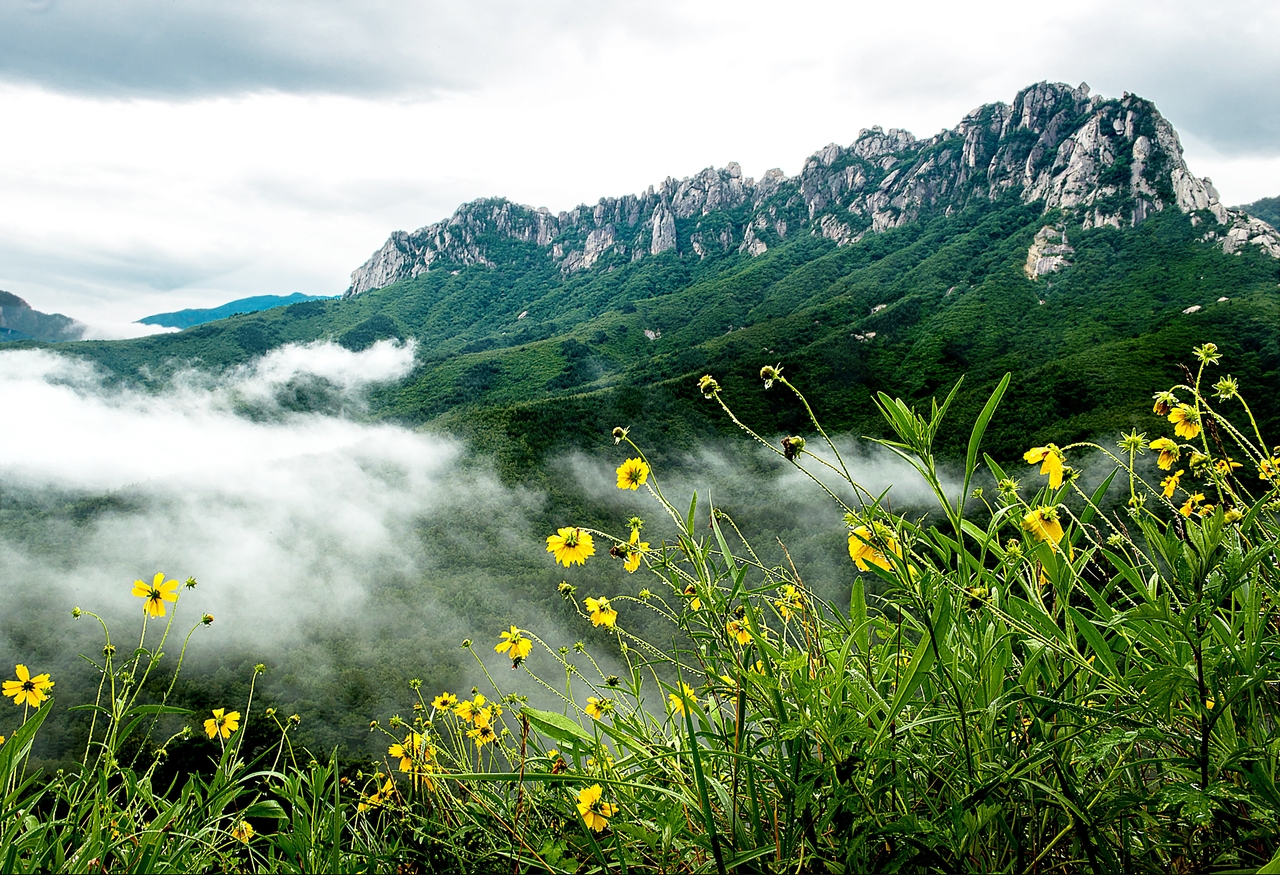
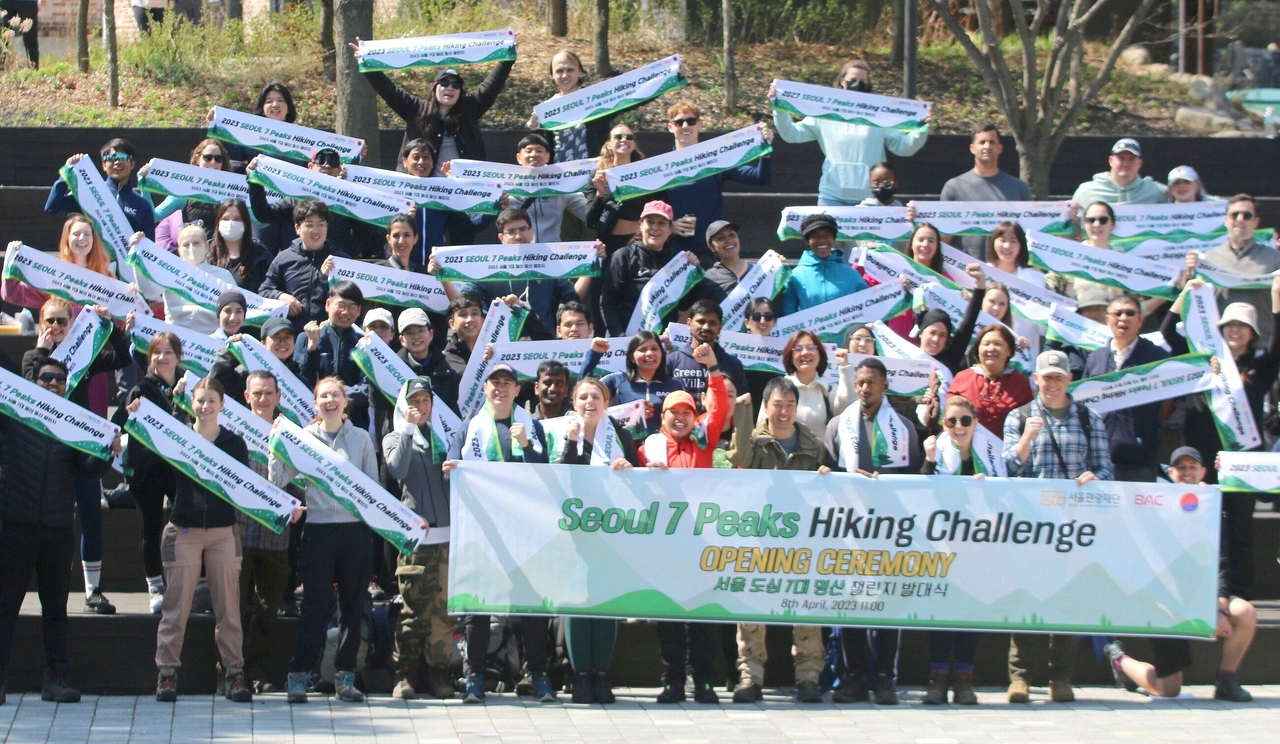
In South Korea and nearly every country in the world, a national park is synonymous with a premier tourist destination.
Foreign visitor admission fees vary widely: the United States charges 150,000 won ($98) per person, with parking costing an additional 50,000 won, while Japan charges 5,000 to 6,000 won and European countries typically charge between 8,000 and 10,000 won. South Korea charges nothing.
South Korea is the only country where visitors can enjoy its finest natural attractions free of charge — a fact that has prompted some citizens to call for a voluntary nature conservation fee. Last year, South Korea's 22 national parks drew a combined 43.31 million visitors, of whom about 2.05 million were foreign nationals.
Representatives of the Korea Tourism Organization and the Korea National Park Service met Wednesday at the tourism organization's headquarters in Wonju to sign an MOU aimed at globalizing the country's national parks and boosting regional tourism around them.
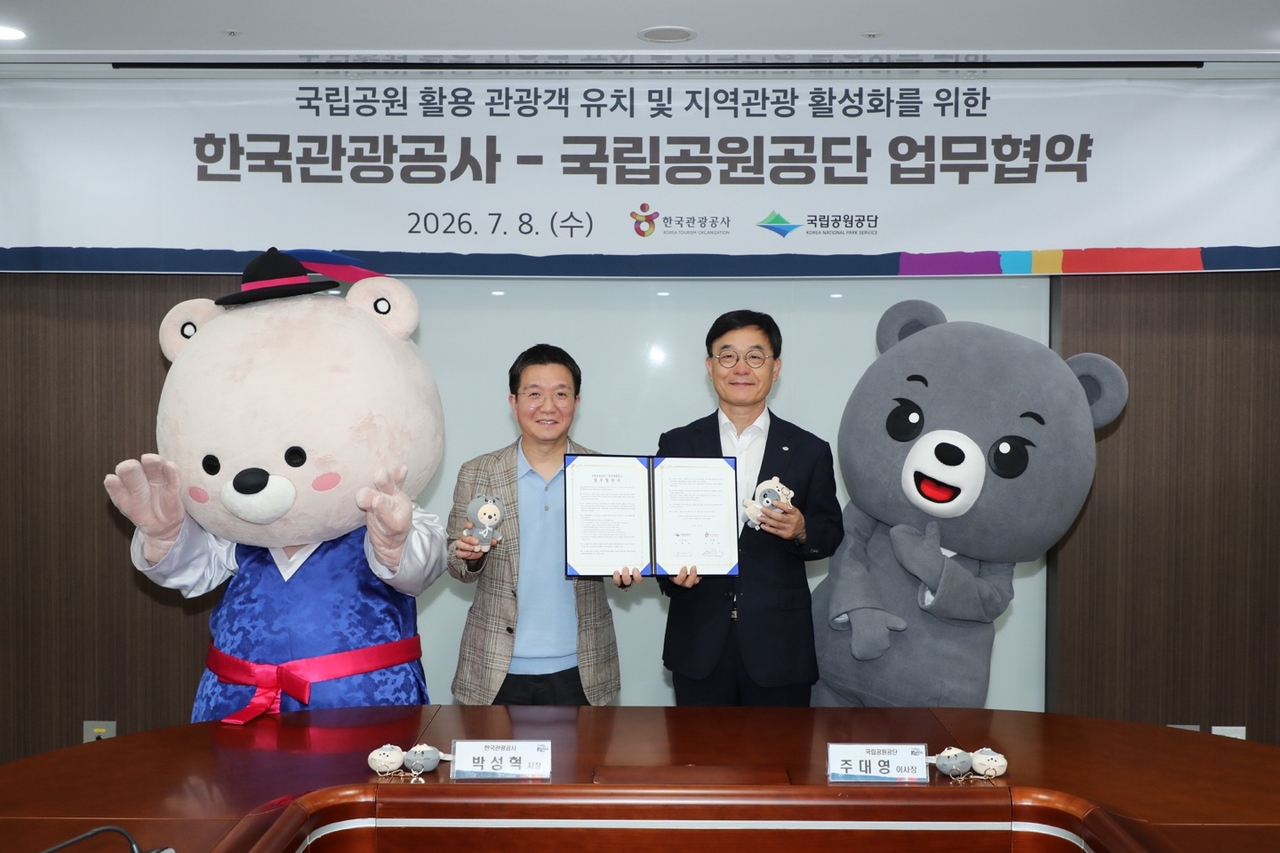
The agreement was drawn up in response to growing demand for K-trekking, with the goal of expanding visits to national parks by both domestic and foreign travelers and improving visitor convenience. Foreign visits to national parks surged about 132 percent year on year — from roughly 890,000 in 2024 to about 2.05 million in 2025 — signaling that trekking is emerging as a new pillar of Korean tourism.
The two organizations have set a target of 3 million foreign visitors to national parks by 2028 and will cooperate on four fronts: launching promotional campaigns targeting foreign visitors; publicizing national parks through the tourism organization's online and offline channels, including Hiker Ground and the integrated tourism platform VisitKorea; developing K-trekking products tied to overseas trade fairs and K-tourism road shows; and operating AI-based services and sharing data to boost regional tourism.
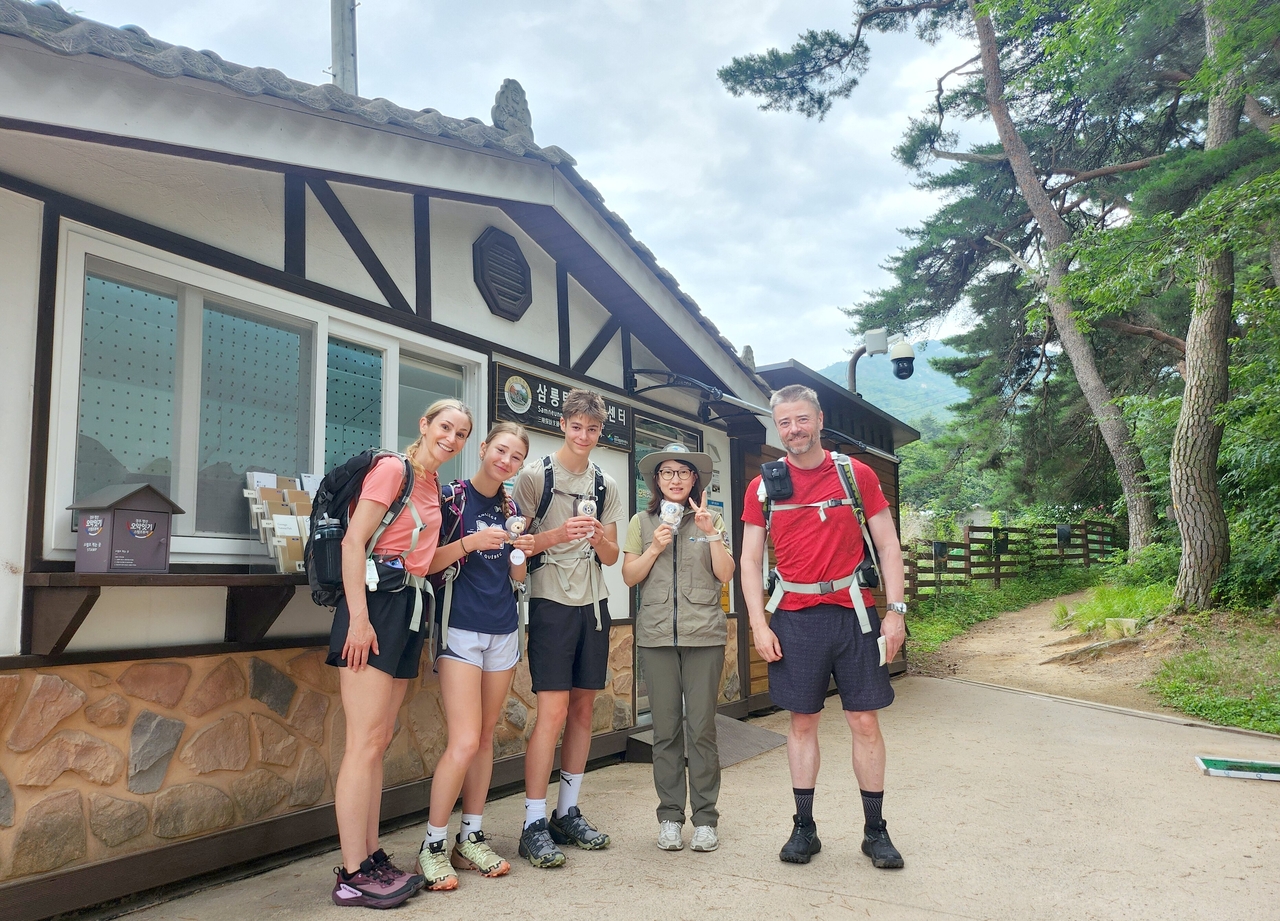
The travel platform Creatrip will also run a K-Trekking Challenge campaign through November. The campaign targets foreign visitors at five national parks — Seoraksan, Odaesan, Bukhansan (including its Seoul and Dobong branches) and Gyeongju — and will promote visitor services such as free safety equipment rentals. Participants who share their trekking experiences on social media will receive limited-edition merchandise featuring characters from both organizations as well as travel platform points.
"K-trekking is drawing growing attention from both domestic and international tourists as a new form of tourism content," said Park Seong-hyeok, president of the Korea Tourism Organization. "Through this agreement, we will actively promote K-trekking as another compelling reason to visit local regions."
abc@heraldcorp.com