
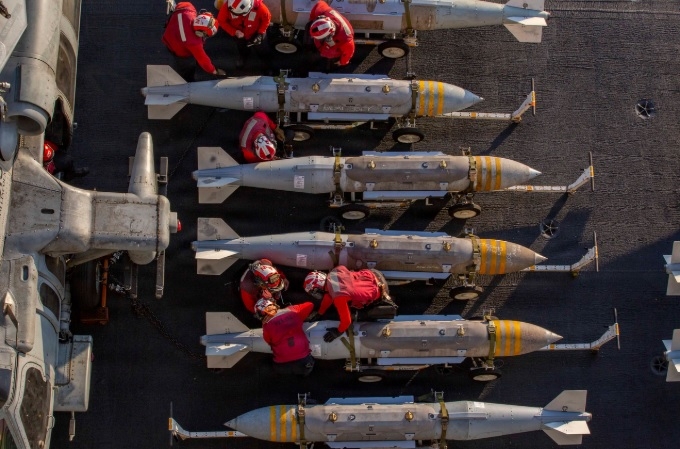
NATO is moving beyond its push for higher defense spending and turning its full attention to ramping up weapons production. With manufacturing capacity struggling to keep pace with surging demand, alliance officials say the central challenge has shifted from securing budgets to strengthening supply chains and expanding industrial output.
NATO Secretary General Mark Rutte said in an interview ahead of the alliance summit opening Tuesday in Ankara, Turkey, that "a year ago, everything was about pledging more defense spending," adding that "this year, it's about delivering on those pledges." The Wall Street Journal reported the interview Saturday.
Rutte said member states are rapidly increasing defense budgets, but actual weapons production and military capability are failing to keep up.
Last year, NATO members excluding the United States spent $574 billion on defense — a 20% increase from the previous year. Germany raised its defense spending by 24% to $114 billion and plans to triple its 2024 defense budget by 2029.
The surge in defense spending has left US defense contractors with roughly $300 billion in backlogged orders, but production shortfalls are causing significant delays between weapons orders and actual delivery.
Rutte attributed the bottleneck to several factors: the depletion of weapons and ammunition in the wars in Ukraine and Iran, and insufficient capacity to recruit and train new troops.
He also said the fragmentation of European defense industries — where member states independently develop similar weapons systems to protect their domestic defense sectors — is compounding the problem. That inefficiency, he said, risks diverting resources away from critical capabilities such as air defense systems, precision-strike missiles and integrated intelligence networks.
"Overcoming these obstacles is the central agenda of this summit," Rutte said. "The money is already flowing and the defense industrial base is expanding — now we need to accelerate production."
Drawing on lessons from the war in Ukraine, he said the priority is not simply producing large numbers of drones but building the capacity to produce them. "The technology itself is evolving so fast that it changes every two to three weeks," he said.
NATO will also hold an industrial forum during the summit, bringing together defense company CEOs and government officials from member states.
The forum is expected to yield announcements of weapons procurement contracts worth billions of dollars, as well as preliminary agreements and joint production deals. NATO plans to use the forum to accelerate the expansion of member states' defense production capacity and strengthen supply chains.
sjy@heraldcorp.com




