
Three major carriers and MVNOs to adopt system across in-person, online channels
Biometric concerns addressed with alternative verification, exception procedures
Stricter SIM registration rules for foreigners to follow in second half of year

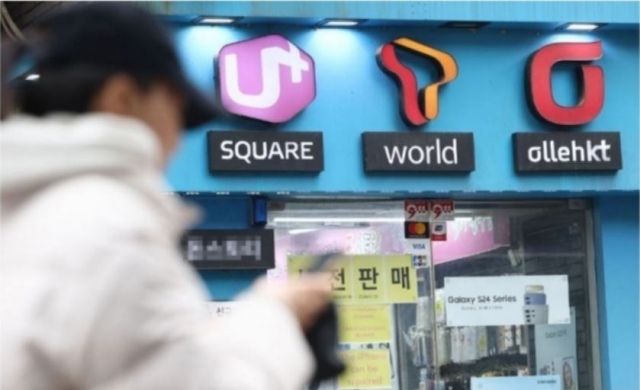
South Korea will begin requiring facial recognition to verify the identity of new mobile phone subscribers starting Monday, the government announced Tuesday.
The measure aims to block illegal burner phones — known locally as "daepoppon" — and filter out fraudulent registrations exploited for voice phishing and identity theft at the point of sign-up.
The three major mobile carriers and mobile virtual network operators will phase in facial recognition across both in-person and online registration channels, with mobile ID apps and resident registration documents available as alternative verification methods.
However, given concerns about the use of biometric data, the government said an exception procedure will be available when facial recognition fails. For lines registered under foreign nationals' names, the government plans to improve identity document verification systems and tighten registration requirements in the second half of the year.
The Ministry of Science and ICT announced the measures Tuesday as part of a comprehensive plan to prevent fraudulent mobile phone use.
The plan reflects the central role mobile phones now play in financial transactions and identity authentication. The ministry said it will strengthen identity checks at the registration stage and expand post-registration sanctions, targeting specific types of misuse including identity theft, name lending and abuse of corporate phone plans.
Facial recognition is the first measure to take effect. Officials said existing ID checks alone are no longer sufficient to prevent registrations under another person's name, as personal data leaks have increased and techniques for forging or altering identity documents have grown more sophisticated. Last year, authorities detected 20,000 illegal burner phones, and voice phishing losses reached 1.3 trillion won ($842 million).
The facial recognition requirement had drawn criticism even before its introduction. Concerns were raised that using sensitive biometric data such as facial images during the phone registration process requires stronger protections for personal information and user choice. In response, the ministry said raw facial recognition data will not be stored or retained, and all related information will be deleted immediately after the matching check is complete. The Korea Internet and Security Agency also conducted security reviews, including checks for hacking vulnerabilities.
The ministry incorporated improvement recommendations from the Personal Information Protection Commission and the National Human Rights Commission of Korea, and put alternative verification methods in place. Users with smartphones can authenticate through the mobile ID app provided by the Ministry of Interior and Safety. Those without smartphones, or who cannot use the mobile ID app due to a first-time registration, a lost device or similar circumstances, may instead present a same-day copy of their resident registration abstract.
To reduce confusion during the initial rollout, the ministry will gradually strengthen alternative verification options and their legal basis. In August, it plans to review ways to improve the convenience of alternative verification methods. In September, it will link the resident registration abstract verification process to the identity confirmation system. In October, amendments to the Telecommunications Business Act enforcement decree will clarify the legal basis for facial recognition and the standards for sanctioning fraudulent registrations.
Fraudulent registrations under foreign nationals' names remain a challenge to be addressed in the second half of the year. Industry observers have long noted that lines registered to foreigners are frequently misused as burner phones, and that facial recognition alone may not be enough to stop fraudulent registrations. The ministry said it will work with the Ministry of Justice and other relevant agencies to improve the foreign ID verification system and tighten line registration requirements. It is also pursuing a default policy of one line per person, with a justification process required for anyone seeking additional lines.
The government is also stepping up its response to name lending and abuse of corporate phone plans. To combat schemes in which people are lured with promises of loans or high-paying part-time work into registering phones and handing over the devices and SIM cards, carriers will be required to inform customers at the point of registration about the illegality of burner phones and the penalties involved. For corporate plans, cross-verification of business registration information will be expanded, and a real-user registration requirement will apply to some lines held by businesses at high risk of insolvency. Short-term multiple-line registrations will also be restricted, with a cap of four lines within any 180-day period.
Post-registration sanctions have also been tightened. The ministry has already initiated suspension proceedings against three mobile virtual network operators found to have facilitated fraudulent registrations, and is pursuing license cancellation against one internet telephony provider that falsified caller ID information.
A subscription restriction service that prevents unwanted additional lines from being opened in a user's name will also be expanded. Currently, users must apply for the service themselves, but starting in November it will be offered as a default feature when signing a mobile phone contract.
Choi Woo-hyeok, director general for information security and network policy at the Ministry of Science and ICT, said strengthening identity verification at the registration stage is "the most effective preventive measure for protecting people's assets and identities at a time when burner phones have become a key tool in various crimes affecting everyday life." He added that the ministry "will do its utmost through public outreach and cooperation with relevant agencies to ensure that user choice and convenience are guaranteed while burner phones are effectively prevented."
rim@heraldcorp.com




