
Report sets out medium- to long-term ESG management direction
"We will work to build a sustainable company with all stakeholders"
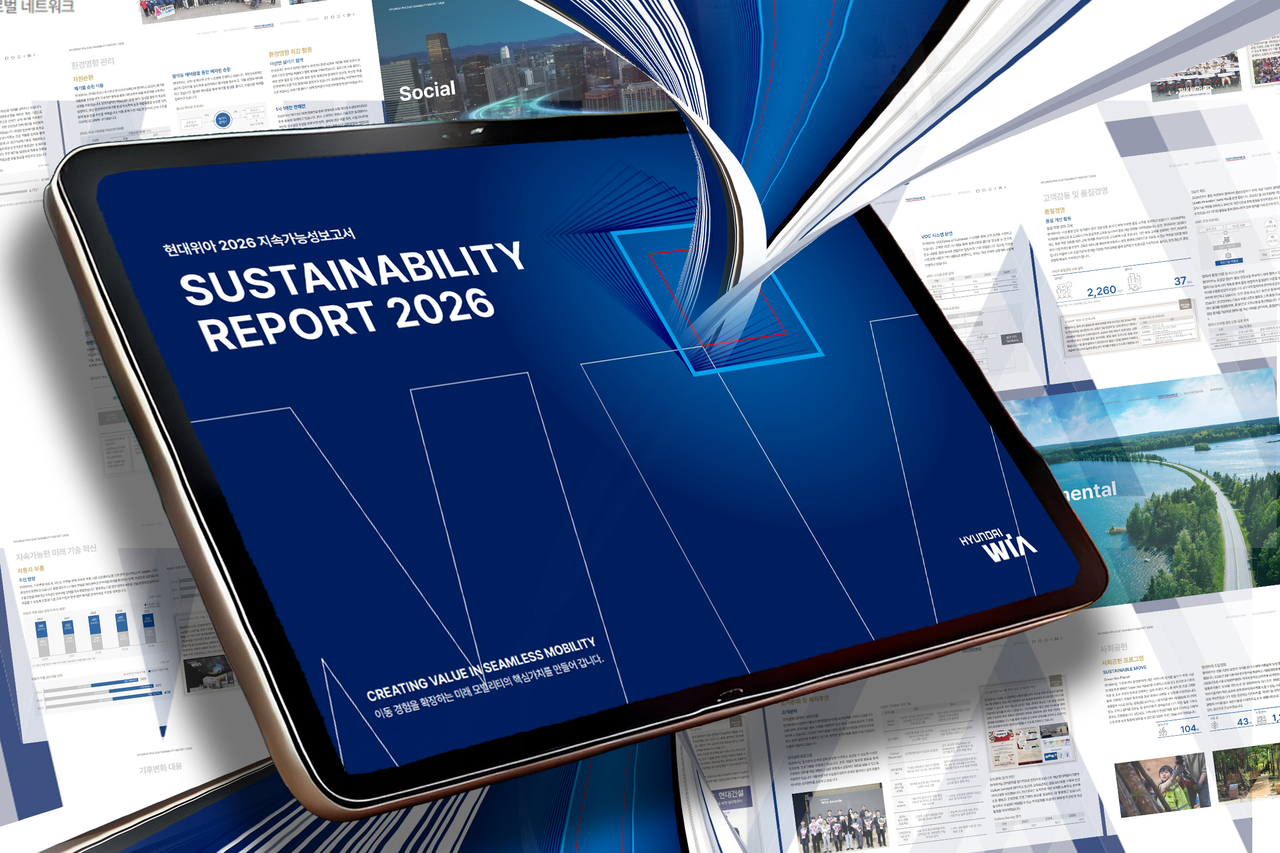
Hyundai Wia published its 2026 Sustainability Report on Tuesday, disclosing its ESG (environmental, social and governance) management goals and progress to customers, suppliers, shareholders and other stakeholders.
The report identifies three material issues selected through a materiality assessment: sustainable supply chain management, climate change response and greenhouse gas reduction, and workplace safety and health management.
Hyundai Wia derived these issues through a "double materiality assessment," which considers both the financial impact on the company and the company's impact on society and the environment. The company plans to use the findings to improve its sustainability management framework.
Hyundai Wia said it is actively working to build a sustainable supply chain. It conducts ESG assessments of suppliers and supports high-risk suppliers in improving their practices — last year it carried out supply chain ESG assessments covering 167 suppliers in total. The company also operates a "co-growth fund" that provides low-interest loans to suppliers and offers technology support and ESG education to strengthen their capabilities.
The report also details key achievements and implementation plans related to climate change. In May, Hyundai Wia received approval for its greenhouse gas reduction targets from the Science Based Targets initiative (SBTi). SBTi is a global initiative that verifies whether corporate greenhouse gas reduction targets meet science-based criteria.
Hyundai Wia plans to cut direct and indirect emissions (Scope 1 and 2) at its facilities by 36.5 percent by 2030 and reduce supply chain emissions (Scope 3) by 31.8 percent by 2035, while strengthening its global order competitiveness.
The company is also pursuing carbon neutrality and 100 percent renewable energy by 2045. As of 2025, it has achieved an RE100 implementation rate of 14.9 percent across all its facilities. Its Slovakia subsidiary completed RE100 last year by switching to 100 percent renewable electricity through the purchase of Guarantees of Origin certificates. Its India subsidiary sources approximately 89.3 percent of its total electricity from renewable energy through power purchase agreements and renewable energy certificate purchases, and is working to raise that share further.
The report also sets out workplace safety and health management plans. Under the vision of "safe companionship for a happy tomorrow," Hyundai Wia is pursuing safety management with three goals: achieving zero accidents, establishing a safety culture, and eliminating serious incidents. To that end, the company conducted 4,563 risk assessments last year and carried out 80 improvement activities targeting major hazards such as collisions, falls and collapses.
The report also includes human rights management goals. In line with a human rights management roadmap established last year, Hyundai Wia plans to build a human rights impact assessment framework and conduct a pilot assessment starting this year.
"The sustainability report demonstrates Hyundai Wia's commitment to ESG management and its key achievements," a company official said. "We will do our best to build a sustainable company together with all stakeholders, including suppliers, customers and shareholders."
Meanwhile, Hyundai Wia posted sales of 2.18 trillion won ($1.41 billion) in the first quarter of this year, up 5.7 percent from the same period last year, driven by strong performance in its defense and mobility solutions divisions. Operating profit rose 6.2 percent to 51.6 billion won.
likehyo85@heraldcorp.com




