
'76 years of silence': lawmaker calls for government-level probe into wartime massacre
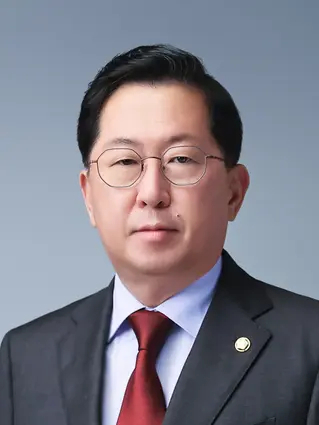
People Power Party lawmaker Yu Yong-won said Wednesday he had introduced a special bill to uncover the truth behind North Korea's wartime atrocities and restore the honor of victims and their families — ahead of the 76th anniversary of the outbreak of the Korean War. The bill concerns the mass killings at Seoul National University Hospital during the war.
According to Yu's office and historical records and testimonies compiled to date, a war crime took place at Seoul National University Hospital in Yeongeon-dong, Jongno-gu, Seoul, between June 28 and June 29, 1950 — three days after the war broke out — when North Korean troops and Korean Workers' Party members massacred approximately 1,000 South Korean wounded soldiers and civilian patients.
In the early days of the war, large numbers of South Korean wounded soldiers from battles in the Uijeongbu area and at the Miari Pass defensive line had been evacuated to Seoul National University Hospital.
At around 9 a.m. on June 28, 1950, North Korean People's Army troops attempted to enter the hospital. A South Korean Army platoon defending the facility fought to the last but was wiped out entirely. The People's Army forces, having seized the hospital, then indiscriminately shot the wounded South Korean soldiers and civilian patients inside. Medical staff were forcibly conscripted into the North Korean military and most were taken to the North, according to accounts that have emerged.
Testimony from a witness — a nursing assistant — at the scene indicates that wounded South Korean soldiers began arriving at the hospital in large numbers from June 26, that all 800 beds were full by June 27, and that patients filled not only the emergency room and operating rooms but the corridors as well. The total number of patients admitted is estimated to have exceeded 1,000.
The Truth and Reconciliation Commission also published a report in 2025 on the mass killings at Seoul National University Hospital by the North Korean People's Army, concluding that North Korean forces entered the hospital in Yeongeon-dong, Jongno-gu, Seoul, on the morning of June 28 and unlawfully killed wounded South Korean soldiers and civilian patients in two separate incidents — the first on June 28 and the second on June 29. The commission estimated the total number of victims at approximately 1,000, of whom about 330 were confirmed through its investigation.
The report identified the perpetrators as approximately 50 People's Army soldiers from North Korea's 4th Division and nine Korean Workers' Party members from Seongdong-gu whose names remain unknown. It formally urged the government to record the indiscriminate killing of wounded soldiers and civilian patients as a violation of the Geneva Conventions and an unambiguous war crime, to document North Korean forces' atrocities as established historical fact, and to secure an apology from the North Korean regime along with measures to redress the harm done.
The special bill introduced by Yu would establish, under the authority of the prime minister, a committee to investigate the true facts of the incident — including the number of victims not yet officially confirmed — and to restore the honor of victims and their bereaved families. The committee would be required to complete the collection and analysis of relevant materials within three years.
The committee would also be required to submit a final investigation report to the National Assembly within six months of completing that work. The central and local governments would be authorized to fund commemorative projects, including the construction of a memorial tower and memorial park, the establishment of an archive, and human rights and national security education programs.
"Even 76 years after the incident, a full accounting of the circumstances of the massacre and the exact number of victims has not been achieved, and the legal and institutional foundation needed to restore the honor of victims and their families has yet to be put in place," Yu said. "The special bill provides the legal basis for systematically establishing the truth of the incident and for pursuing the restoration of honor for victims and their families, as well as commemorative initiatives."
"Recording North Korea's war crimes in history and remembering the sacrifice of the patriots who gave their lives defending the Republic of Korea is our duty as people living in South Korea today," he added. "I will do everything I can to enact this special law so that it may serve as a historic starting point for passing on to future generations the values of freedom, peace and national security."
bigroot@heraldcorp.com




