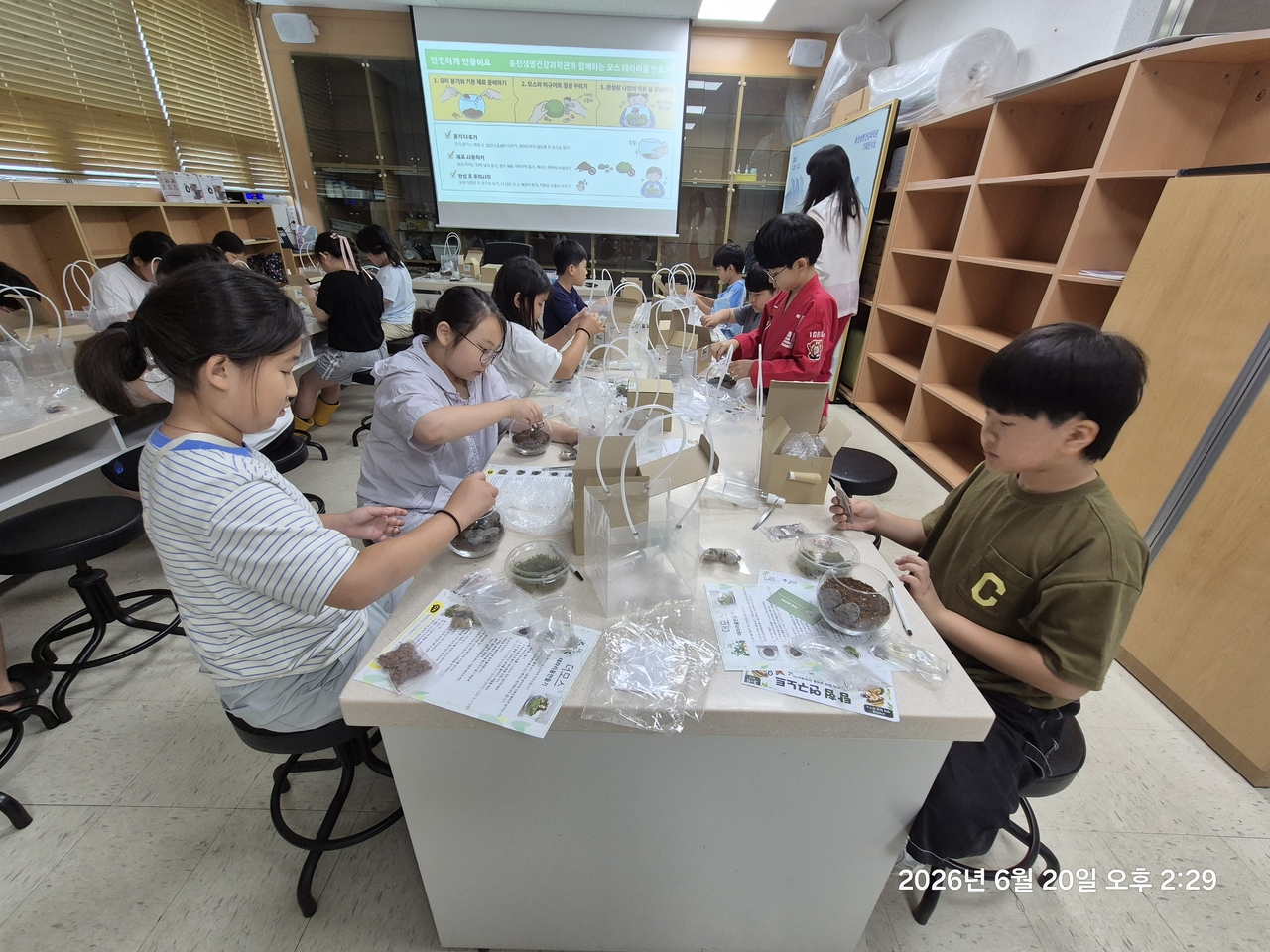
"Wow, we actually built a habitat where living things can survive."
Elementary school students in grades three through six who visited the Hongcheon Life and Health Science Museum for a hands-on field trip listened to a lecture on the basic principles of light and life science — then demonstrated remarkable talent by building their own "moss ecosystems" exactly as their teacher had instructed.
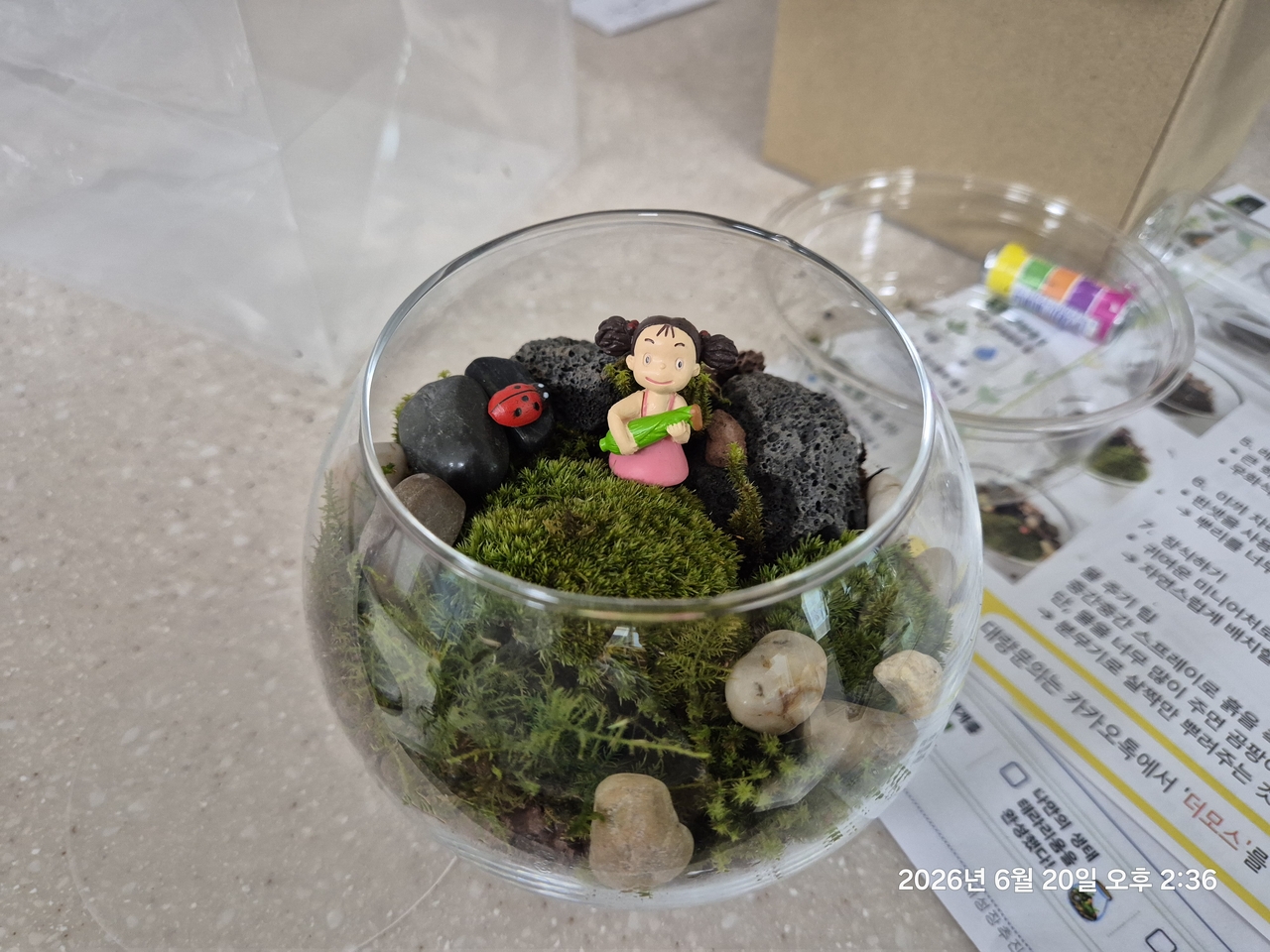
Inside small glass containers, the elements of life the children arranged gave form to nature's cycles. The mystery of the ecosystem had blossomed from the children's own hands. This science classroom in Hongcheon represented a teaching scheme — and a schema successfully executed by the children — that even kids at elementary schools affiliated with Harvard, Oxford, or the Wharton School might well envy.
Through the moss terrarium project, the children learned about ecosystem cycles and environmental conservation.
The Hongcheon Life and Health Science Museum in Hongcheon-gun held a hands-on science enrichment program called "Science Marvel Ecology Exploration Lab" for students in grades three through six on June 20.
The program was a hands-on, interdisciplinary science education course centered on light, the natural environment, and the principles of ecosystems. It was designed so students could observe and experiment directly rather than learning scientific concepts from textbooks alone.
By far the most popular activity was "moss terrarium building."
The students carefully arranged moss, volcanic rock, and soil inside transparent glass containers, each completing a one-of-a-kind miniature ecosystem of their own.
As green moss, stones, and earth came together in a palm-sized space, a tiny forest took shape, and the students absorbed lessons about the environments living things inhabit and the principles of ecosystem cycles.
By examining how moss interacts with water, light, and air, the students also reflected on the value of the natural environment and the importance of conservation.
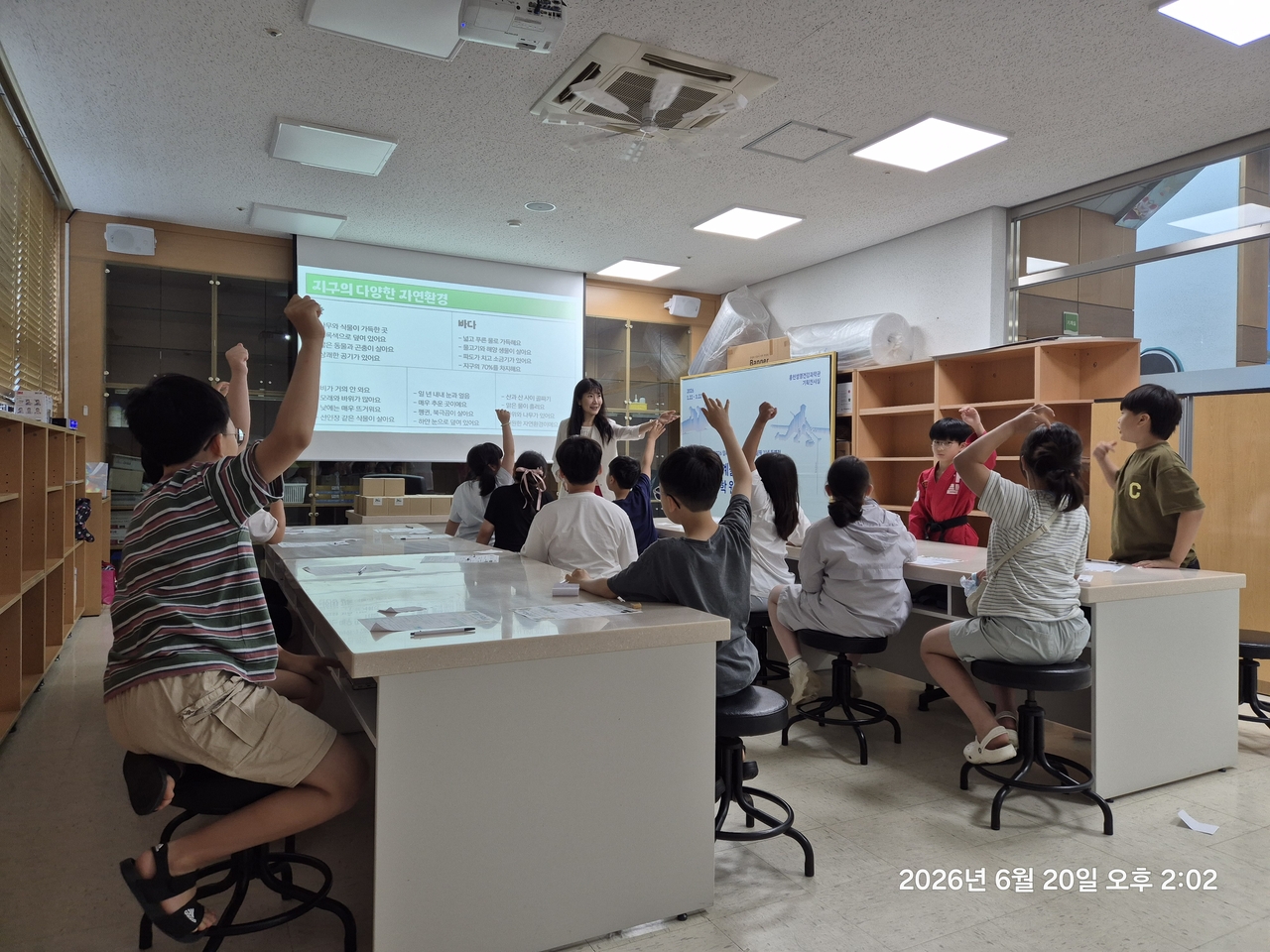
The special lecture went beyond a simple craft activity, structured so students could nurture scientific curiosity by seeing and touching nature up close. Through the terrariums they built themselves, the students learned that life and the environment are interconnected even within a tiny ecosystem, and they showed strong attention and engagement throughout.
The Hongcheon Life and Health Science Museum plans to continue running hands-on science programs that combine observation, experimentation, and building activities so students can engage with science in an accessible and enjoyable way.
"We designed the program so that students can understand science easily and enjoyably by connecting it to nature in everyday life, rather than finding it intimidating," a museum official said. "We will continue to expand hands-on science education experiences that nurture children's curiosity and creativity."
It was a scene of educational innovation, Hongcheon-style — the kind that children in Seoul, Busan, and even Daejeon, South Korea's science city, might look upon with envy.
abc@heraldcorp.com