Supply chain realignment and intensifying big pharma pipeline hunts amid US-China tensions; China's rapid rise armed with Phase 2 trial data puts K-biotech in a breathless race; AI drug development platforms evolve from promotional tools to measurable clinical success indicators
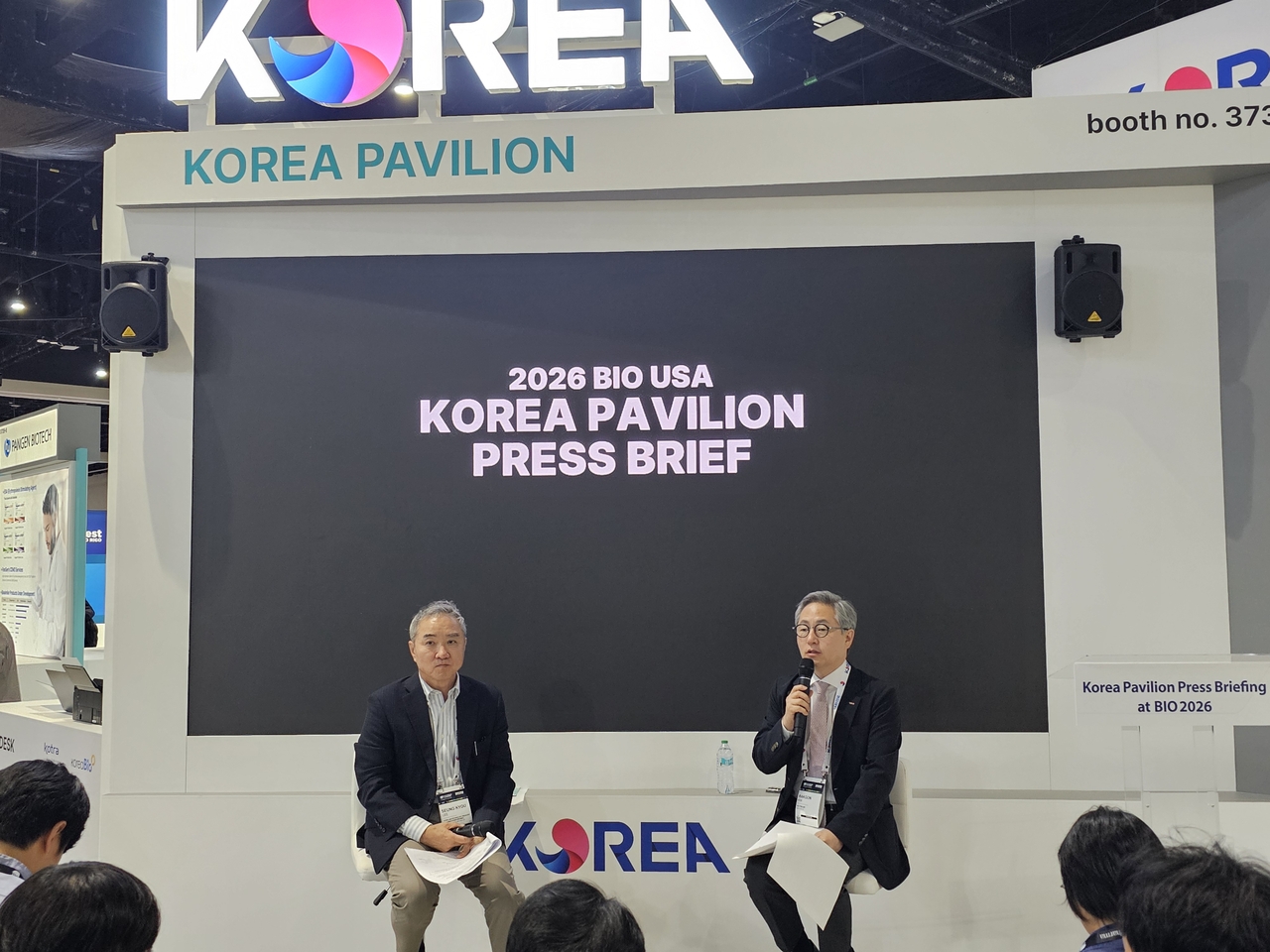
"BIO USA 2026 will be a watershed moment for the global biotech ecosystem, with three overarching themes reshaping the landscape: supply chain realignment, investment and M&A activity, and the industrialization of AI technology."
Lee Seung-gyu, vice chairman of the Korea Biotechnology Industry Organization, made the remarks Monday (local time) at a press briefing at the Korea Pavilion during the 2026 BIO International Convention — known as BIO USA — in San Diego, outlining the event's defining issues and the survival strategies Korean companies must pursue on the ground.
The first theme Lee identified is the "blockification" of global supply chains and value chains, triggered by the US Biosecure Act push and the Inflation Reduction Act. With the invisible tug-of-war between Washington and Beijing bearing directly on the entire biotech industry, how multinational pharmaceutical companies are diversifying their contract development and manufacturing operations and production processes has become a central topic of discussion.
The second theme is the rising bar in the M&A and licensing-in market as big pharma races to secure pipelines. "China's pipeline count has now reached three-quarters of the US level," Lee said, adding that Chinese biotech firms have been leveraging low costs to amass early Phase 2 proof-of-concept data and close major technology licensing deals.
South Korea, by contrast, has spent years in an investment deep freeze and remains largely stuck at the early-stage compound phase, leaving it struggling to keep pace in the global market. Lee did not mince words: "Beyond the government's large Phase 3 fund, we urgently need a robust Phase 2 support program in a matching-grant format to help ventures quickly complete their proof-of-concept work."
The third theme is the genuine industrialization of AI-driven drug development. "Until recently, AI was treated as a possibility or a corporate promotional agenda item — but starting this year, it has entered the actual field," Lee said. "We are at a turning point where it must prove its worth through measurable indicators, such as how much it improves clinical success rates and secures economic viability." He pointed to the expected contributions of domestic technology companies including Galux.
Against this backdrop of simultaneous crisis and opportunity, South Korea's biotech sector is showing its largest-ever presence at the event. A total of 79 organizations are participating through integrated pavilions — 51 companies under KOTRA's integrated Korea Pavilion and 28 under a joint pavilion organized by the Korea Health Industry Development Institute and Seoul National University. The total number of participating companies, including those with standalone booths, stands at 130 to 140, making South Korea the second most active national presence after the United States.
Particularly notable this year is the inaugural "Korea Session" in BIO USA history — an official program dedicated to the Korean biotech ecosystem that showcases the country's advanced technology capabilities beyond its reputation as a manufacturing powerhouse.
"I hope the small domestic ventures that crossed the Pacific at considerable expense will come away with more than just experience — with solid results," Lee said. "The government and industry must read the moment precisely so we do not miss this golden window, when big pharma is turning its eyes toward Asia, and particularly toward South Korea, to fill supply chain gaps."
silverpaper@heraldcorp.com