
Muan-gun watches closely as civic groups form to lobby for main office; mayor-elect backs use of all three existing buildings
A sharp regional conflict is expected to emerge over where to locate the main headquarters of the Jeonnam-Gwangju Special City, set to officially launch next month. The dispute intensified after the Ministry of Interior and Safety said the new city must have a designated main office, prompting competing campaigns among Gwangju, Muan-gun and Suncheon.
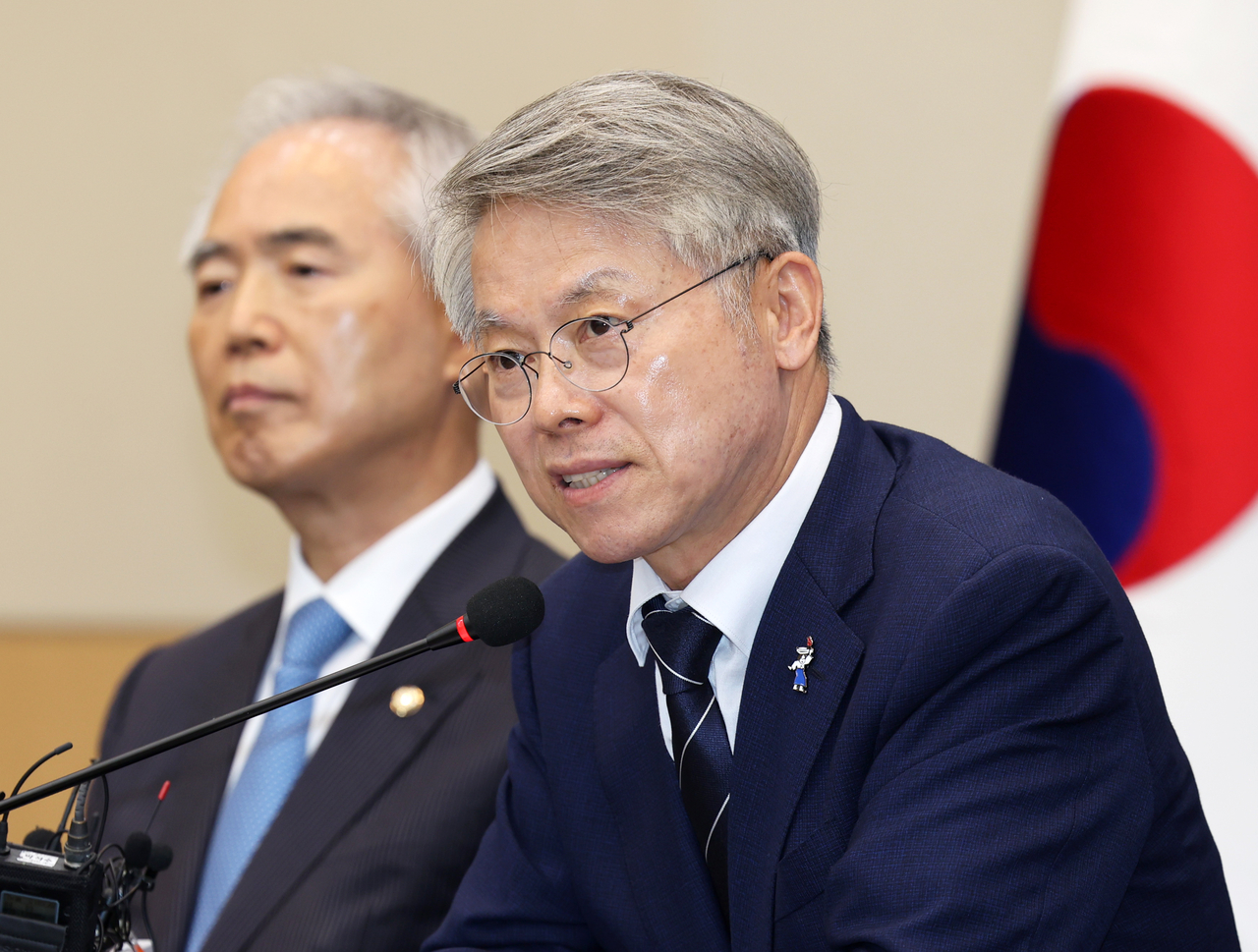
Mayor-elect Min Hyeong-bae has repeatedly said he intends to make balanced use of all three existing government buildings, but civic lobbying groups — including task forces and emergency committees — are expected to spring up across the region.
The southwestern zone centered on Muan-gun was the first to organize a formal lobbying committee. Gwangju and the eastern zone anchored by Suncheon are also pressing for a meaningful transfer of administrative functions to their areas.
Some initial confusion from the administrative merger of Gwangju and South Jeolla Province appears unavoidable. The new city faces a long list of unresolved issues, from reorganizing the civil servant workforce to redrawing administrative zones, overhauling public services and renaming roads.
In Muan-gun, a joint public-private task force — formally named the Committee to Secure the Main Headquarters in Muan — has launched and begun official activities.
Muan-gun County Chief Kim San and Park Mun-jae, chairman of the county's prosperity association, serve as co-chairs of the committee. It plans to put forward policy proposals, submit recommendations to the central government, and run public awareness and outreach campaigns.
The committee is demanding that Muan-gun be designated the official main headquarters of the Jeonnam-Gwangju Integrated Special City, rejecting the proposal to rotate operations across three buildings. It is also calling for measures to prevent a reduction in the South Jeolla Provincial Office's broad administrative functions and to protect the personnel treatment and working conditions of civil servants currently assigned there.
The committee plans to build a broader civic coalition drawing in municipalities across the southwestern zone and to formally petition Mayor-elect Min's transition team for the headquarters. The southwestern zone, home to the South Jeolla Provincial Office, is framing its case around the principle of balanced regional development.
If administrative functions become concentrated in Gwangju, the committee argues, outlying areas will hollow out and the principle of balanced regional development will be undermined.
Cities in the eastern zone — Suncheon, Yeosu and Gwangyang — contend that the main headquarters should come to them, arguing the area has long been sidelined from the administrative center. They are calling for the existing eastern branch office to be elevated to main-headquarters status and for economic and industrial departments to be concentrated there.
Gwangju, for its part, has pushed back sharply.
Civic groups in Gwangju argue the main headquarters should be located there, citing the city's brand recognition, accessibility and symbolic weight. With a population of 1.4 million making it the largest urban concentration in the new city, they emphasize efficiency and the concentration of existing infrastructure.
Their argument is that Gwangju City Hall should serve as a "control tower" housing core administrative functions — planning, budgeting and personnel management.
To minimize disruption in the early stages, Mayor-elect Min is considering running all three offices in Gwangju, Muan-gun and Suncheon in parallel for now, with rotating staff assignments under review.
sij@heraldcorp.com




