
Gwangju Mayor Kang Ki-jung, who sat out local elections, and former KHNP chief Jeong Jae-hoon seen as leading candidates; executive recommendation committee to be formed Tuesday
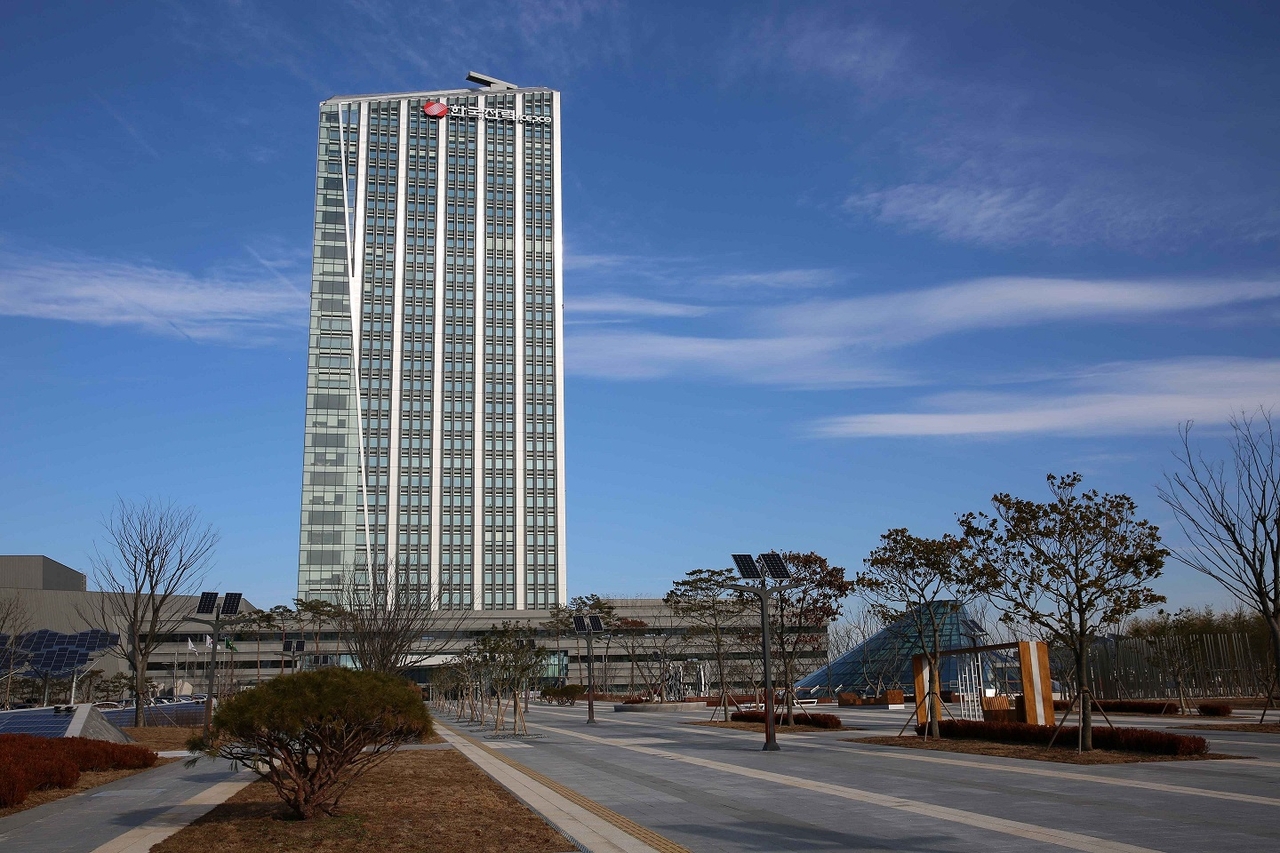
The formal process to select a successor to Korea Electric Power Corp. President Kim Dong-chul is set to begin in earnest this week, with about three months remaining in his term.
The leading candidates are Gwangju Mayor Kang Ki-jung, who did not run in the June 3 local elections, and Jeong Jae-hoon, the former president of Korea Hydro & Nuclear Power who led the state-run nuclear operator when the Moon Jae-in administration ordered the early shutdown of the Wolsong Unit 1 reactor.
According to the power industry, KEPCO plans to form an executive recommendation committee on Tuesday to begin the presidential selection process.
Kim Dong-chul, appointed in September 2023 under the Yoon Suk Yeol administration, is set to complete his three-year term on Sept. 19. The search for his successor is launching roughly three months before that date.
Under the Act on the Management of Public Institutions, public institutions are required to form an executive recommendation committee at least two months before the incumbent chief's term expires.
Typically, KEPCO decides whether to renew the sitting president's term before initiating a successor search — but that step is being skipped this time, prompting speculation that a candidate has already been chosen behind the scenes.
The appointment process follows a set sequence: the executive recommendation committee is formed, candidates are publicly recruited, the Ministry of Economy and Finance's Public Institution Management Committee reviews the shortlist, the board of directors votes, the minister of the supervising ministry recommends a candidate, and the president makes the final appointment.
For this search, KEPCO will form the committee, issue a public recruitment notice, conduct interviews and select a final candidate. That candidate will then go through review by the Ministry of Planning and Budget's Public Institution Management Committee, a board vote, a recommendation by the Minister of Climate, Environment and Energy, and final appointment by the president.
One notable change in this cycle is that the supervising ministry has shifted from the Ministry of Trade, Industry and Energy to the Ministry of Climate, Environment and Energy following a government reorganization. If Minister Kim Sung-hwan retains his post in an upcoming Cabinet reshuffle, the minister — a National Assembly lawmaker from Yeosu, South Jeolla Province — would oversee the KEPCO recruitment process.
Industry insiders widely view the public recruitment as a formality, with the government effectively pre-selecting a candidate before the process begins. Appointments to heads of public institutions tend to be driven by political considerations, with the ruling party frequently installing political allies or current and former officials from the supervising ministry as a reward following elections.
Kim Dong-chul became the first politician to lead KEPCO when he took office in September 2023, 62 years after the company was incorporated as a joint-stock company in 1961. At the time, some in the industry questioned whether he had the expertise to run the country's largest energy public enterprise, given his limited background in the energy sector.
Since Kim took office, however, stabilizing international oil prices have eased fuel cost burdens, and KEPCO has posted 11 consecutive quarters of profit — turning a profit in the third quarter of 2023 and sustaining that trend through the first quarter of this year.
Since a nationwide blackout during the Lee Myung-bak administration, KEPCO presidents before Kim had consistently come from the bureaucratic ranks at the vice minister level of the industry ministry, including Cho Hwan-ik, Kim Jong-gap and Jeong Seung-il. The successor search is therefore shaping up as a contest between political figures from the Honam region and candidates with a bureaucratic background.
oskymoon@heraldcorp.com



