Magma GT and GT3 concepts unveiled at Le Mans
Cheers erupt across reveal venue
X Gran Convertible joins driver parade
Brand takes aim at German premium rivals
Mass production still hinges on market response
![The Magma GT Concept unveiled by Genesis at the 24 Hours of Le Mans. The two-seat luxury grand tourer concept embodies the direction of Genesis's high-performance Magma brand. [Genesis]](https://wimg.heraldcorp.com/news/cms/2026/06/13/news-p.v1.20260612.db320e085b5143f5aa51a2a274cfa908_P1.jpg)
Genesis laid out its vision for a sports car at Le Mans, France, signaling that the luxury brand is ready to push into motorsport and high-performance vehicles and take on the world's top premium names.
The brand unveiled the Magma GT Concept and Magma GT3 Concept on Friday at the Genesis Hospitality suite inside Circuit de la Sarthe. Cheers broke out across the venue as the two vehicles were revealed. Some attendees said they would buy one without hesitation if it ever reached production.
Both vehicles remain at the concept stage, and mass production and sales are still some way off. The reaction on the day made clear, however, that Genesis has real potential in the sports car segment.
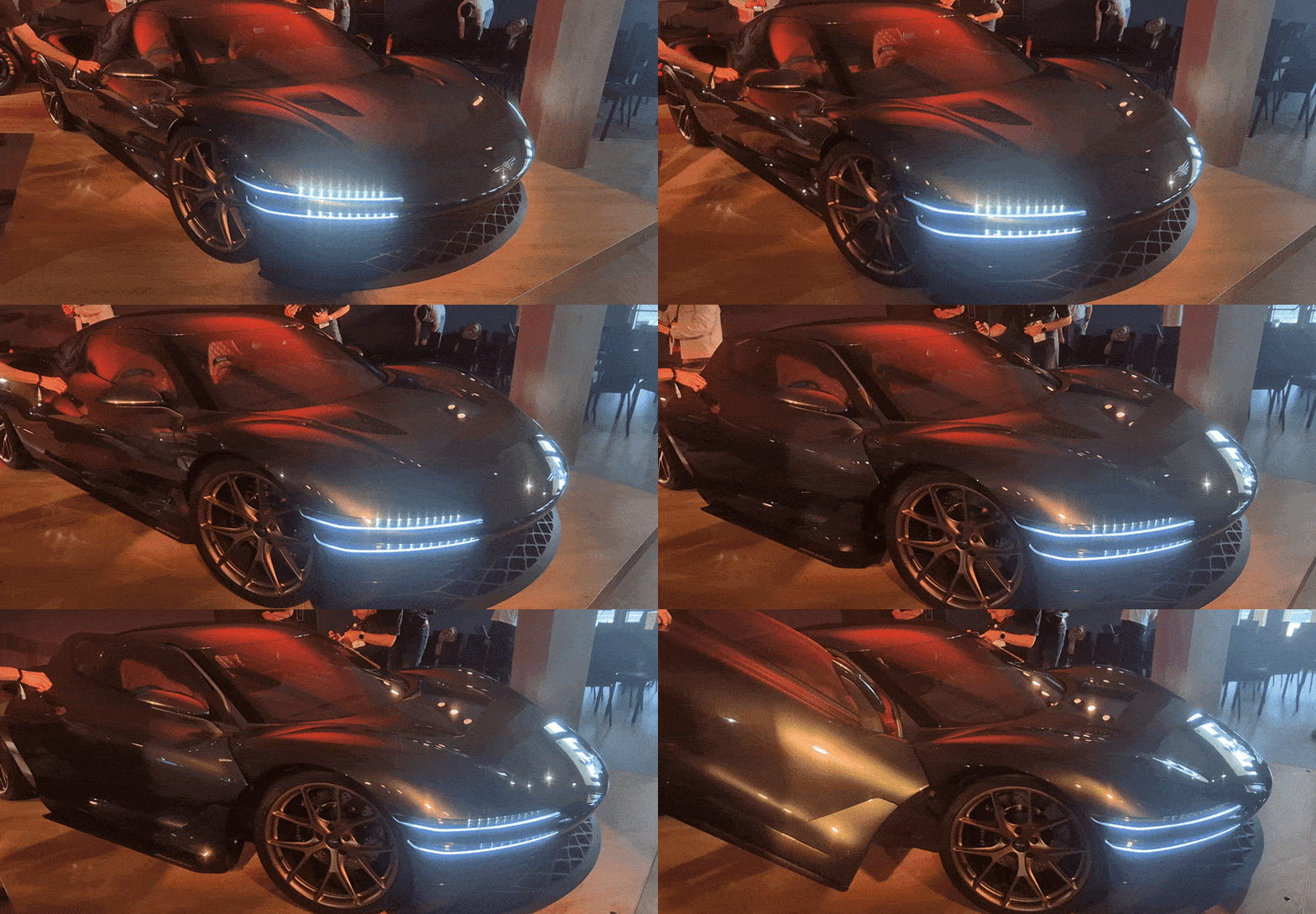
Elegance intact: Genesis defines its take on the luxury sports car
The Magma GT Concept is Genesis's vision of a two-seat luxury sports car — one that balances the relaxed character suited to long-distance driving with the dynamism of a high-performance machine. The exterior was first shown last year; Le Mans marked the global debut of the interior design.
A driver-focused twin-cockpit layout, analog gauges and physical controls emphasize a direct, tactile connection between driver and vehicle. On the outside, a low front end, slim twin-line lamps, generously flared fenders and air intakes running toward the rear announce its performance intent. A deep green metallic finish shifts toward gold under different lighting, lending the car a luxury sensibility, while red rear lamps and a diffuser sharpen the sports car tension.
![The Magma GT3 Concept, making its world premiere at the 24 Hours of Le Mans. The race car concept was designed with GT3 technical regulations in mind. [Genesis]](https://wimg.heraldcorp.com/news/cms/2026/06/13/news-p.v1.20260612.18aad50c4edd42799982d2034363d0a5_P1.jpg)
GT3: a beast built for the circuit
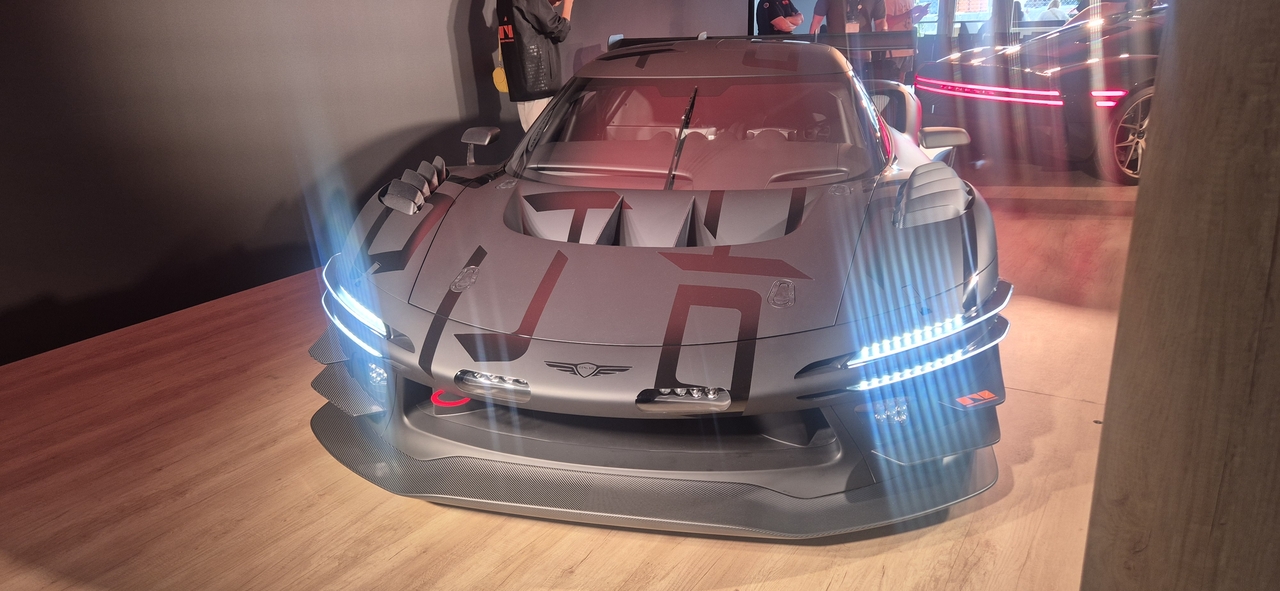
The Magma GT3 Concept takes the same design language and pushes it to an extreme suited to racing. Developed as an independent concept with GT3 technical regulations in mind, it signals that Genesis has its sights set on customer racing and a broader high-performance ecosystem.
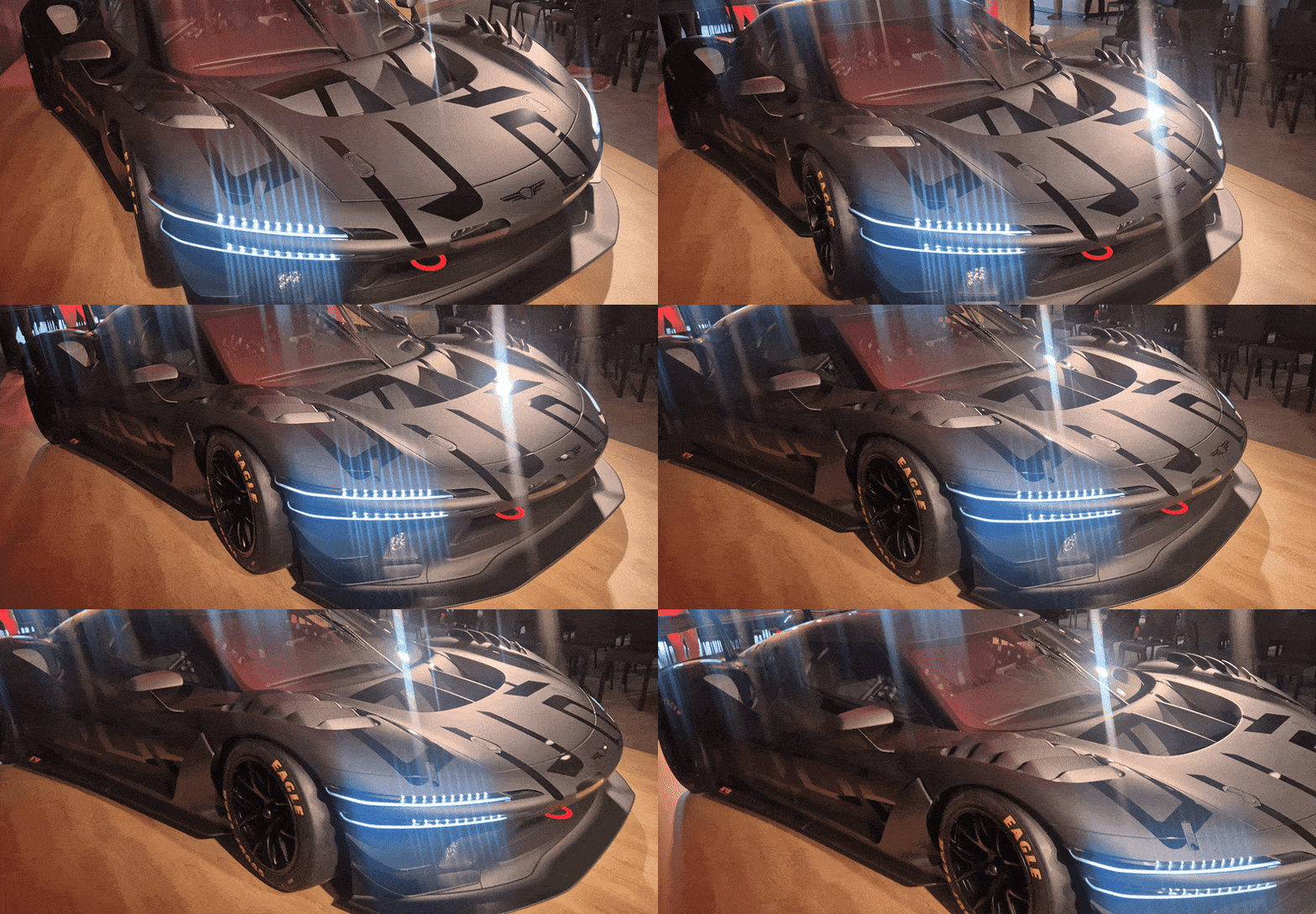
The GT3 sits lower and wider than the GT, with dramatically flared fenders, a large front splitter, intake and exhaust ducts, a fixed rear wing and a substantial diffuser — all working together to maximize aerodynamic performance, cooling efficiency and high-speed stability. The twin-line lamps carry over from the GT, but the overall impression is far sharper and more aggressive. Where the Magma GT is an elegant sports car for the road, the GT3 Concept is closer to a circuit beast with every element reconfigured for performance and efficiency.
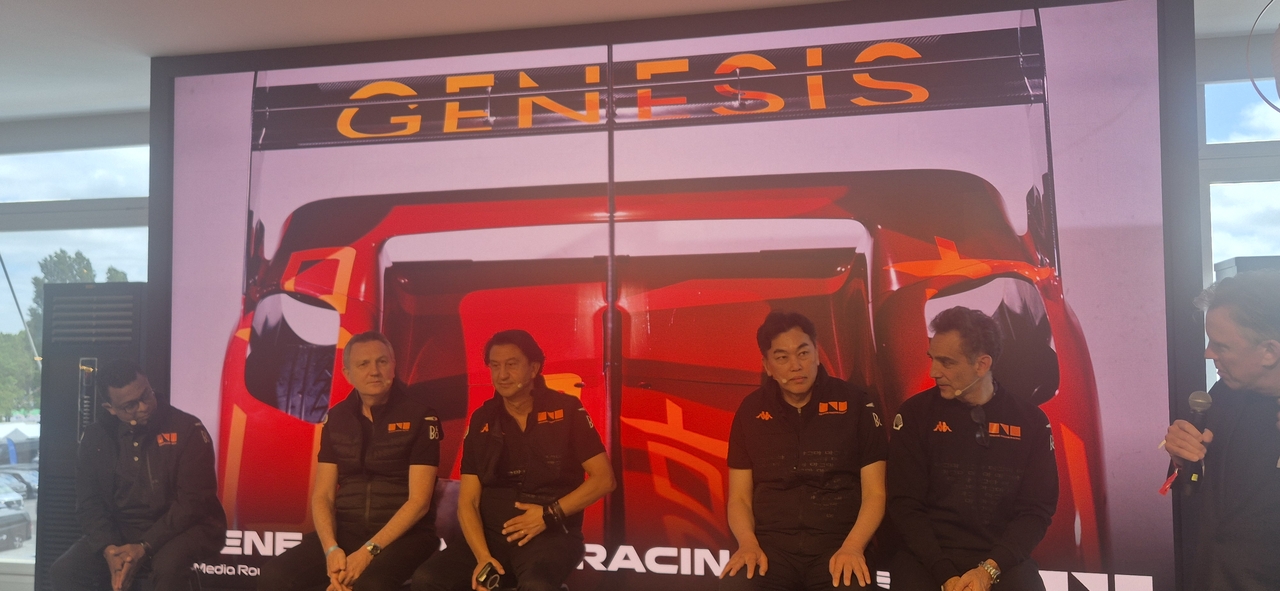
Luc Donckerwolke, chief design officer and chief creative officer of Hyundai Motor Group, described the two models as "beauty and the beast" — the Magma GT leading with Genesis's characteristic elegant lines and emotional proportions, the GT3 Concept transforming those qualities into something aggressively race-ready.
Mass production hinges on market response; brand vows to compete without discounts
Jose Munoz, president and CEO of Hyundai Motor Co., said the company has confirmed the scientific and technical feasibility of producing the Magma GT and GT3 and is now examining financial viability. He added that the GT3 Concept sets the direction for developing the GT, and that the development path will be shaped by market and customer response.
Munoz also expressed confidence on pricing. He said Genesis wants to remain competitive without offering discounts, and that the brand views Mercedes-Benz, BMW and Audi as direct rivals in the North American market and will strive to match them. "Selling alone is easy, but selling profitably is harder," he said. "Maintaining sound business fundamentals is what matters."
![The Genesis X Gran Convertible Concept in Midnight Teal. The concept applies a subdued teal finish and tartan-patterned materials to emphasize an elegant sensibility. [Genesis]](https://wimg.heraldcorp.com/news/cms/2026/06/13/news-p.v1.20260612.4e254706a0bc4f2cb82f578023708401_P1.jpg)
Convertible joins Le Mans stage, extending the luxury vision
Genesis used Le Mans for more than a concept car reveal. Two Genesis X Gran Convertible Concepts appeared in the driver parade held in the city of Le Mans — an architecture study based on the G90 infused with Magma design sensibility, presenting racing energy and Genesis-style luxury side by side.
The Liquid Titanium model featured an exterior inspired by Magma Racing and an orange-toned interior to project a dynamic character, while the Midnight Teal model conveyed a more restrained luxury through its calm color palette and premium materials. Both vehicles were driven by Genesis brand ambassador and racing advisor Jacky Ickx and reserve driver Jamie Chadwick.
Le Mans as proving ground: 'Finishing the race is the first goal'
Genesis's high-performance strategy is directly tied to its 24 Hours of Le Mans campaign. Genesis Magma Racing entered the world endurance racing stage with the GMR-001 hypercar. Munoz said Le Mans is not a contest for the fastest single lap but for the car that runs the longest and most reliably over 24 hours, calling it "a vital opportunity to learn about quality, durability, reliability and safety."
Cyril Abiteboul, CEO of Hyundai Motorsport and general director of Genesis Magma Racing, said finishing the race is a clear goal at the 24 Hours of Le Mans, noting that all first-time entrants have faced difficulties. "Building up the standings steadily, grounded in stability and focus, is what matters," he said. He also said the team could explore entering the IMSA series — North America's premier endurance racing championship — under the same vehicle regulations in the future.
![The Genesis Magma Racing GMR-001 hypercar wearing a special livery unveiled ahead of its Le Mans debut. The design features a gradient running from Magma Orange to deep red, with hangul lettering spelling out "Magma." [Genesis Magma Racing]](https://wimg.heraldcorp.com/news/cms/2026/06/13/news-p.v1.20260602.61ee7db31d414f579e42766acb913e6f_P1.jpg)
The commercial impact of motorsport also drew attention. Abiteboul said motorsport can influence brand awareness, brand preference and ultimately pricing power, but stressed that the team must deliver strong results on track to achieve that.
Interest at home is growing quickly as well. Lee Si-hyuk, executive vice president and head of the Genesis Division, said Genesis's WEC participation — which began at Imola and Spa-Francorchamps — has significantly expanded attention to motorsport in South Korea, adding that it has been particularly meaningful to begin connecting with younger consumers.
kwater@heraldcorp.com