Munoz says no immediate plans for European production; demand must come first
Hybrids to enter Europe next year as dealer and service networks expand
Domestic slump blamed on 2.5-turbo supply disruption; HEV demand to drive second-half recovery
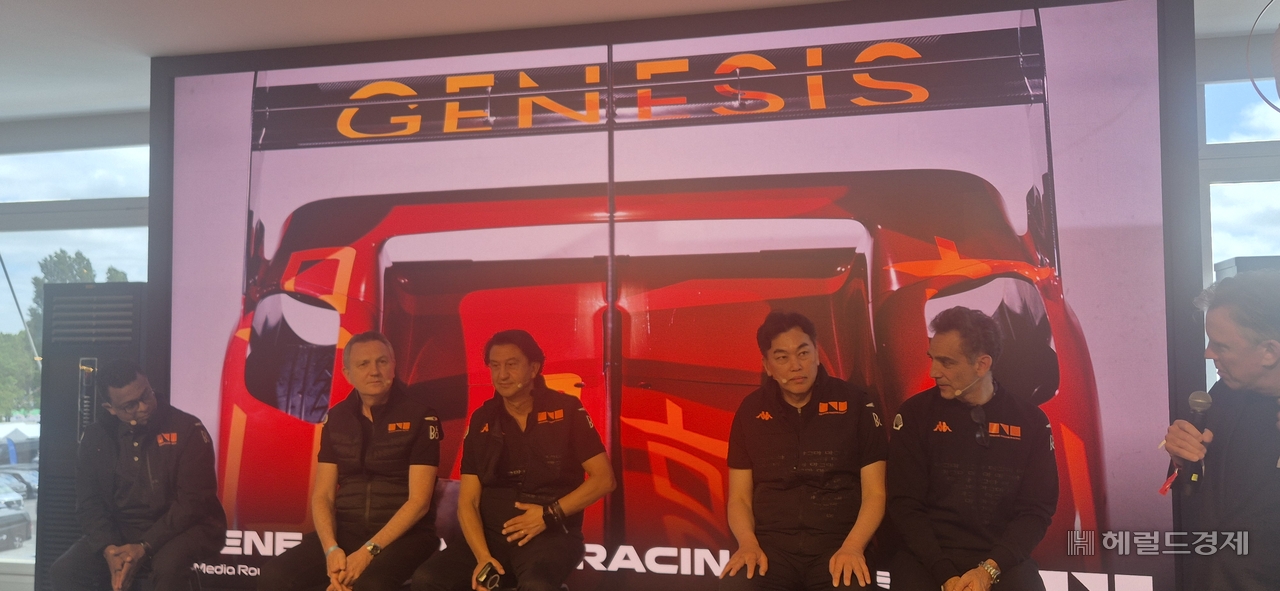
Genesis, the luxury brand of Hyundai Motor Group, is putting hybrids at the center of its strategy to revive sales in both Europe and South Korea. In Europe, the brand plans to move beyond its electric-vehicle-focused approach and diversify its powertrain lineup, while at home it aims to make up for a fire-related sales slump with hybrid demand in the second half of the year.
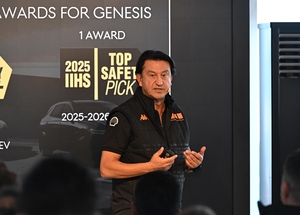
Jose Munoz, president of Hyundai Motor Co., said at a Genesis media round table held Friday at the Circuit de la Sarthe in Le Mans, France, that bringing the latest technology European customers want — particularly hybrids — to market is a priority. "Hybrids are set to be available next year, and we are building out our sales channels with key dealer partners," he said.
However, when asked about the possibility of local production in Europe, Munoz said there are currently no such plans. "We always take a step-by-step approach," he said.
Most Genesis vehicles sold in Europe are currently produced in South Korea and exported. In the United States, by contrast, some models including the GV70 are built at the Alabama factory and sold locally.
Munoz's remarks suggest Genesis intends to grow its sales volume in Europe first before considering localization. The brand sold 2,476 vehicles in Europe last year — roughly 3 percent of its US sales of 82,331 units over the same period. Genesis aims to raise that figure to more than 12,000 units by 2030, about five times the current level.
To that end, Genesis plans to expand its European presence to 11 countries next year, establish more than 50 dedicated sales outlets and over 200 service centers, and roll out powertrain options — including hybrids — tailored to local demand.
Munoz was cautious when asked about the possibility of using the Czech factory for Genesis production. "The Czech plant is one of the best factories we have in the world," he said, adding that it is currently running at full capacity with every market wanting its maximum output. "We need to keep reviewing how we can make the best use of that factory," he said.
Pointing to the GV70's production at the Alabama plant as a model, Munoz said Genesis could consider localizing production in Europe as well. "Once we confirm the demand we want, we can consider localization — just as we have done successfully in the United States," he said.

'A market we cannot give up': Genesis shifts from EV-only to diversified lineup in Europe
Genesis is overhauling both its sales channel strategy and its powertrain approach in Europe. Where the brand previously targeted the European market primarily with electric vehicles, it will now broaden its options to include hybrids and extended-range electric vehicles to match regional demand.
Lee Si-hyuk, executive vice president and head of the Genesis Business Division, called Europe "an extremely important market that Genesis absolutely cannot give up," and said the brand expects to grow sales substantially by working with dealer partners who have established sales channels across the region.
"We are supplying EVs to Europe, but we plan to offer powertrain options such as hybrids and EREVs that meet the diverse needs of European customers," Lee said, adding that having the right powertrain and the right sales channels would allow Genesis to hit its targets even in a challenging market.

Domestic slump: 2.5-turbo supply disruption cited; second-half HEV demand awaited
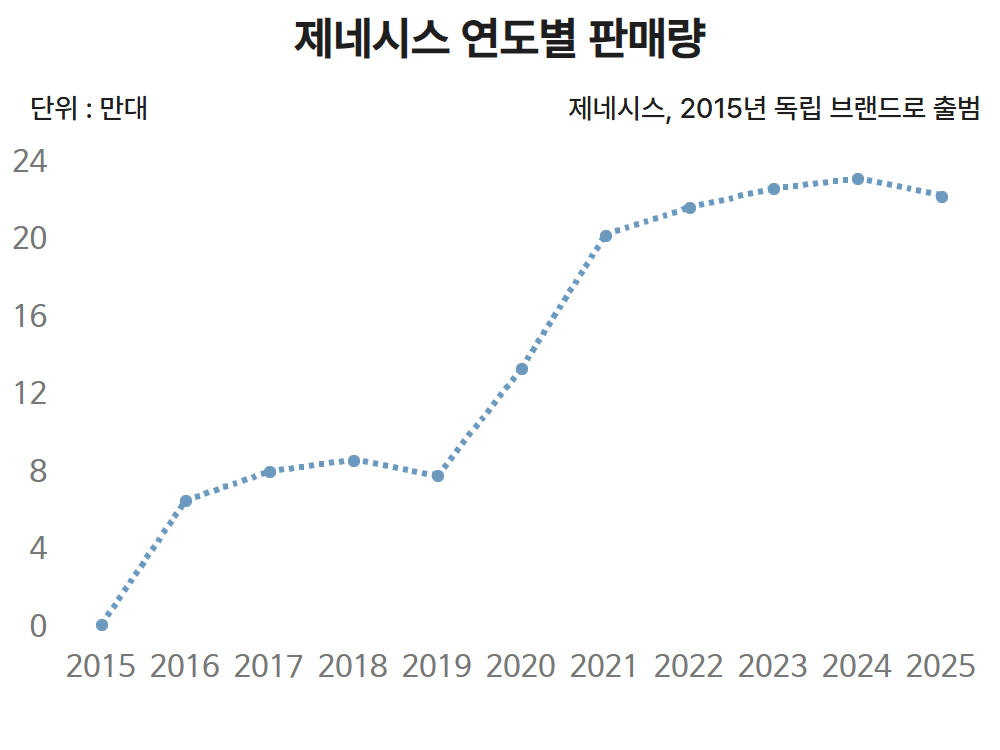
Genesis is also counting on hybrids to reverse a sales decline in South Korea. Domestic sales from January through April this year totaled 32,927 units, down 20 percent from the same period last year. A fire at parts supplier Anhyeon Industrial in April compounded the drop by disrupting production.
"The unfortunate incident left us short on engine supply, dealing a heavy blow to Genesis production in April and May," Lee said. "Most Genesis vehicles sold domestically use the 2.5-turbo engine, and production of that engine was halted for about a month and a half — it inevitably affected our overall domestic sales."
Genesis plans to rebuild momentum in the domestic market through hybrid demand in the second half of the year. "We know there are customers waiting for the hybrids scheduled for the second half," Lee said. "We are currently focused on perfecting the hybrid and delivering the best possible product quality."
"We will do our best to maintain strong momentum in the domestic market through the second half and into next year," he added.
Genesis plans to roll out hybrid variants of the G80 and GV80 in the second half of this year, followed by a GV70 hybrid next year.
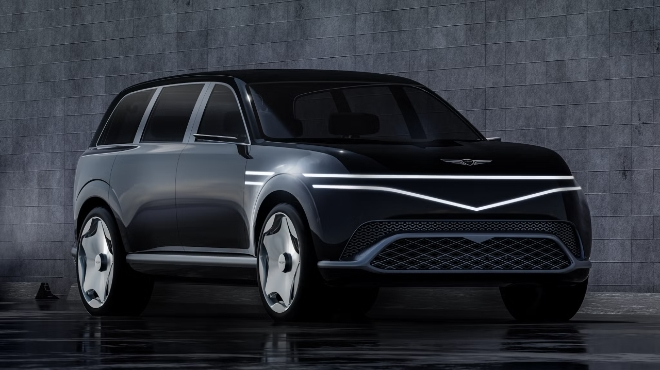
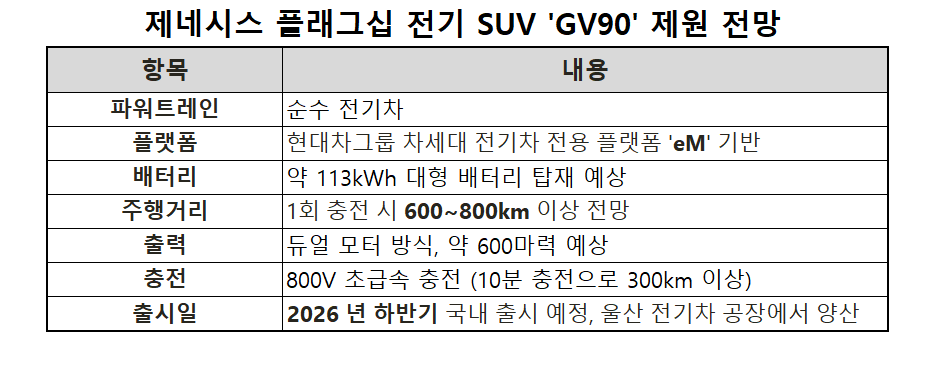
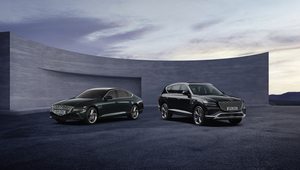
The brand's first large electric SUV, the GV90, is also set to be unveiled in the second half of the year. Positioned as Genesis's next-generation flagship, the GV90 will compete against global luxury brands such as BMW and Mercedes-Benz, differentiating itself through interior space and design.
"We are putting the finishing touches on the GV90 to ensure perfect product quality and the highest level of customer satisfaction," Lee said. "In terms of spatial experience and design language, it will be a fresh and competitive model compared to anything that has come before it."
Genesis is also accelerating its shift toward autonomous driving and electrification platforms. Hyundai Motor plans to equip the upcoming facelift of the Genesis G90, due out this year, with Level 2+ highway driving assist and memory parking assist features. Next year, a next-generation software-defined vehicle platform will expand highway autonomous driving capabilities. From 2028, the brand will begin introducing Level 2++ technology capable of autonomous driving on both highways and in urban areas.
In total, Genesis plans to launch eight new and derivative models by next year and introduce 22 new and enhanced models in the North American market by 2030, strengthening its electrification portfolio.
Magma Racing as brand builder: 'Expanding touchpoints with younger audiences'
Genesis is also using its participation in the 24 Hours of Le Mans and the FIA World Endurance Championship to raise brand awareness. The brand describes its motorsport involvement not as a standalone activity but as a strategic effort to strengthen its foothold in the European market and connect with younger consumers.
"I believe Genesis's WEC participation, which began at Imola and Spa, has significantly expanded consumer interest in motorsport in South Korea — and we are feeling that firsthand," Lee said.
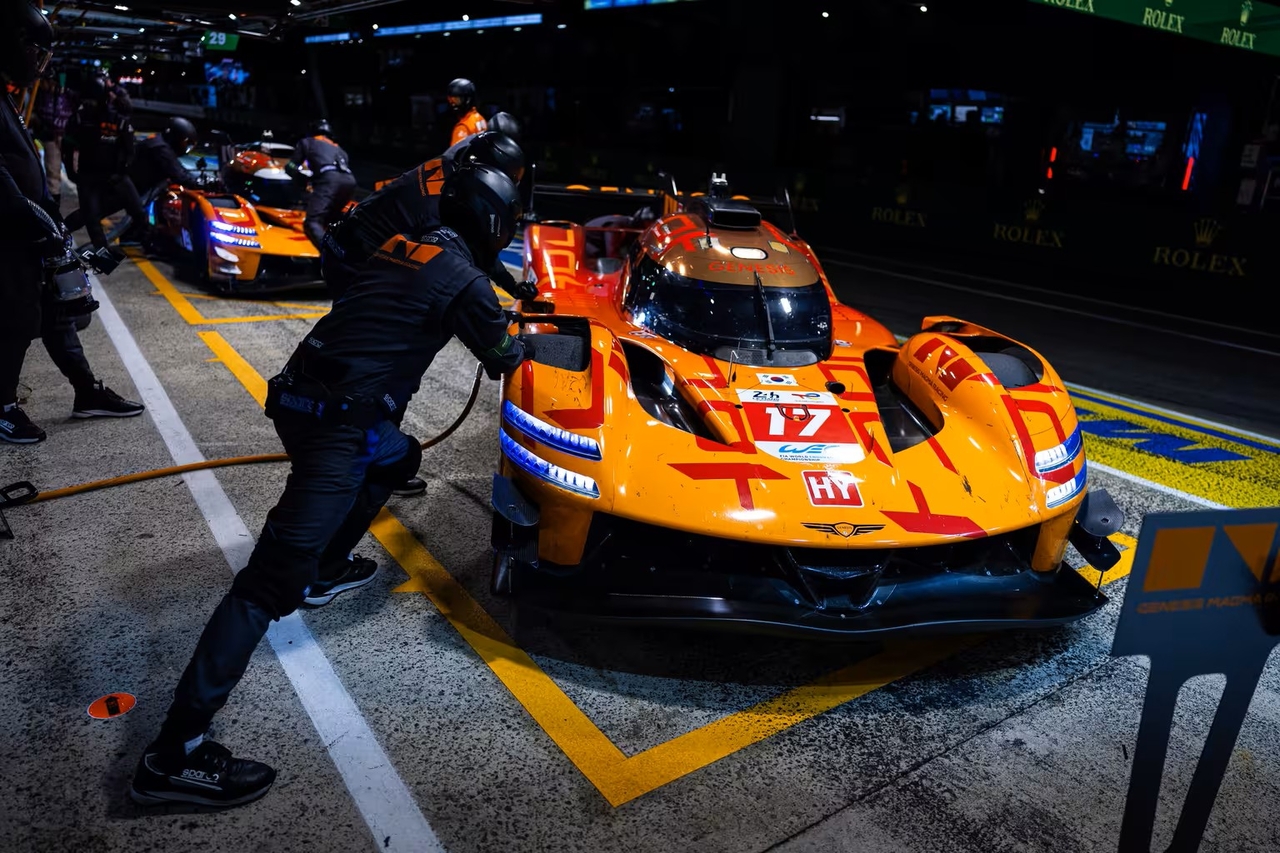
"The audience watching WEC broadcasts skews significantly younger than usual, and engagement is high," Lee said. "We are also seeing more new visitors coming to Genesis's channels."
Genesis plans to pursue hybrid rollouts, European sales network expansion and brand-building through Magma Racing simultaneously as it works to strengthen its position in the global premium market.
kwater@heraldcorp.com