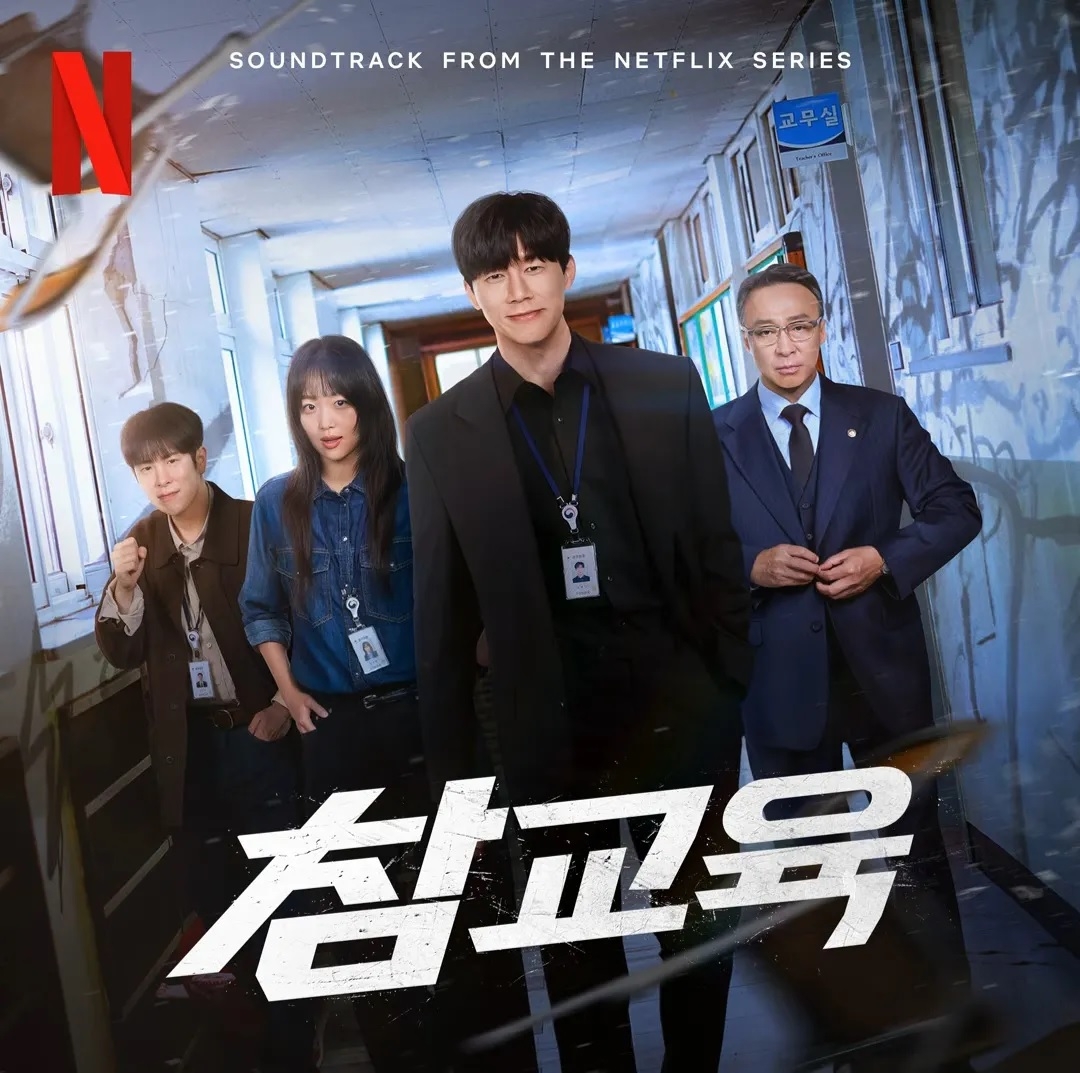
Netflix drama series "Teach You a Lesson" has become a global hit, topping the streaming platform's worldwide TV show rankings.
According to FlixPatrol, a global OTT ranking tracker, "Teach You a Lesson" ranked No. 1 among Netflix TV shows worldwide on Friday.
The series claimed the top spot in Netflix's daily Top 10 in 45 countries, spanning South Korea, Asian nations including India, Japan and Bangladesh, South American countries including Brazil, and Middle Eastern markets including Qatar, Lebanon and Turkey. The show accumulated a total score of 795 points to secure the No. 1 position on Netflix's global TV chart.
Released June 5, "Teach You a Lesson" follows a fictional government agency called the Teacher Rights Protection Bureau, established to restore order to a crumbling school system.
The series centers on the bureau's agents meting out punishment — including corporal and even more extreme forms of violence — to problem students who bully classmates or commit crimes, parents who engage in gapjil toward teachers, and educators involved in misconduct. The show has resonated widely amid a broad social consensus in Korea over the collapse of public education, with many viewers describing it as deeply satisfying. Online commenters have suggested that the drama's themes of eroding teacher authority and a broken school system resonate with audiences abroad as well.
Yet even as the show draws large audiences, critics have raised persistent concerns about its quality and the messages it conveys. The fictional Teacher Rights Protection Bureau operates as a government agency under the Ministry of Education, but acts with extralegal authority — dispensing violence and punishment against problem students and abusive parents without any established legal process. In reality, such powers would be distributed across investigation, trial and sentencing, with deliberation and checks in place; in the drama, punishment is handed down by the unilateral judgment of bureau agents. Critics argue the show fails to accurately reflect reality and opts to resolve complex issues through simple violence rather than engaging seriously with the controversies it raises.
The series is based on a webtoon of the same name, which itself drew criticism for racism, misogyny and excessive violence, and was even pulled from serialization overseas. In Korea, a teachers' organization staged a protest against the production, and actor Kim Nam-gil, who had been considered for the lead role, ultimately turned it down.
paq@heraldcorp.com