Ulsan plant output to be cut to 200,000 units; production to pivot toward hybrids and EVs as union pushes back against outsourcing
Hyundai Motor Co. is moving to reduce transmission production at its Ulsan factory, redistributing a portion of internal combustion engine transmission output to an affiliate while refocusing the plant on mass production of hybrid and electric vehicles. The plan has drawn fierce opposition from the union, which warns the shift could hollow out jobs over the long term, turning the outsourcing dispute into a fresh flashpoint in labor-management relations.
According to industry sources and the union, Hyundai Motor is discussing at its employment stability committee a plan to cut transmission output at the Ulsan Engine Transmission Division from 360,000 units to roughly 200,000 — a reduction of about 45%. The company would wind down some lines that produce internal combustion engine transmissions to adjust overall production capacity.
Management argues that in-house production of internal combustion engine transmissions for slower-selling models should be reduced through outsourcing, and that production efficiency must be improved to meet rising demand for hybrid vehicles. The company says the need to reallocate transmission volumes has grown because a dedicated EV factory completed at the end of last year is set to begin full operation in September, and because demand for hybrid models — including the new Grandeur produced at the Asan plant — is increasing.
Hyundai Motor had already ended domestic production of the Kappa engine, a small gasoline unit fitted to models including the Venue and Casper, in 2024, transferring that output to affiliate Hyundai Wia and other suppliers.
The union has pushed back sharply, saying the plan amounts to gutting the most productive machining lines and slashing production capacity in half — moves it describes as "killing the shop floor." Workers on some lines have gone so far as to refuse overtime shifts in protest.
At the heart of the dispute is which entity will absorb the volumes being taken away from Ulsan. According to industry sources, Hyundai Motor is reviewing a plan to expand production at Hyundai Transys — the Hyundai Motor Group parts affiliate — to 400,000 units to offset the reduction in its own output.
Hyundai Transys has in fact been scaling up its hybrid-related production capacity to keep pace with rising demand. Late last year, labor and management at Hyundai Transys agreed to build a new line to increase output of front-wheel-drive P1 motors as part of the company's electrification transition. The new line is planned for the Seongnyeon factory in Seosan, South Chungcheong Province.
To soften union resistance, Hyundai Motor is also reportedly in talks to allocate a portion of TMED-II transmission output for the Palisade hybrid — a flagship SUV with steady demand — to the Ulsan Engine Transmission Division. The company is expected to convey to the union that this allocation could help secure future work for the division, given that TMED-II units will also be used in the new Tucson and Genesis GV80 hybrid models due for release in the second half of this year.
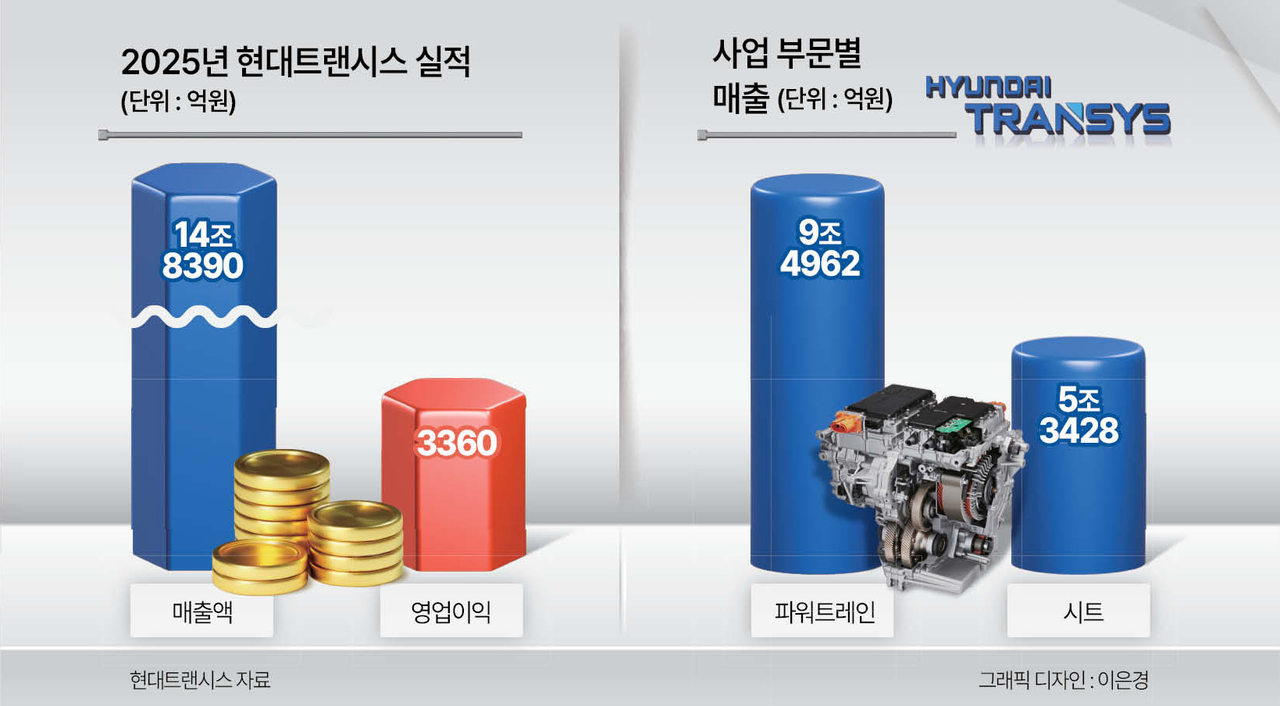
Currently, all TMED-II units for the Palisade hybrid are produced at Hyundai Transys' Seosan factory and supplied to Hyundai Motor. Hybrid drivetrain components are considered a high-value product category requiring advanced technology and facing rapidly growing demand. Riding that wave, Hyundai Transys posted sales of 14.8 trillion won (approximately $9.69 billion) last year, up 16.5 percent from the previous year, while operating profit surged 327 percent to 336 billion won — both records since the company's founding. In the first quarter of this year, sales rose 5 percent year-on-year to 3.8072 trillion won.
The union's sensitivity stems from its view that the transmission volume adjustment is not simply a matter of production efficiency but is directly tied to future employment. With the shift to electric vehicles proceeding more slowly than expected, hybrid vehicles — including their transmissions and drivetrain components — have emerged as a key profit driver for automakers.
Hyundai Motor sold 637,000 hybrid vehicles in global markets last year, and that figure is forecast to grow to about 771,000 this year — roughly 21 percent of the company's total projected sales of approximately 4.15 million vehicles. Of those, an estimated 430,000 hybrid units are expected to be produced domestically, a scale that could intensify the standoff between labor and management over who makes the related components.
The tension is not new: in both 2022 and 2024, partial strikes by the Hyundai Transys union caused supply disruptions, prompting Hyundai Motor's union to argue for keeping transmission production in-house.
"Transmissions we make ourselves should be going into the Palisade and every other model," a union official said. "Instead, even the volumes we have left are being pushed outside."
"Hybrid vehicles have become the key model defending automakers' profitability amid the EV demand slump," an industry official said. "As Hyundai Motor expands overseas production while also moving to concentrate parts volumes within its affiliates, the sense of crisis on the domestic shop floor is growing." By Jeong Gyeong-su
kwater@heraldcorp.com