Internal fractures deepen as work-to-rule campaign drags on, costing shift workers up to 1.5 million won a month; union's historic first strike squandered; bylaws revision seen as bid to concentrate fiscal power in leadership hands; negotiations set to resume next week
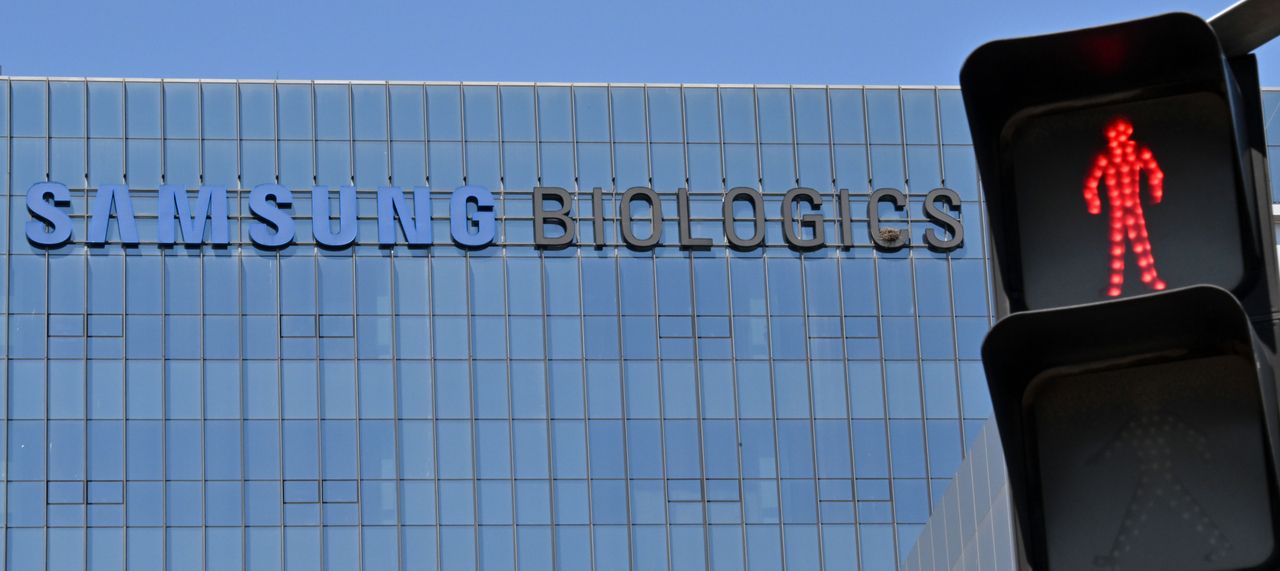
The Samsung Biologics union is losing momentum fast, and internal fractures have reached a critical point. Unlike the Samsung Electronics union, which secured a wage agreement before resorting to a strike, the Samsung Biologics union has already burned through its first-ever strike action without meaningful results — leaving it with no further leverage to pressure management.
The leadership's insistence on demands that go well beyond wages — including veto power over personnel decisions and outsourcing contracts — has pushed negotiations into a near-total deadlock. Rank-and-file members are increasingly gripped by fears of pay cuts and job insecurity, and backlash against the leadership is growing rapidly.
After more than a month of work-to-rule, participating members see monthly pay fall by 1 million to 1.5 million won (about $982)
The financial cost of the labor action has become an immediate reality. As payday approached, employees who had taken part in the dispute flooded the company with inquiries about the size of their pay reductions. Samsung Biologics proactively sent individual payslip previews through its internal system so workers could see the figures before payment arrived.
Those who participated in the strike and work-to-rule campaign will receive this month's wages with basic pay docked in proportion to hours on strike under the no-work, no-pay principle — and with all overtime, night-shift and holiday allowances stripped out for the period they refused such work. Because biopharmaceutical production runs around the clock and shift and overtime pay make up a large share of total compensation, affected employees are estimated to have lost up to 1.5 million won this month, though the exact amount varies by individual.
The mood on anonymous workplace forums has turned icy. One union member wrote that while they had known the no-work, no-pay rule applied, they had not expected the deductions to be so steep for just a few days on strike. "Nine hundred thousand won gone just from the strike attendance record, and because I didn't do overtime and weekend shifts like usual, my pretax pay is about 1.2 million won less than last month," the member wrote, sharing specific figures. Distrust of the leadership's unilateral approach is spreading rapidly, particularly among younger employees who have taken an immediate hit to their livelihoods.
Overreach on management rights deepens deadlock — members ask: 'Do they think we're a semiconductor company?'
The leadership's refusal to drop demands that management rights over personnel and operations be written into the collective agreement — well outside the scope of a wage negotiation — is fueling further division. "It feels like the union has decided to take the company down with it," one employee wrote online. "Stop demanding things that will never be agreed to and just wrap up the wage and working-conditions talks." Others voiced desperation over the prospect of losing their jobs, citing falling share prices and disruption to order pipelines: "I worked hard to get here and I don't want to lose this job."
Critics inside the company say the backlash stems from the leadership's misjudgment in trying to import the confrontational playbook of unions at Samsung Electronics and other manufacturers into a contract development and manufacturing organization, or CDMO, where the business model is fundamentally different. "It's not as if we have some unique proprietary technology," one employee wrote. "Our salespeople work hard to win contracts, and clients pay us to do the work. Why kill the goose that lays the golden eggs just to squeeze out a few hundred thousand or a few million more won a year?"
Hidden in the push for an independent union: a bylaw revision that would let leadership pay itself living expenses from union dues
While members fret over pay cuts and the company's ability to win new contracts, anger inside Samsung Biologics has boiled over after details emerged suggesting the union leadership had been quietly engineering bylaw changes to entrench its own financial interests. In pushing to leave the industry-wide union federation and establish an independent union, the leadership proposed amendments that would strip the delegate assembly and general membership of their fiscal oversight powers and concentrate financial authority in the hands of the executive.
The leadership announced it would hold a general assembly from June 16 through June 18 to vote on withdrawing from the federation. But when the substance of the hidden bylaw revisions became known, members expressed a deep sense of betrayal.
The centerpiece of the proposed changes, Article 21 on the job security of union officers, goes beyond standard provisions covering legal fees and fines. It would give the executive committee sole discretion to pay union officers "living expenses" from union funds, with no broader oversight required. In effect, the leadership could draw on membership dues to cover their own living costs without any meaningful check — even as ordinary members take home less pay. A separate addition under Article 28, Paragraph 3, on accounting, would create a "strike fund accumulation and emergency fiscal measures" provision, transferring authority to build large reserves from the delegate assembly to the executive committee, a body critics describe as a rubber stamp for the leadership.
A labor relations expert said using the cause of federation withdrawal as cover for concentrating opaque fiscal power is "a textbook case of rolling back union democracy," adding that pursuing the amendments would not only trigger fierce internal resistance but would seriously damage the leadership's credibility and moral standing going forward.
Amid pressure from all sides, Samsung Biologics management and the union are expected to return to the bargaining table next week, ending more than a month of going around in circles. Management is due to send a reply to the union's formal negotiation request by Friday, after which substantive talks are expected to resume.
silverpaper@heraldcorp.com