US lawmakers frame penalty as discrimination against American firm; Seoul scrambles to contain fallout
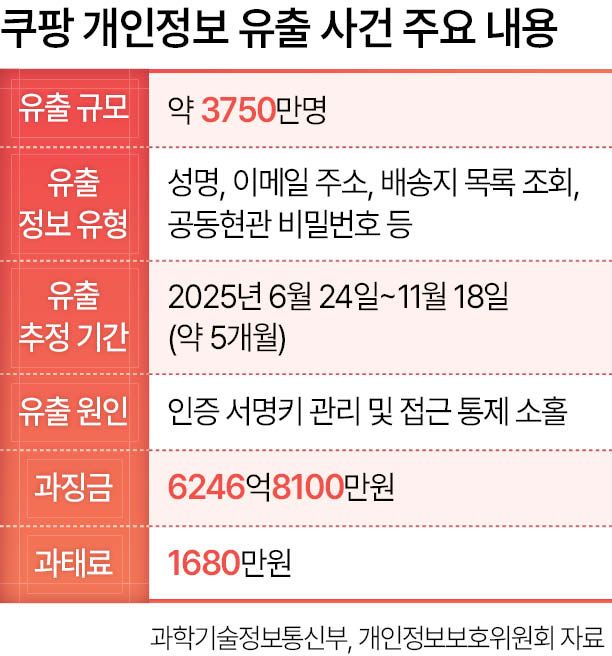
A record 624.7 billion won fine levied against Coupang Inc over a massive personal data breach is raising fears that the case could escalate into a trade dispute between South Korea and the United States. In Washington, the penalty is increasingly being viewed not as routine enforcement of privacy law but as discriminatory treatment of an American company.
Some US lawmakers and investors have pushed back, arguing that the South Korean government is unfairly targeting Coupang, which is listed on the New York Stock Exchange.
At a House Foreign Affairs Committee hearing on June 3, Republican lawmakers claimed that Seoul was discriminating against Coupang as an American company. Republicans also reportedly took the lead in signing a letter sent to the South Korean Embassy calling on the government to halt what they described as discriminatory regulation. Secretary of State Marco Rubio acknowledged that "certain actions by Korea toward American companies" had affected Washington's "ability to finalize a trade agreement" — the first public admission by a senior US official that the Coupang dispute has had a direct bearing on trade talks. At a confirmation hearing last month for Michelle Steel Park, Donald Trump's nominee for US ambassador to South Korea, Republican Sen. Bill Hagerty — a close Trump ally — cited the Coupang case and said he was concerned that "some American technology companies appear to be facing discrimination in Korea." Steel said she would work to ensure American firms receive equal treatment in South Korea.
The House Judiciary Committee also conducted a closed-door investigation in February, questioning Harold Rogers, Coupang's interim representative in Korea, as part of a broader inquiry into whether American companies face discrimination in the country. Much of this US activity has been driven by Coupang's own aggressive lobbying campaign, which the company launched almost immediately after the data breach became public in an effort to reframe its legal exposure as a trade issue.
In the first quarter of this year alone, Coupang spent $1.09 million — about 1.66 billion won — on lobbying in the United States, an 87.9 percent increase from the previous quarter. Its targets ranged across the US executive branch, Congress and the private sector.
Seoul, which has taken a hard line against Coupang, is working to prevent the dispute from spilling over into broader trade and security relations.
When the possibility of a US-Korea trade conflict was raised by American officials in December last year, the government mounted a cross-ministry response. Kim Yong-beom, the presidential office's policy chief, personally chaired an emergency meeting on the Coupang situation that brought together the ministers of science and ICT, the heads of the Personal Information Protection Commission, the Broadcasting and Communications Commission and the Fair Trade Commission, as well as senior diplomatic officials. Kim Jung-kwan, minister of trade, industry and energy, and Yeo Han-koo, chief trade negotiator, have visited the United States three and two times, respectively, this year alone to manage the situation and prevent it from hardening into a trade dispute.
Kim Tae-hwang, a professor of international trade at Myongji University, said concerns about the case becoming a trade issue were understandable, given that Coupang's lobbying and government relations activities appeared to be influencing US politics and generating repeated references in Congress.
However, he added that Washington had not yet challenged the enforcement of South Korea's personal data protection law or the legal procedures themselves. "It will be important to emphasize that this is a principled response in accordance with domestic law and procedure," he said.
By Ko Jae-woo and Yang Young-kyung
ko@heraldcorp.com
y2k@heraldcorp.com