The complete repertoire of Gureuhyangje Julpungyu, a national intangible heritage, will be performed in Gwangju for the first time, shining a light on the depth and refinement of the Namdo pungyu tradition.
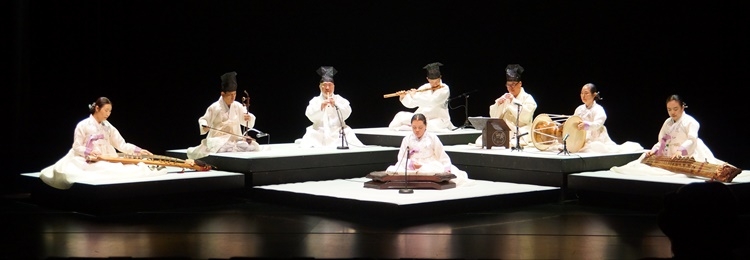
Gureuhyangje Julpungyu, a national intangible heritage, will take the Gwangju stage for the first time on June 19.
The Gureuhyangje Julpungyu Preservation Society of South Jeolla Province, led by chairperson Jang Myung-hwa, will present the "Gureuhyangje Julpungyu Bitgoeul Tour Performance" at 7:30 p.m. at the small theater of the Gwangju Arts Center.
The performance has drawn attention for taking place ahead of the planned launch of a special administrative city merging South Jeolla Province and Gwangju. It also marks the first time the tradition has been staged in Gwangju.
The music refers to the julpungyu tradition practiced and passed down by musicians gathered in Gurye, South Jeolla Province. The term "hyangje" — meaning "local" or "provincial" — distinguishes it from the julpungyu tradition of the Seoul region.
Julpungyu's original name is "hyeonak yeongsanhoesan," a form of pungyu centered on string instruments, as opposed to "daepungyu," which is built around wind instruments.
Most regional julpungyu traditions disappeared through the Japanese colonial period and the pressures of modernization, but the Gurye tradition survived. Its more than 1,000-year lineage and distinctive melodic character earned it designation as Important Intangible Cultural Heritage No. 83, Hyangje Julpungyu.
Gureuhyangje Julpungyu is a suite of chamber music transmitted exclusively in the Gurye region. The upcoming performance is structured in three parts: bonpungyu, janpungyu and dwitpungyu.
The program opens in the bonpungyu section with daseureum, bonyeongsan and jungyeongsan, before moving into the janpungyu section. That section features seryeongsan, garakdeori, sanghyeondodeuri, sehwanik, hahyeondodeuri, yeombuldodeuri, taryeong and gunak, showcasing the tradition's characteristically stately and delicate melodies.
The final dwitpungyu section closes the performance with gyemyeongarak dodeuri, yangcheong dodeuri, ujogarak dodeuri and pungyu gutgeori, leaving audiences with the deep resonance that defines julpungyu.
Gureuhyangje Julpungyu is a traditional instrumental ensemble designated National Intangible Cultural Heritage No. 83-1 in 1985.
Centered on the geomungo, the ensemble brings together the danso, daegeum, piri, gayageum, haegeum, yanggeum and janggo in a form of chamber music known as bangjungak, carrying forward the pungyu tradition of the seonbi to the present day.
The preservation society has built a foundation for transmission through regular performances and gugak classes. Last year, it held a 40th anniversary commemorative performance at Bojeoru Pavilion at Hwaeomsa Temple.
"Gureuhyangje Julpungyu is a precious heritage of Gurye that has maintained its lineage for more than 40 years since its designation as a national intangible heritage in 1985, thanks to the dedication of countless practitioners and preservation society members," a county official said.
parkds@heraldcorp.com