Counterintelligence, investigative and security functions to be redistributed; civilian compliance committee to be established under defense minister
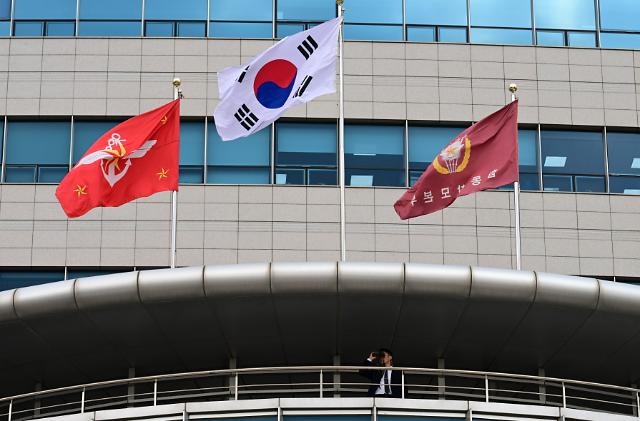
The government announced Wednesday it will dissolve the Defense Counterintelligence Command — the military intelligence agency that drew intense scrutiny for its role in the Dec. 3 emergency martial law incident — and redistribute its core functions across newly created organizations. The move ends the agency's 49-year existence.
Defense Minister Ahn Gyu-baek unveiled the plan, titled "Dissolution and Functional Reorganization of the Defense Counterintelligence Command," at the Ministry of National Defense headquarters in Seoul on Wednesday.
Under the plan, the agency's counterintelligence and defense industry-related intelligence activities, security investigations, and security audit functions will be transferred to separate institutions.
Counterintelligence and defense industry intelligence work, along with defense industry cybersecurity duties, will go to a newly established Defense Counterintelligence Headquarters. Security investigation functions and joint investigative authority during martial law will transfer to the Defense Ministry's Investigation Headquarters.
A new Defense Security Support Group will also be created to handle military security duties, including central security audits at the corps level and above and investigations into security incidents.
The agency's authorized personnel strength will be cut by one-third. About half of the current roster is expected to move to the counterintelligence headquarters, roughly 200 security investigators will transfer to the investigation headquarters, and the Defense Security Support Group will be staffed at around 200 personnel.
Functions long seen as the foundation of the agency's outsized influence within the military — including monitoring of internal trends, personnel intelligence gathering and reputation collection — will be abolished entirely, as will the collection of information on illegal activity and misconduct unrelated to counterintelligence.
The government also said it will strengthen internal oversight of the newly created Defense Counterintelligence Headquarters and enhance democratic control by the National Assembly and the Defense Ministry.
A senior external audit official will be appointed to head the headquarters' inspection office, and a dedicated unit will be established within the Defense Ministry to command and supervise counterintelligence, intelligence and security agencies.
A civilian-led "Compliance Inspection Committee," composed of outside experts, will be set up directly under the defense minister to provide external oversight. The ministry also plans to establish basic guidelines for counterintelligence activities and report to the National Assembly on a regular basis.
The government will additionally pursue legislation — tentatively titled the "Act on the Duties of Military Counterintelligence Unit Personnel" — to codify in law the scope of permissible counterintelligence activities and penalties for illegal conduct.
"This reorganization goes beyond a simple restructuring or functional adjustment," Minister Ahn said. "It will be a historic turning point in building a military that truly belongs to the people — one that restructures the organization and its mission so that military intelligence agencies can never again intervene in politics."
He added that the ministry would move away from the agency's "closed and authoritarian organizational culture," and said anyone involved in the Dec. 3 martial law incident or implicated in misconduct would be categorically excluded from the new organizations. "We will select personnel with political neutrality and professional competence through rigorous vetting," he said.
The Defense Ministry aims to complete the creation of the new organizations by late July or early August, following the enactment and revision of relevant presidential decrees. A preparatory task force will be launched to manage the transition.
The Defense Counterintelligence Command was found to have played a central role in the Dec. 3 emergency martial law incident, dispatching troops to the National Assembly and the National Election Commission and operating teams tasked with arresting politicians.
President Lee Jae Myung had campaigned on a pledge to reform the military intelligence agency. The government has been reviewing reform options after concluding that the excessive concentration of authority in the command and the absence of democratic oversight mechanisms were root causes of the problem.
youknow@heraldcorp.com