
Two men in their 20s sent to prosecutors after gang defrauded 39 victims of 1.1 billion won
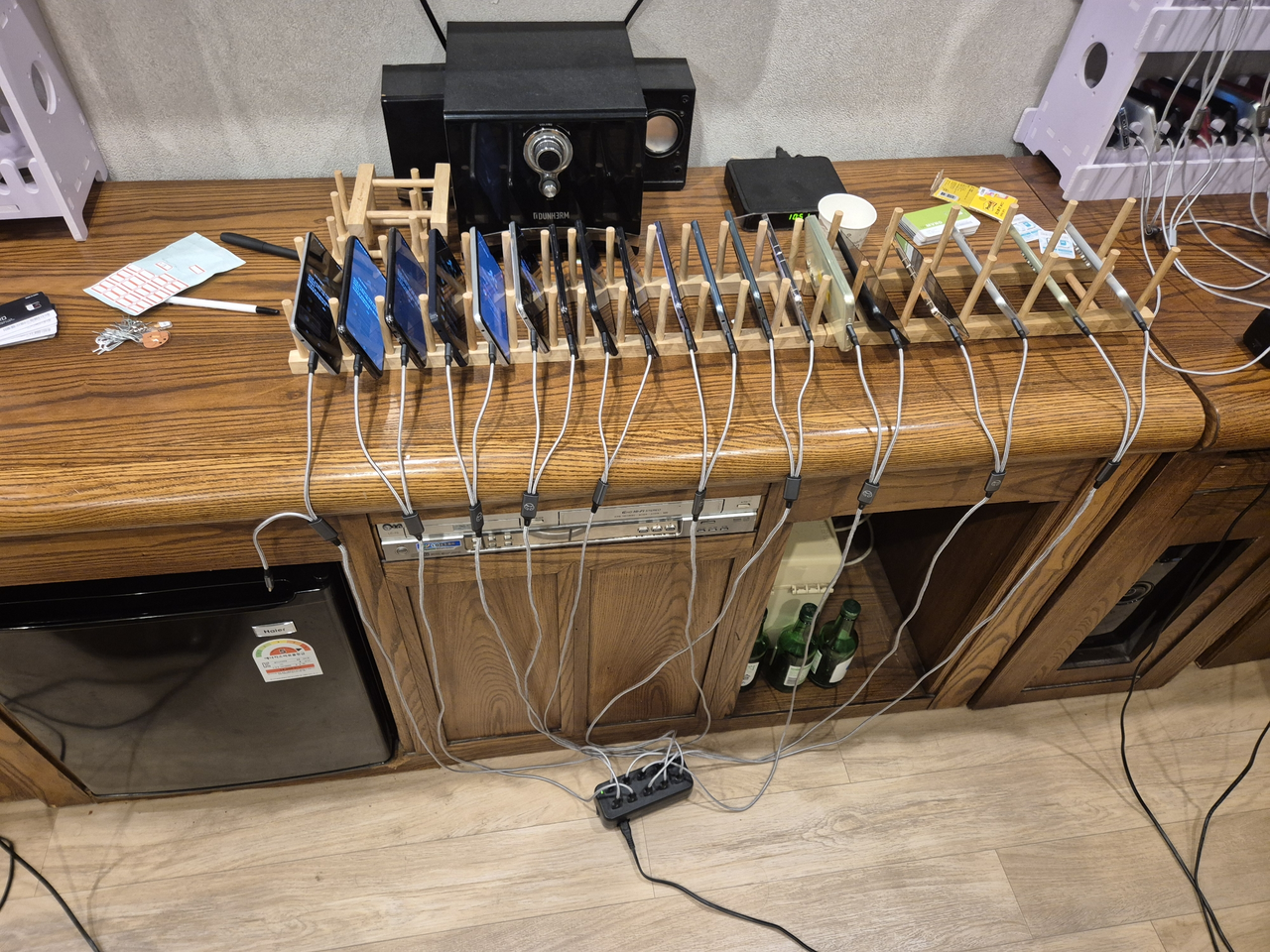
Police have sent two men to prosecutors for running caller ID spoofing relay stations out of motels across the country, helping a phishing gang carry out a "no-show" fraud scheme.
Seoul's Geumcheon Police Station said Wednesday it had forwarded the two men in their 20s, identified only as A and B, to prosecutors on charges including violations of the Act on Special Cases Concerning the Prevention of Loss Caused by Telecommunications-Based Financial Fraud, the Telecommunications Business Act and the Electronic Financial Transactions Act.
According to police, the two acted on instructions from an overseas-based phishing organization and operated caller ID spoofing relay stations at motels nationwide from October last year through May this year.
Using the relay stations the pair managed, the phishing gang defrauded 39 victims of approximately 1.1 billion won (about $724,000) through a no-show scam.
Police obtained intelligence on the operation on May 7 and launched an investigation, then secured arrest warrants and apprehended the two men on May 27 in Guri, Gyeonggi Province, and Cheonan, South Chungcheong Province.
The investigation revealed that A and B received instructions via Telegram and WeChat from handlers known by aliases including "Woo○○" and "Gaemi○○," moving between motels roughly every week to run the relay stations. They stayed at motels in Cheonan, Guri, Changwon, Geoje, Ulsan and Gangneung, using 136 burner phones and 395 burner SIM cards delivered by courier from the phishing organization.
Members of the overseas phishing organization installed remote-control apps on the phones the suspects managed, then used them to call or send text messages to victims in South Korea. Although the calls were placed over overseas internet phone services, they were spoofed to display domestic "010" numbers on recipients' screens.
A and B each received a monthly base salary of 4 million to 6 million won, along with weekly pay and accommodation costs, in exchange for running the relay stations. A had joined the scheme first and later recruited B by telling him he could "make a lot of money."
Police said they plan to expand the investigation by tracking down additional crimes committed by the pair and the overseas ringleaders, while also filing charges under the Telecommunications Business Act against roughly 90 individuals whose identities were used to register the burner phones and SIM cards.
"The phishing organization was able to steal hundreds of millions of won through the no-show scam by spoofing caller IDs," a police official said. "Even if a call comes in from a '010' number, people should be especially cautious if the caller's identity cannot be clearly confirmed and they are asking for upfront payment or proxy purchases."
newday@heraldcorp.com




