Instant travel incentives boost tourist satisfaction while driving local spending
Naju Love Gift Certificates and Naju Mall points tie tourism to the local economy in a model drawing national attention
Flagship project of 'Visit Naju 2026' accelerates the city's shift toward a stay-and-explore tourism destination
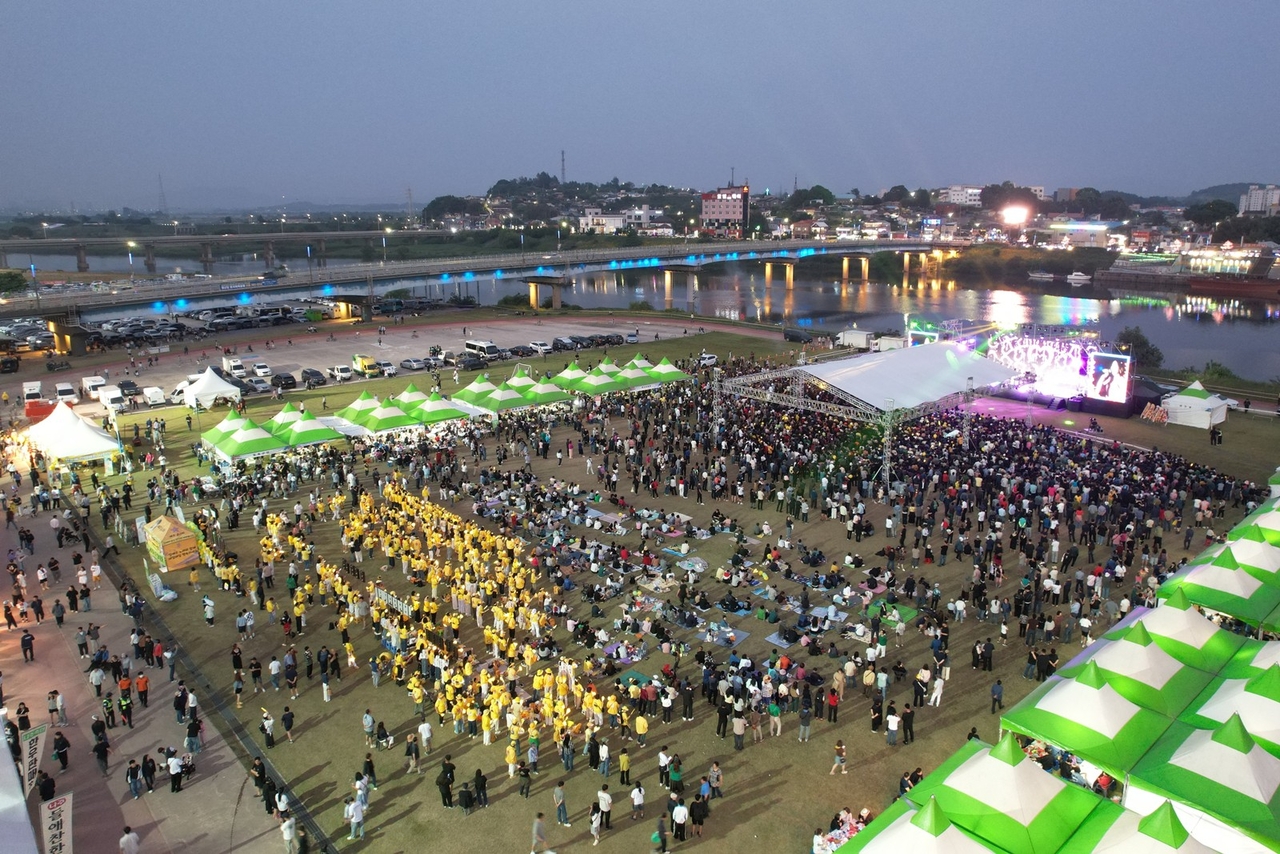
Naju, South Jeolla Province, has recorded more than 10,000 applicants in just three months for its overnight tourism incentive program "Naju 1 Night, 2 Gains," cementing the initiative as a new model for attracting visitors and stimulating the local economy during the city's "Visit Naju 2026" year.
The city announced Wednesday that applications for the program, which rewards tourists who stay overnight, had crossed the 10,000 mark.
Under the program, individual out-of-town visitors who spend at least one night in Naju and visit at least one tourist attraction receive benefits worth up to 150,000 won (about $99).
Participants can choose to receive their support as Naju Love Gift Certificates or Naju Mall points, and also receive a 50 percent discount voucher for the Hwangpo Sailboat and a free monorail pass for the Bitgaram Observatory.
The program has drawn attention as a stay-oriented tourism policy linking accommodation, sightseeing and local spending to extend visitors' time in the city and energize the local commercial district.
A key differentiator is the on-site payment system, which allows tourists to receive their incentives during their trip rather than after returning home.
Naju operates a year-round, around-the-clock incentive distribution system so visitors can receive Naju Love Gift Certificates while traveling and spend them immediately at restaurants, cafes, experience facilities and traditional markets.
Unlike conventional tourism support programs that require tourists to submit receipts after their trip before receiving vouchers, this program lets visitors feel the benefit right away and spend it locally on the same visit.
The ripple effects on the local economy are already visible.
According to the Korea Culture and Tourism Institute's 2024 National Travel Survey, the average domestic traveler spends about 61,000 won per trip. Based on that figure, the 10,000 applicants are estimated to have generated roughly 610 million won in direct tourism spending, with positive effects spreading across accommodation, restaurants, cafes, tourist sites and small-business stores throughout the city.
For tourists who find it difficult to use gift certificates during their itinerary, the program also lets them receive their support as Naju Mall points, which can be used after the trip to purchase local agricultural and specialty products.
The arrangement benefits not only tourists but also local farmers, expanding their sales channels and boosting revenue in a structure where tourism and agriculture grow together.
Naju plans to continue expanding its stay-oriented tourism infrastructure around the program and to link it with major tourism content under "Visit Naju 2026" to further increase visitor dwell time and local spending.
"Surpassing 10,000 applicants in just three months is meaningful proof that Naju is transforming from a city people pass through into one where they stay and enjoy themselves," Mayor Yun Byeong-tae said. "We will run the program with greater substance so that tourist spending flows back to local businesses and farm households, and we will build on that success to make Visit Naju 2026 a triumph."
kkm9971@heraldcorp.com