President Lee's directive makes joint investigative body and parliamentary probe a reality; Supreme Prosecutors' Office in talks with Korean National Police Agency on joint team; key questions center on election officials' preparedness and prior knowledge; both Democratic Party and People Power Party plan to file parliamentary investigation requests Monday
The ballot shortage that disrupted the June 3 local elections is set to trigger a full-scale joint investigation by prosecutors and police. After President Lee Jae-myung ordered the formation of a joint investigative body and a thorough inquiry into the incident, the Supreme Prosecutors' Office and the Korean National Police Agency immediately began talks on establishing the team, which could be up and running as early as Monday. President Lee also asked the National Assembly to pursue a parliamentary investigation into the matter, and both the Democratic Party of Korea and the People Power Party plan to file their respective parliamentary investigation requests as early as Monday, bringing legislative scrutiny of the affair into sharper focus.
According to prosecutors, the Supreme Prosecutors' Office is reviewing the size, staffing and structure of the joint team, with its Public Investigation Division — which handles election-related cases — expected to take the lead. After President Lee announced Sunday that he had ordered the team's formation, the office said in a public statement that it would "swiftly establish a joint investigative body with police and, through close cooperation, conduct an efficient investigation to rigorously uncover the public's doubts" about the disruption to voters' right to participate in the June 3 local elections.
The central question for the joint team will be whether National Election Commission officials can be shown to have willfully neglected their duties. Dereliction of duty under Korean law applies when a civil servant refuses or abandons their responsibilities without justifiable cause. Investigators will need to establish that the failures were a conscious abandonment of duty rather than a simple administrative error.
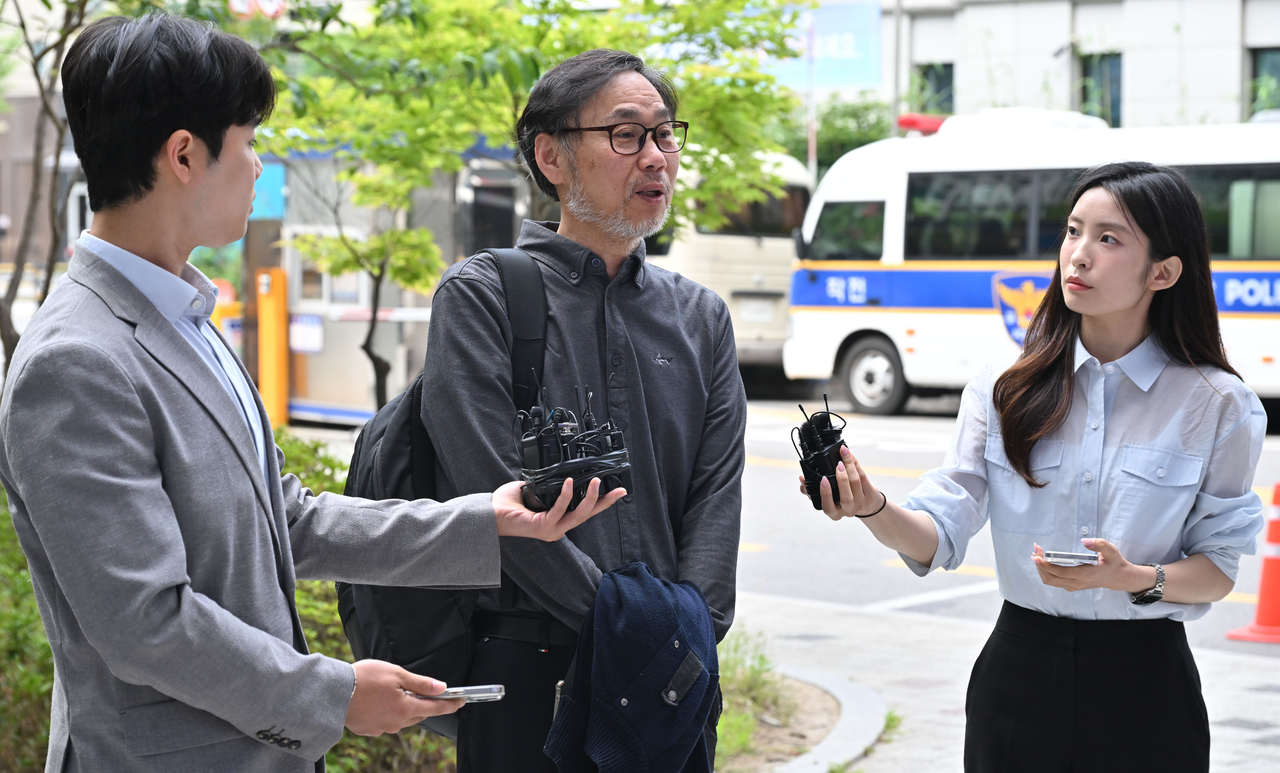
A lawyer who previously served as a senior prosecutor said in a phone interview that "dereliction of duty requires a conscious act of abandonment or neglect — and some polling stations apparently anticipated a shortage. If no action was taken in response, that could constitute neglect." He added that "whether the person who received the report had an obligation to act is a point that will need to be examined, and if the report never reached the official responsible for ballots, that failure itself could amount to dereliction of duty."
According to the National Election Commission, 67 of the country's 14,288 polling stations received additional ballots after running short on election day, when both local elections and National Assembly by-elections were held. Fifty polling stations experienced ballot shortages, and voting was suspended and later resumed at 22 stations.
The commission said its guidelines require a minimum print run of at least 50 percent of the total registered electorate for local elections and at least 60 percent for National Assembly and presidential elections. Those guidelines have been identified as a contributing factor in the shortage. The joint team is expected to examine the internal process by which the commission set its minimum print quantities, as well as indications that ballots were running low before any voters were actually turned away.
With the joint investigation now taking shape, the various complaints filed with law enforcement agencies since the ballot shortage came to light are also expected to be consolidated under the joint team.
The Metropolitan Crime Investigation Unit of the Seoul Metropolitan Police Agency on Monday questioned a representative of the Citizens' Livelihood Countermeasures Committee, a civic group that filed a complaint against National Election Commission Chairman Noh Tae-ak and others on charges of dereliction of duty, abuse of authority, and occupational embezzlement and breach of fiduciary duty.
The political establishment has also moved against the commission over the ballot shortage. Both parties plan to file parliamentary investigation requests as early as Monday, signaling a push to subject the commission — which has long operated in a regulatory blind spot as a constitutionally independent body — to meaningful legislative oversight.
Democratic Party floor leader Han Byung-do said at an emergency press briefing Sunday that "the full picture and the truth of whether there were structural flaws in the commission's internal systems must be clearly established and boldly corrected," adding that the party would submit a parliamentary investigation request and ask the Assembly speaker to convene a plenary session promptly.
The Democratic Party named nine lawmakers from the 22nd National Assembly's first-half session of the Public Administration and Security Committee — Yoon Geon-young, Lee Hae-sik, Kim Seong-hoe, Mo Gyeong-jong, Lim Mi-ae, Yang Bu-nam, Lee Sang-sik, Lee Gwang-hui and Chae Hyeon-il — as its nominees for the parliamentary investigation committee. The party also said it would establish a separate internal task force on electoral system reform to review the Public Official Election Act, the National Election Commission Act and related legislation.
The People Power Party is pushing to chair the parliamentary investigation committee, demanding the post from the Democratic Party. PPP leader Jang Dong-hyeok said at a party supreme council meeting Monday, "Who is responsible for creating the all-powerful election commission we have today?" He argued that "the PPP must lead from the witness selection stage if we are to produce results the public will accept," and said a parliamentary investigation run at the Democratic Party's discretion — "calling witnesses as it pleases, just like the parliamentary probe aimed at canceling Lee Jae-myung's trial" — would be "pointless" and "absolutely unacceptable." He also sharply criticized President Lee's order to form the joint investigative body, calling it a "joint team designed to give the election commission a free pass."
bell@heraldcorp.com
addressh@heraldcorp.com