
Busan relocation roadmap due by year-end, ahead of sale talks
Fractional ship investment listing planned for September; shipowner business to expand
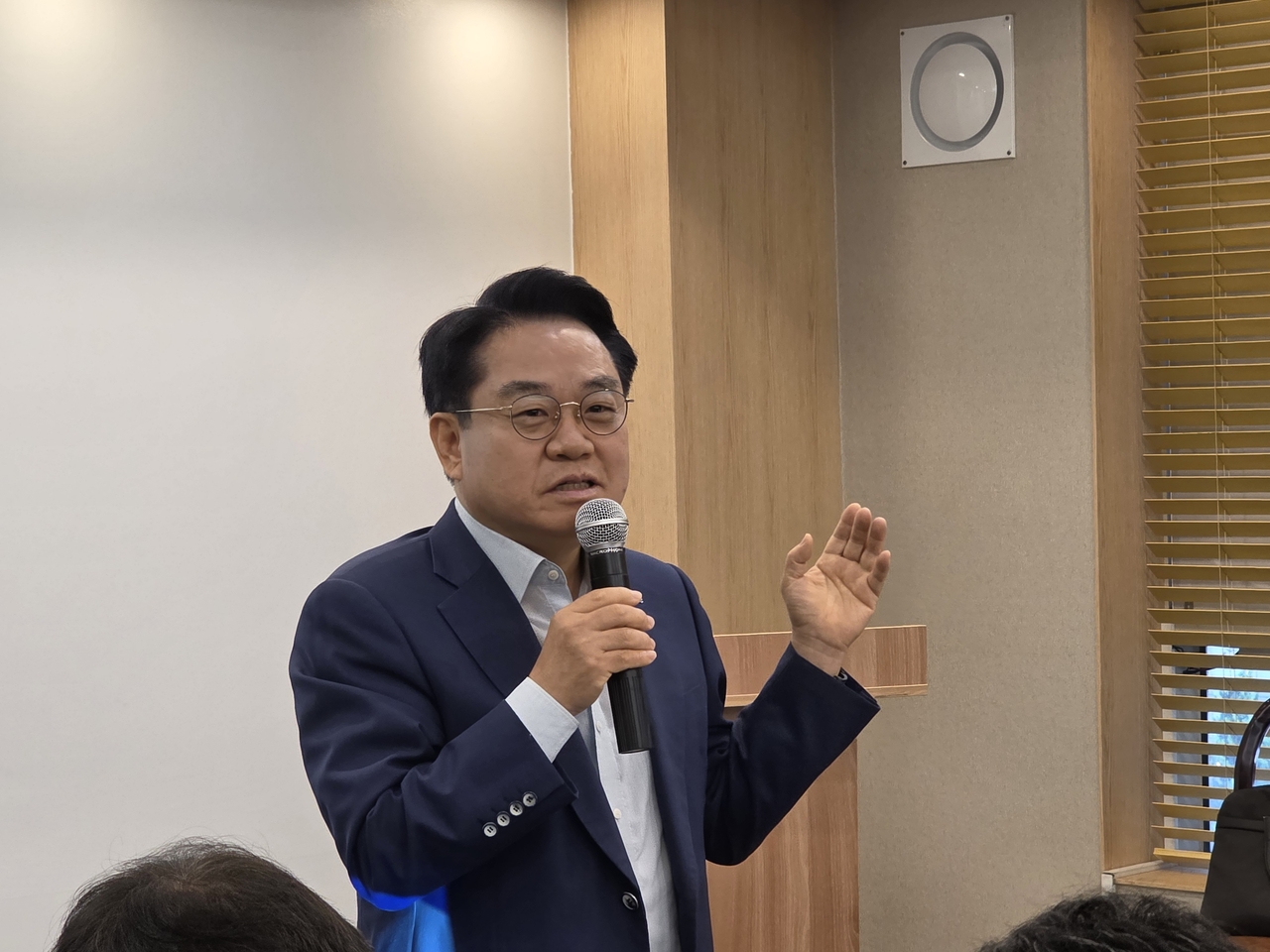
Korea Ocean Business Corp. President Ahn Byung-gil said HMM should complete a roadmap for relocating its headquarters to Busan by year-end before any serious sale discussions begin — a signal that building the carrier's competitiveness matters more than the pace of a divestiture.
Speaking at a press briefing in Yeouido, Seoul, on Monday, Ahn said in response to a question about the timing of an HMM sale that "from the shipping industry's perspective, what matters more than a quick sale is deciding in which direction to grow HMM and develop it into a global carrier."
He went on to say that "the policy priority is relocation — specifically the move to Busan — rather than the sale," adding that "once the Busan relocation roadmap is largely in place by year-end, sale discussions can follow."
Ahn also said Korea Development Bank may feel pressure to move quickly on a sale, but that Korea Ocean Business Corp. and the broader shipping industry view strengthening competitiveness and establishing a growth strategy as the first order of business. "There are currently no specific discussions between KDB and Korea Ocean Business Corp. regarding the sale," he said.
On the government's push to develop Arctic shipping routes, Ahn said the corporation would provide financial support "regardless of short-term profitability." Korea Ocean Business Corp. last month jointly selected Pan Star Line.com as a preliminary candidate to conduct a pilot voyage on the Arctic route, together with the Korea Shipping Association. Once formally designated as the pilot operator after consultations, the selected carrier would receive fiscal support from the association's fund, preferential ship financing from Korea Ocean Business Corp., and reductions in port facility usage fees.
Ahn said the Ministry of Oceans and Fisheries and Korea Ocean Business Corp. are still reviewing whether to directly purchase vessels or operate them on a charter basis. "Whether through ship financing or another method, we will provide support if Korea Ocean Business Corp. needs to," he said, adding that "if it is necessary as a matter of government policy, regardless of profitability, we intend to provide support through special financing or other means."
On the significance of HMM's relocation to Busan, Ahn emphasized the clustering effect that a maritime industry hub would create. "To build a globally powerful maritime nation, shipping companies, cargo owners and logistics firms need to come together," he said. "If related companies concentrate in Busan starting with HMM, a shipping industry cluster will form and synergies will emerge."
The briefing also saw the release of Korea Ocean Business Corp.'s "2025 Ship Financing Survey." According to the corporation, the total volume of ship financing extended last year to 1,041 vessels owned by 100 domestic carriers came to approximately 7.89 billion won ($5.11 million), down 11.2 percent from the previous year. As previously arranged funding accumulated, the overall ship financing balance rose 12.1 percent year on year to $27.3 billion.
The figures showed that improved financial health among carriers has helped stabilize the ship financing market. The share of subordinated financing — which carries higher risk — fell from 7 percent to 3 percent over the past three years, while the share of policy financing hit its lowest level since 2022 at 27 percent.
"Korea Ocean Business Corp.'s fundamental goal is to see financial investment in the maritime industry flourish," Ahn said. He added that the corporation works to create a stable financing environment for carriers by providing continuous guarantees between shipping companies and private lenders, channeling private capital into the shipping sector.
Ahn also outlined three key projects he plans to pursue during the remainder of his term: fractional ship investment, expansion of the shipowner business, and establishment of a maritime asset exchange.
He said the corporation plans to list a fractional investment product backed by a vessel worth approximately 40 billion won on the Korea Exchange as early as September. He added that the groundwork would be laid to establish a shipowner business subsidiary and build a maritime asset exchange by 2028.
eyre@heraldcorp.com



