Sweet scent and seasonal charm: a fragrant native plant for June gardens
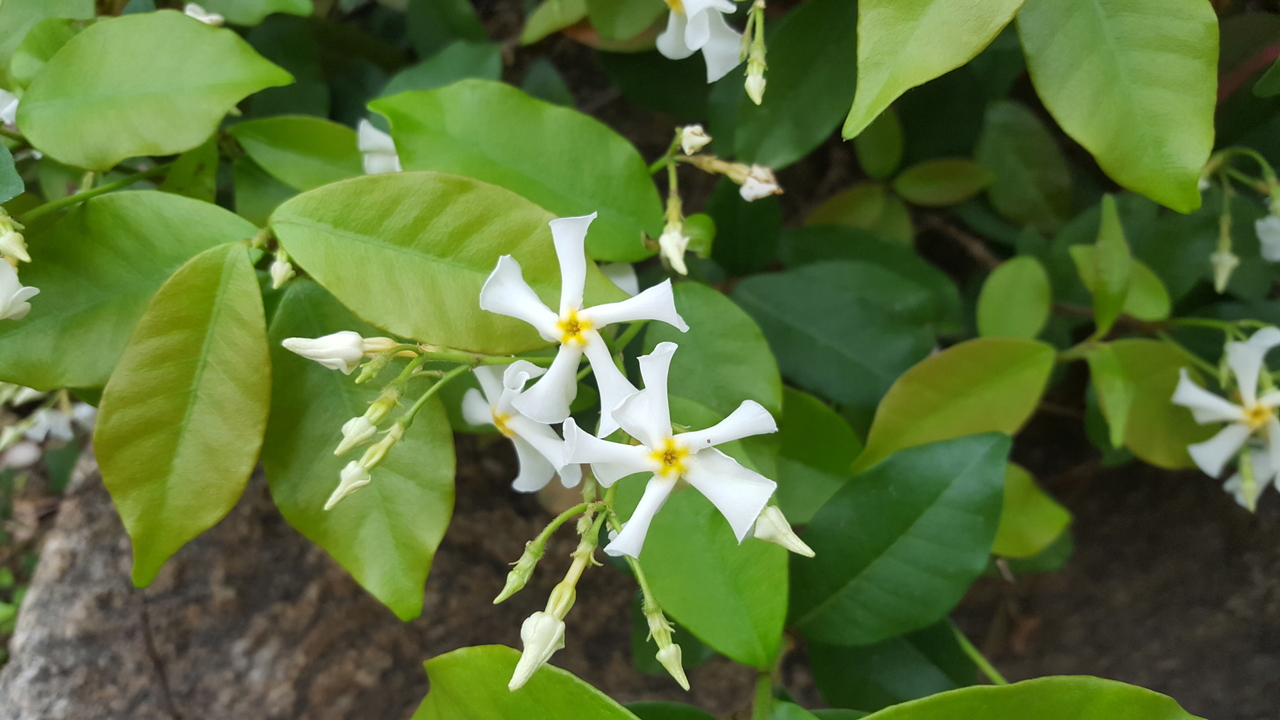
What plant fills an early-summer garden with a wave of sweet fragrance?
The Korea Forest Service's National Arboretum, led by Director Im Yeong-seok, has named Asian jasmine (Trachelospermum asiaticum (Blume) Nakai) its "Woori Garden Plant" for June.
Asian jasmine is an evergreen climbing vine in the family Apocynaceae. In early summer, from May through June, pinwheel-shaped white flowers bloom at branch tips and in leaf axils, then gradually turn an elegant yellow as they fade — a quietly striking transformation. The contrast between the flower's delicate appearance and its deep, sweet fragrance is particularly notable; the scent can fill an entire garden. The Korea Forest Service calls it a native plant that maximizes the olfactory appeal of June gardens as foliage deepens into full green.
In the wild, Asian jasmine grows through forests, rock crevices and up tree trunks across southern Korea and Jeju Island, making it highly versatile as a vertical garden plant. It can be trained to cover fences, arches and walls with lush, fragrant greenery, used as a ground cover, or grown in hanging baskets and allowed to trail downward.
The vine thrives in fertile, well-drained sandy loam with adequate moisture and adapts well to both full sun and partial shade. Its tolerance for drought, air pollution and salt spray makes it equally suited to urban gardens and coastal settings.
Asian jasmine can be propagated from seed by harvesting fruit in autumn before it fully ripens and splits open, removing the silky hairs and sowing immediately or storing for spring planting. Stem cuttings are even more reliable, as the plant roots readily at each node. Cuttings taken from dormant stems in March, or from healthy new growth trimmed to 10–15 centimeters during the rainy season in June or July, root easily when planted in well-drained soil and kept in high ambient humidity.
"Asian jasmine is a captivating garden plant that awakens all the senses with its pinwheel-like flowers and enchanting fragrance amid June's lush greenery," said Kim Hyeok-jin, director of the Forest Biological Resources Utilization Center. "We hope this recognition helps more people discover the value of this native vine as an outstanding material for vertical gardens."
kwonhl@heraldcorp.com