Kim Gyeong-dae defeats Democratic Party's Kang Tae-ung by more than 7,100 votes to become Yongsan-gu district mayor; Kang, a Seoul National University graduate and former first administrative vice mayor of Seoul, was seen as a formidable challenger
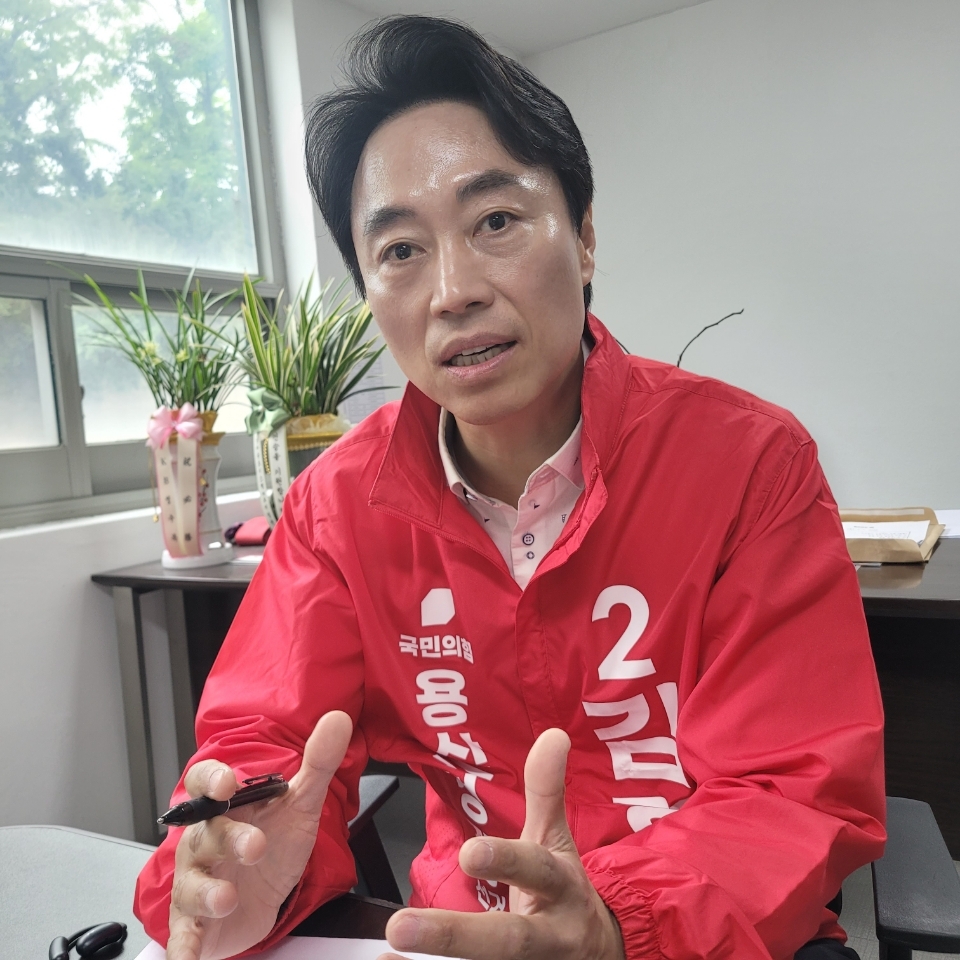
One of the most closely watched races in the June 3 local elections was the contest for Yongsan-gu district mayor.
The matchup between People Power Party candidate Kim Gyeong-dae and Democratic Party candidate Kang Tae-ung drew attention not only as a ruling-versus-opposition battle but also as a contest between a homegrown local politician and a career bureaucrat from the central government.
Kim won. The three-term district council veteran defeated Kang — a former first administrative vice mayor of Seoul — to claim the Yongsan-gu district mayor's seat.
Kim's political journey was anything but smooth.
After graduating from Dankook University in Yongsan and joining Samsung Group through its open recruitment program, he built a career in the private sector before planting roots in the local community and entering Yongsan politics. He won a seat on the district council and secured three consecutive terms, cementing his local base — but a 2018 run for Yongsan-gu district mayor ended in defeat.
That setback did not stop him.
Ahead of this year's local elections, Kim entered the People Power Party primary and secured the nomination after competing against Kim Hyeong-seok, a former vice minister of unification. In the general election, he faced a formidable opponent: Kang Tae-ung, a career administrator who had served as Seoul's first administrative vice mayor and twice sought a National Assembly seat before stepping down to contest the district mayor race.
The outcome remained hard to predict until the final stages of the count.
In the early tally of early-voting results, Kang pulled ahead, putting Kim's camp on edge. The trend appeared to reflect the Democratic Party's typical strength in early voting.
As the count of election-day ballots progressed, the momentum shifted.
Ultimately, Kim's deep local roots proved decisive as he completed a comeback and secured victory.
Yongsan has traditionally been regarded as a conservative-leaning district, giving People Power Party candidates a structural advantage — though that alone guarantees nothing. The area has drawn heightened national attention since the presidential office relocated there, adding to its political symbolism.
The result stands as a demonstration of the power of community-based politics alongside party competitiveness.
The name recognition and trust Kim built over years of meeting residents as a district councilman proved enough to overcome a rival with the far more prominent resume of a former Seoul deputy mayor.
The race underscored a familiar truth in local politics: how long a candidate has walked alongside residents often matters more than academic credentials or career titles.
Kim has now become Yongsan-gu's top administrator, having turned three terms on the district council and one prior electoral defeat into the foundation for success.
It is a result shaped by a politician's perseverance in converting defeat into an asset, and by the enduring strength of grassroots politics.
Residents now hope the passion and commitments Kim displayed on the campaign trail will translate into tangible results for the district. Whether he can lead Yongsan's transformation and live up to those expectations remains to be seen.
seouldream01@heraldcorp.com