Democrats dominate Greater Seoul, Gangwon; PPP holds firm in Yeongnam, South Chungcheong
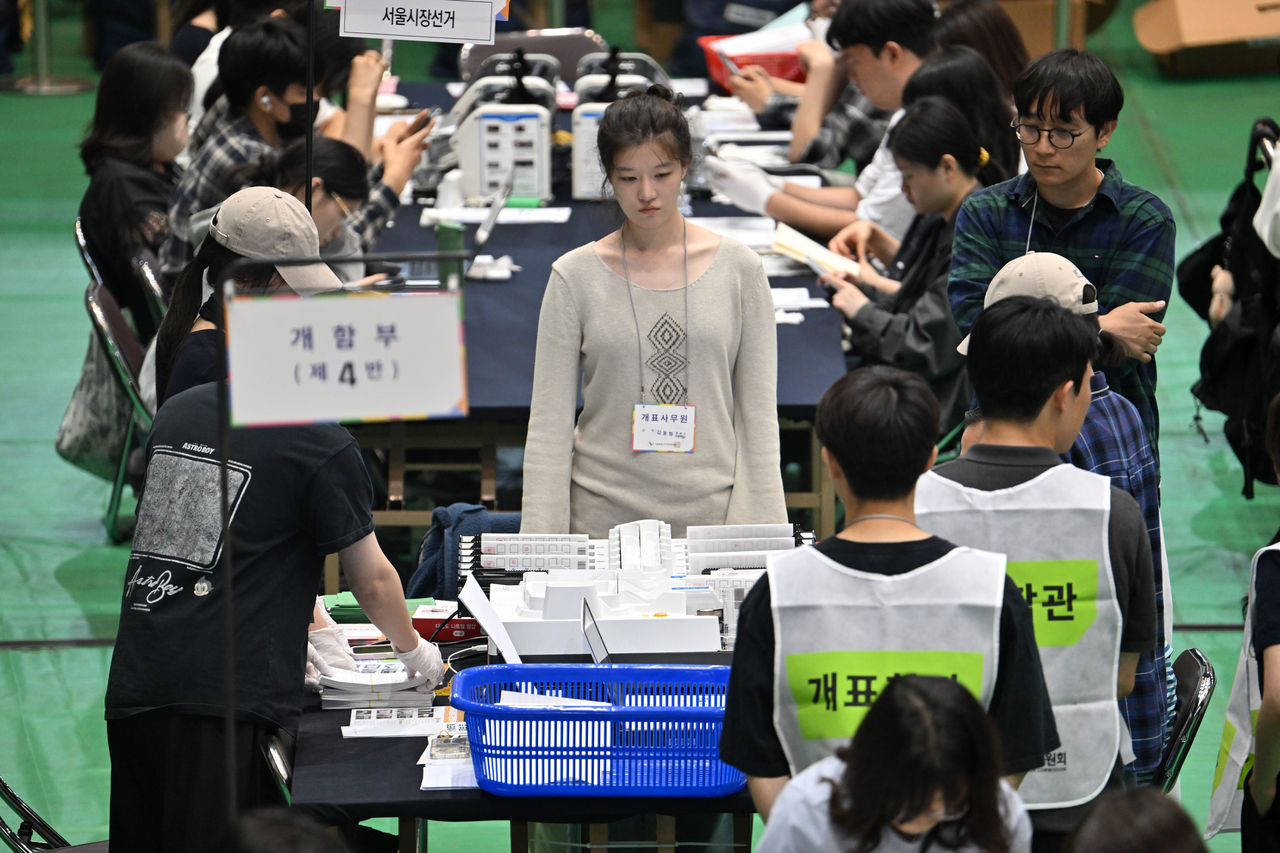
The Democratic Party of Korea won 119 of the 227 basic local government chief races in Wednesday's local elections, while the People Power Party took 95, tilting the balance of local power toward the Democratic Party for the first time in four years. The Rebuilding Korea Party secured two district chief seats and independents won 11, partially filling the cracks in the two-party dominance.
As of 9 a.m. Thursday, the National Election Commission had confirmed or projected Democratic Party candidates as winners in 119 of the 227 basic local government chief races nationwide, with PPP candidates accounting for 95.
The defining feature of this election was the Democratic Party's strong showing in the greater Seoul metropolitan area — home to the bulk of the country's population and industry — as well as in the Chungcheong and Gangwon regions, which have long served as swing-vote bellwethers.
In Gyeonggi Province, the Democratic Party secured 19 of 31 city and county chief seats, clearing a majority. In Incheon it took eight of 11, driving the party's dominance across the metropolitan area.
In Daejeon, the Democratic Party swept all five basic local government chief seats. In North Chungcheong Province, it edged ahead with six seats to the PPP's five. In Gangwon Province, the Democratic Party won 11 of 18 seats against the PPP's seven — a meaningful shift in a region long associated with conservative strength.
Across the Yeongnam region, however, the PPP's grip remained firm. In Daegu, the party swept all nine district and county chief races, reaffirming its clean-sweep hold on the city. In North Gyeongsang Province, the PPP won 18 of 22 seats, with independents taking the remaining four and the Democratic Party failing to win a single seat. In Ulsan, the PPP took four of five seats, with the Democratic Party claiming one.
Signs of fracture emerged in Busan and South Gyeongsang Province. In Busan, the PPP won nine of 16 seats against the Democratic Party's seven — a relatively narrow gap. In South Gyeongsang Province, the 18 seats were split among the PPP with 10, the Democratic Party with four and independents with four.
In North Jeolla Province, the Democratic Party's traditional heartland, the party swept all 14 city and county chief seats, consolidating its base. In South Chungcheong Province, by contrast, the PPP won 10 of 15 seats — including those in Gongju, Boryeong, Seosan, Nonsan, Gyeryong, Buyeo, Cheongyang, Hongseong, Yesan and Taean — making conservative dominance in the province even more pronounced.
The Rebuilding Korea Party secured two basic local government chief seats, in Sinan and Jangheung in South Jeolla Province. The 11 victories by independent candidates also drew attention, particularly in rural Yeongnam, where voters showed a clear preference for individual candidates over party affiliation. Independents won chief seats in Cheongdo, Seongju, Uljin and Ulleung in North Gyeongsang Province, and in Jinju, Uiryeong, Geochang and Hapcheon in South Gyeongsang Province.
"Looking at the basic local government chief results alone, the PPP defended its regional base centered on Yeongnam," a political insider said. "The Democratic Party extended its reach to the greater Seoul area and Gangwon, gradually pulling the balance of local power toward itself."
rimsclub@heraldcorp.com