LG Electronics, Doosan Robotics hit upper limit; Naver surges
Stocks reverse sharply in a single day, swinging like speculative plays
179 gainers vs. 732 decliners highlight deepening market divergence
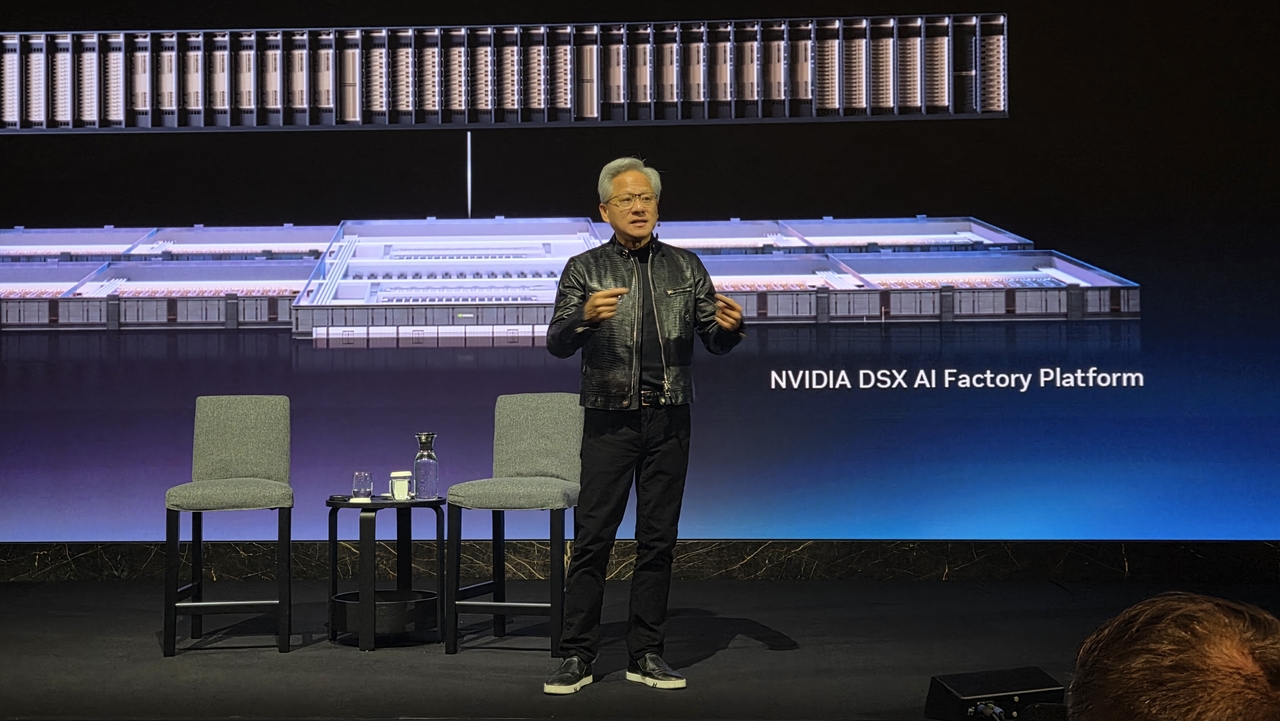
South Korean stocks are swinging wildly ahead of Nvidia CEO Jensen Huang's planned visit to Seoul, with blue-chip heavyweights behaving like speculative plays. LG Electronics and Doosan Robotics hit their daily upper limit, while Naver and LG CNS surged by double digits — extraordinary moves for companies with market capitalizations in the tens of trillions of won.
Korea Exchange data show that stocks grouped as "Jensen Huang beneficiaries" all surged in unison on Friday. LG Electronics soared 30 percent, reaching its daily price limit, while LG CNS jumped 26.27 percent and LG Corp climbed 13.10 percent. Naver rose 16.03 percent. Doosan Robotics also hit its upper limit, and Doosan, the group's holding company, closed up 11.71 percent. SK Telecom, which Huang named as a key partner, gained 11.53 percent.
The mood reversed sharply within a day. As of 10 a.m. Monday, LG Electronics — which had hit its upper limit on Friday — was trading at 336,500 won, down 44,000 won (about $29), or 11.56 percent, from the previous session. Naver fell 22,000 won, or 8.10 percent, to 249,500 won. Other Friday surgers retreated across the board: LG CNS dropped 12.73 percent, LG Corp fell 17.19 percent and Doosan slid 11.39 percent. The sharp reversal has prompted observers to note that even large-cap stocks are now showing the kind of volatility more commonly associated with Kosdaq theme plays. Double-digit daily swings are rare for companies of the scale of LG Electronics, whose market capitalization exceeds 60 trillion won, and Naver, valued at more than 40 trillion won.
Market participants attribute the turbulence to investor excitement over Huang's upcoming visit and the prospect of a series of meetings with the heads of South Korea's major conglomerates. Industry sources say Huang is scheduled to arrive Friday and meet with LG Group Chairman Koo Kwang-mo, SK Group Chairman Chey Tae-won and Naver board chairman Lee Hae-jin. Reports that Huang may also throw out the ceremonial first pitch at a Doosan Bears baseball game added to the buying frenzy in related stocks.
Investors' expectations were also fueled by memories of last year's so-called "Ganbu meeting" — Huang's encounter with Samsung Electronics Chairman Lee Jae-yong and Hyundai Motor Group Executive Chair Euisun Chung — after which shares of both companies strengthened.
Some market observers warn that recent price moves are leaning too heavily on anticipation. No concrete disclosures — such as new orders or supply agreements — have been confirmed, yet large-cap stocks have repeatedly hit their daily upper limits or posted double-digit gains on little more than hopes of deeper cooperation with Nvidia.
The broader market mood remains subdued. Money has concentrated in a handful of large caps and specific themes, pushing the divergence between winners and losers to an extreme. On Friday, only 179 stocks on the Kospi advanced while 732 declined. The Kosdaq told an even starker story: just 224 stocks rose while 1,478 fell.
The advance-decline ratio — advancing issues as a share of all advancing and declining issues — stood at 47.94 percent on the Kospi and 47.62 percent on the Kosdaq. The Kospi ratio's drop into the 40-percent range was particularly notable: it had not fallen that low since the early days of the COVID-19 pandemic in March 2020, roughly six years ago.
"In the short term it can move share prices, but whether that lasts remains to be seen," said Kim Min-ki, a research fellow at the Korea Capital Market Institute. "Compared with information companies provide directly — such as corporate disclosures or earnings — the staying power of this kind of impact may be relatively limited."
hajun825@heraldcorp.com