
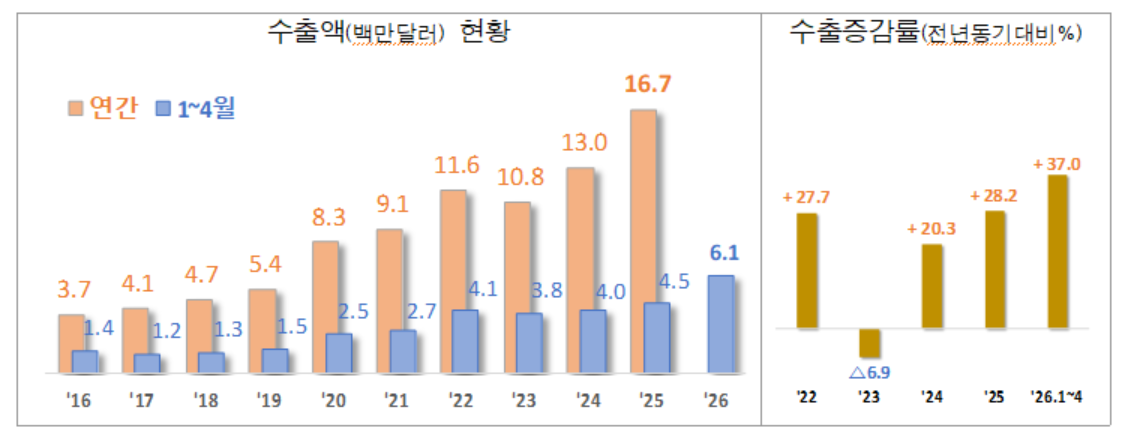
Exports hit record high in Jan.–April, up 37% from a year earlier
Sesame oil — a quiet but essential ingredient behind the global rise of K-food — is posting record export numbers.
South Korea's sesame oil exports reached $6.14 million (about 9.2 billion won) in the January–April period this year, up 37 percent from the same period a year earlier, according to the Korea Customs Service. Export volume climbed 47.6 percent to 657 metric tons, with both figures setting all-time highs for the period. In dollar terms, exports have roughly doubled in five years, rising from $2.7 million in 2021 to $6.1 million this year.
The surge is driven by growing global demand for plant-based oils amid a worldwide health-diet trend, as well as a bundle-purchase effect in which buyers of K-food staples pick up sesame oil as an essential condiment.
Drizzling sesame oil over bibimbap and other hansik dishes at the end of cooking has taken hold in Western kitchens much as olive oil is used to finish salads or fish dishes.
The broader K-food export boom has also raised the profile of Korean cuisine and pulled sesame oil along with it. Ramyun exports reached $1.52 billion in 2025, while sauce exports hit $410 million, lifting overall awareness of hansik ingredients.
Short-form cooking videos spread through K-content platforms have added further momentum. Overseas viewers who try Korean recipes at home follow a natural purchasing path — experiencing hansik, attempting to cook it, then buying sesame oil to replicate the authentic flavor.
The United States and Canada are the top export destinations, together accounting for more than half of total exports at 51.3 percent. The U.S. posted a 170.8 percent increase while Canada surged 249 percent. South Korean sesame oil now reaches 62 countries, including emerging markets such as Australia and the Netherlands.
Australia recorded $2.3 million in sesame oil imports from South Korea in 2025, up 167.9 percent from the prior year, and continued to grow, rising another 29.7 percent in the January–April period this year.
Europe is also emerging as a key growth market, with demand for premium health foods driving expansion. The Netherlands posted a 59.9 percent increase, while the United Kingdom saw a 255.2 percent jump in 2024. European market exports in the January–April period this year rose 42.7 percent to a record $700,000.
kwonhl@heraldcorp.com




