Share jumped 17 percentage points in a year to 48% in May; tenants staying put as listings dry up; renewal right use falls to 25%; jeonse renewals also rise to 54%
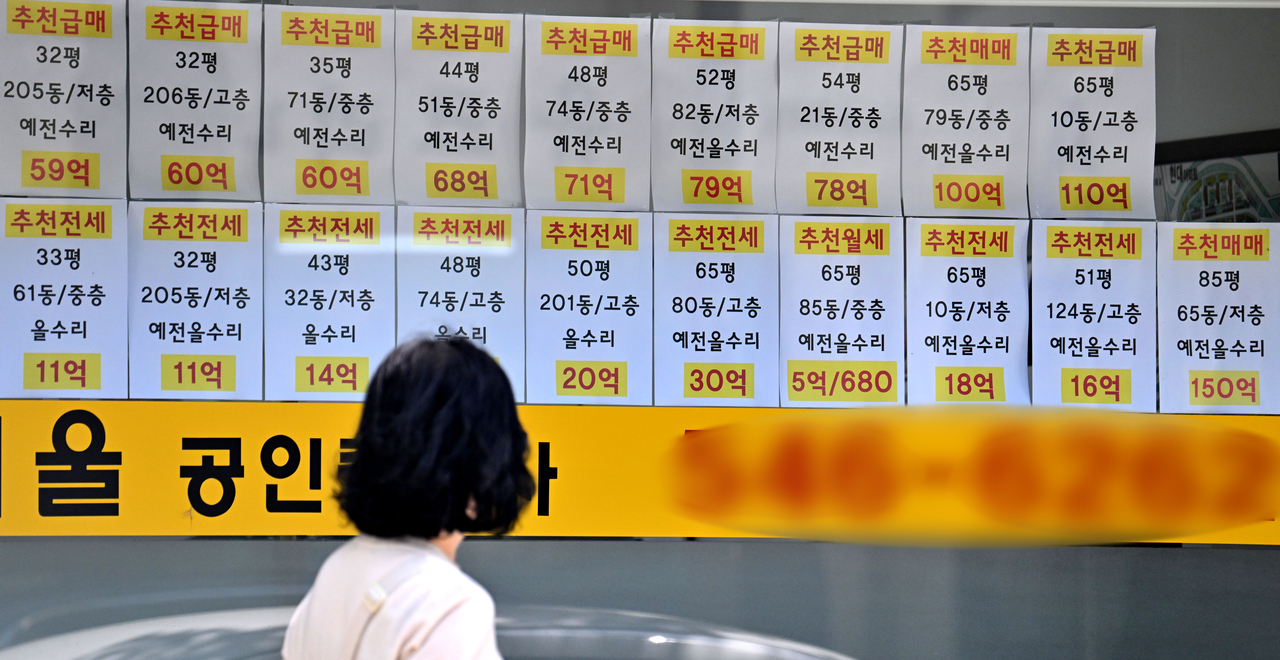
An 84-square-meter unit at Centras in Hawangsimnidong, Seongdong-gu, Seoul, was renewed in May on a two-year wolse contract — a monthly rent arrangement — with a deposit of 100 million won (about $66,500) and monthly rent of 3.5 million won. The renewal was made without invoking the contract renewal right, raising the monthly rent by 550,000 won from the previous 2.95 million won.
An 84-square-meter unit at Helio City in Garakdong, Songpa-gu, was also renewed in May with monthly rent raised by 700,000 won. The contract, extended without using the renewal right, moved from a deposit of 400 million won and monthly rent of 2.3 million won to the same deposit with rent of 3 million won.
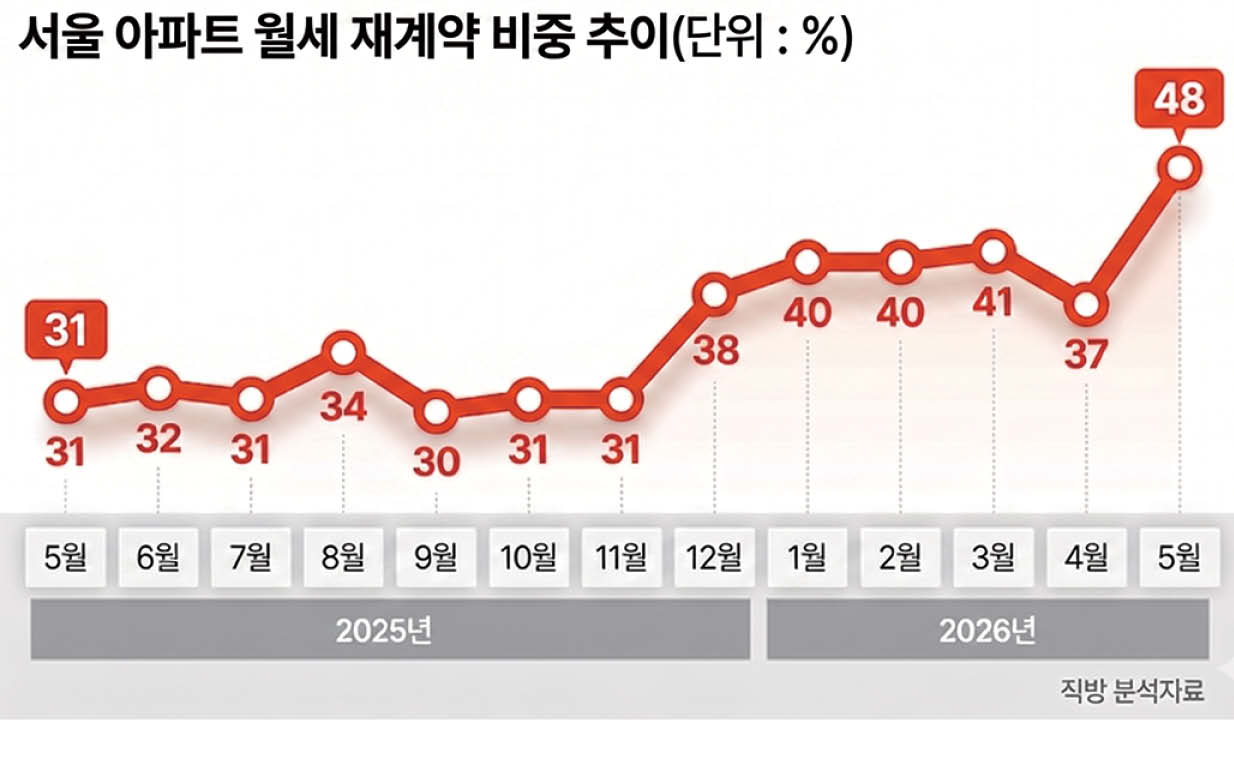
Nearly half of all apartment wolse transactions in Seoul last month were renewals of existing contracts, new data show. The renewal share, which had held in the 30 percent range through last year, has surged to nearly 50 percent as the jeonse and monthly rent crunch in Seoul deepens.
Guro-gu stood out, with seven in 10 wolse contracts being renewals, as tenants give up on moving amid a shrinking pool of available listings and choose to stay in their current homes — a trend compounding housing instability for lower-income residents.
According to data on Seoul apartment jeonse and monthly rent renewal trends by district, commissioned by The Herald Business from real estate platform Zigbang, the wolse renewal share reached 48 percent in May. That is up 17 percentage points from 31 percent in the same month last year. The renewal share climbed to 38 percent in December last year, crossed the 40 percent threshold in January, held roughly flat through the following months, then jumped sharply to 48 percent in May.
By district, Guro-gu posted the highest wolse renewal share in Seoul at 68 percent, followed by Gangdong-gu (59 percent), Mapo-gu (57 percent), Yongsan-gu (56 percent), Gangnam-gu (51 percent), Songpa-gu (55 percent), Jungnang-gu (53 percent) and Yangcheon-gu (52 percent) — all exceeding 50 percent.
Only 25 percent of wolse renewals this month involved use of the contract renewal right, down 13 percentage points from 38 percent in May last year. Analysts attribute this to a growing number of long-term tenants who have already exhausted their renewal rights, as well as an increasing share of tenants willing to accept market-rate rent increases rather than risk losing their current home amid a severe shortage of rental listings.
The number of apartment wolse listings in Seoul stood at 15,599 as of May 31, according to Asil data — down about 27 percent from 21,364 at the start of the year. A rise in owner-occupancy driven by land transaction permit regulations, combined with a broader shift from jeonse to monthly rent arrangements, has sharply reduced the pool of available options, pushing more tenants to extend their existing contracts.
The renewal share for Seoul apartment jeonse contracts has also exceeded 50 percent since February and continues to climb. The jeonse renewal share reached 54 percent this month, up 11 percentage points from 43 percent in the same month last year.
After tracking at 47 percent in January, 51 percent in February, 50 percent in March and 50 percent in April, the Seoul jeonse renewal share expanded further to 54 percent this month.
Seventeen of Seoul's 25 districts recorded jeonse renewal shares above 50 percent. Gangnam-gu led at 66 percent, followed by Seongbuk-gu and Eunpyeong-gu (59 percent each), Gangdong-gu, Nowon-gu and Jungnang-gu (57 percent each), Gangseo-gu (55 percent), Guro-gu and Seocho-gu (54 percent each), Gangbuk-gu, Dongdaemun-gu, Songpa-gu and Jongno-gu (53 percent each), Yangcheon-gu (52 percent), and Gwanak-gu, Geumcheon-gu and Seodaemun-gu (51 percent each).
The share of jeonse renewals using the contract renewal right fell 10 percentage points — from 58 percent in May last year to 48 percent in May this year, mirroring the trend seen in wolse contracts.
As regulatory constraints continue to shrink the supply of jeonse and monthly rent listings, driving up renewal rates and reducing the flow of new units onto the market, the government recently announced a plan to expand the supply of non-apartment rental housing. The goal is to stabilize the rental market by supplying 66,000 purchased rental homes in regulated areas of Seoul and Gyeonggi Province over the next two years.
"With the jeonse and monthly rent shortage already severe, it is difficult to accelerate the supply of new apartments given rising construction costs," said Yang Ji-young, a senior adviser at Shinhan Premier Pathfinder. "Non-apartment housing, however, takes far less time from ground-breaking to move-in than apartments, making it an immediate short-term remedy for the current rental crunch."
By Shin Hye-won
hwshin@heraldcorp.com