
Company wins award alongside two professors for case study spanning textbook writing to classroom use
Three Picl use cases recognized across elementary, secondary and university divisions
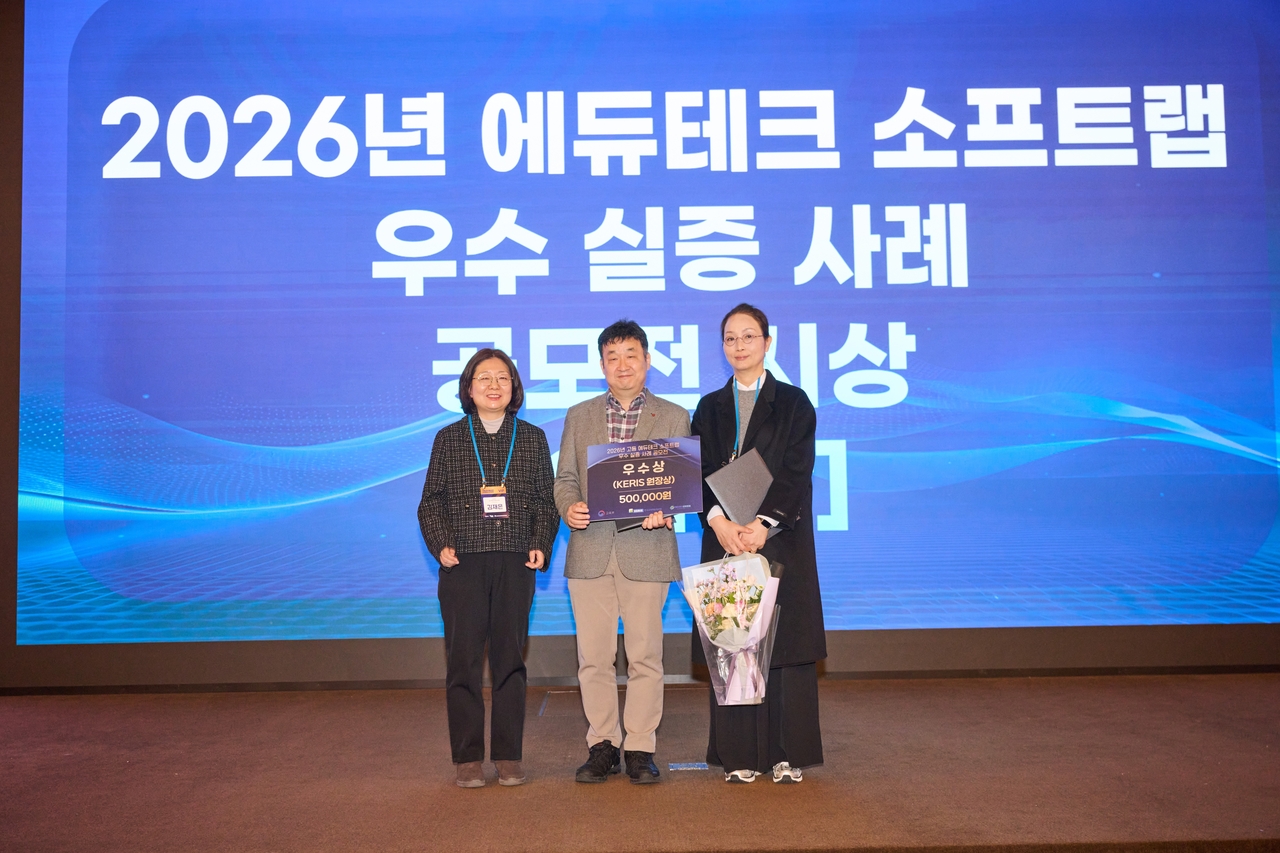
Picl Lab, the edtech company behind PICL, an AI teaching and learning platform grounded in learning science, said Thursday it won an excellence award — presented by the Korea Education and Research Information Service, or KERIS — at the 2026 Higher Education Edtech Soft Lab Outstanding Case Competition. The winning entry was submitted jointly with Kim Ho-seon, a professor at Daewon University College, and Seo Jeong-min, a professor at Busan Catholic University.
The award was presented Tuesday at the 2026 Higher Education Edtech Soft Lab Performance Forum, held at Peace & Park Convention in Seoul, where the winning team also presented its case study.
The submission, titled "AI Courseware PICL Based on Learning Science — A Case Study Proving Educational Effectiveness from Textbook Writing to Classroom Management," was entered by a team called "Geonbangjin Picl," a name derived from the first syllables of the Korean phrase for "radiation diagnosis for healthy teeth." The case study documented how PICL was used in dental hygiene and radiology courses both to write course materials and to run individual class sessions, the company said.
Kim used PICL to write three specialized textbooks, each of which received an International Standard Book Number and was published for use as a regular second-semester course text. The company said the process, which previously took more than six months, was reduced to 21 to 50 hours per volume — roughly three to four weeks.
PICL is an AI teaching and learning platform that generates lesson plans, instructional materials and interactive worksheets, known as Picl Sheets, aligned with learning science principles, based on learning objectives entered by the instructor. The platform's defining feature is that it assigns AI to handle lesson design rather than student thinking — a deliberate safeguard against what the company calls "cognitive outsourcing," in which generative AI does the thinking on behalf of students.
Two additional PICL case studies also received recognition in the competition's elementary and secondary school division. With those wins, a total of three PICL use cases were honored across both the K-12 and higher education divisions.
The recognized cases spanned a wide range of subjects and levels — from English, science, social studies and technology-home economics classes at elementary and middle schools to dental hygiene and radiology courses at the university level.
"It is deeply meaningful that we were able to demonstrate, together with professors, that AI can be used to make students think more — not to think in their place," Picl Lab CEO Jeong Chan-pil said. "We will continue to develop PICL so that more universities and departments can use it with ease, guided by the voices of those working in the field."
pooh@heraldcorp.com




