The elevated walkway has become a landmark tourism draw, anchoring a broader trail and heritage belt linking Jungnang Donghaekkil and Mangwoo History and Culture Park.
Seoul designates it a 'starlight landmark,' with nighttime upgrades and traditional market tie-ins planned to boost the local economy.
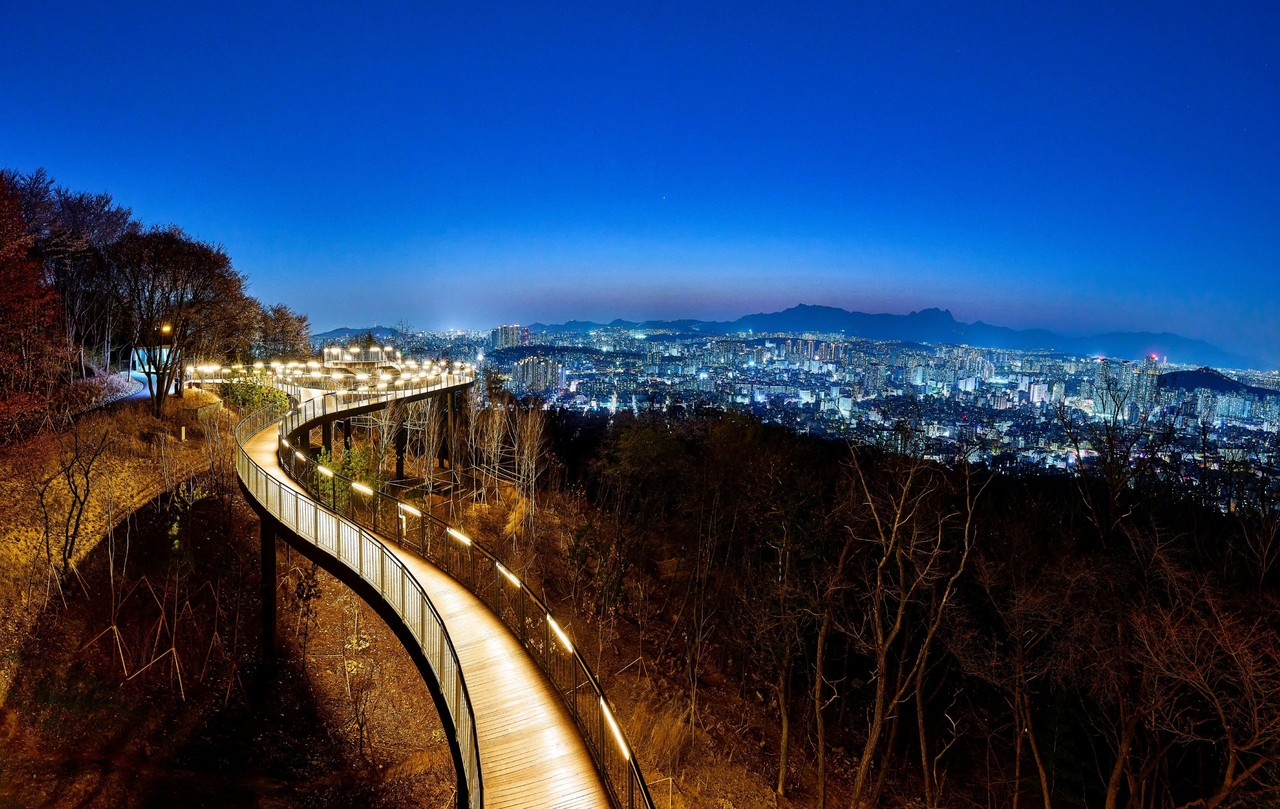
The Yongmasan Skywalk in Jungnang-gu, Seoul has surpassed 2 million cumulative visitors in roughly one year since opening, cementing its status as the district's signature tourist attraction.
The elevated viewing facility offers sweeping views of central Seoul and surrounding mountains, and its connection to nearby walking trails and historical and cultural sites has consistently drawn more visitors.
The skywalk rises up to about 12 meters above ground and stretches approximately 160 meters, giving visitors the sensation of strolling above the forest canopy. From the structure, visitors can take in panoramic views of downtown Seoul as well as Bonghwasan, Bukhansan, Dobongsan and Namsan Tower. Its open vistas, sunset scenery and nighttime lighting have made it popular with families, hikers and foreign tourists alike.
The skywalk connects directly to Jungnang Donghaekkil, a barrier-free walking path that begins at Sagajeong Park, improving accessibility and pedestrian convenience. The route extends further to the Haneul Hydrangea Garden and the Mangwoo Hydrangea Trail inside Mangwoo History and Culture Park, expanding into a tourism corridor that blends nature, history and culture. Exhibitions, cafes and other cultural facilities within Mangwoo History and Culture Park add to the appeal for visitors seeking both a stroll and a cultural experience.
Jungnang-gu is also pushing to extend the skywalk's appeal into nighttime tourism. The Yongmasan Skywalk was selected for the Seoul Metropolitan Government's 2026 Seoul Starlight Landmark Development Project, securing 1 billion won ($744,000) in special adjustment grants.
The district plans to use the funding to install landscape lighting, nighttime photo zones and rest areas designed for longer stays, along with pedestrian lighting along the route toward Mangwoo History and Culture Park. Evening busking performances and cultural arts events are also planned, with the aim of transforming the site from a place simply to walk and look into a nighttime destination where visitors linger.
Efforts are also underway to channel the influx of tourists into broader economic activity in the area. The district opened a customer support center at Sagajeong Market on Oct. 27, providing space for the merchants' association and a rest area for visitors. Plans call for linking the tourism routes from the skywalk and Mangwoo History and Culture Park to nearby traditional markets — including Sagajeong Market, Myeonmok Market and Urim Market — as well as alley shopping districts, with stamp tours and review-certification events in the works.
Jungnang-gu District Mayor Ryu Gyeong-gi said the skywalk has grown into the district's defining tourist attraction by drawing 2 million visitors. "We will continue to connect surrounding tourism resources such as Jungnang Donghaekkil and Mangwoo History and Culture Park to spread the unique charm of Jungnang and build a tourism destination that people will want to return to," Ryu said.
seouldream01@heraldcorp.com