
Trump cites Justice Dept. to justify Huang's reinstatement
Attorney General Blanche dodges questions on alleged wrongdoing
Rubio, who first flagged the scandal, also stays quiet
Bipartisan congressional probe adds to administration's political burden
A single Trump development can shake global markets and economies. If keeping up with the daily flood of Trump news feels overwhelming, our newsletter delivers the essential stories — from Wall Street's closing bell to the market-moving headlines — in just one minute.
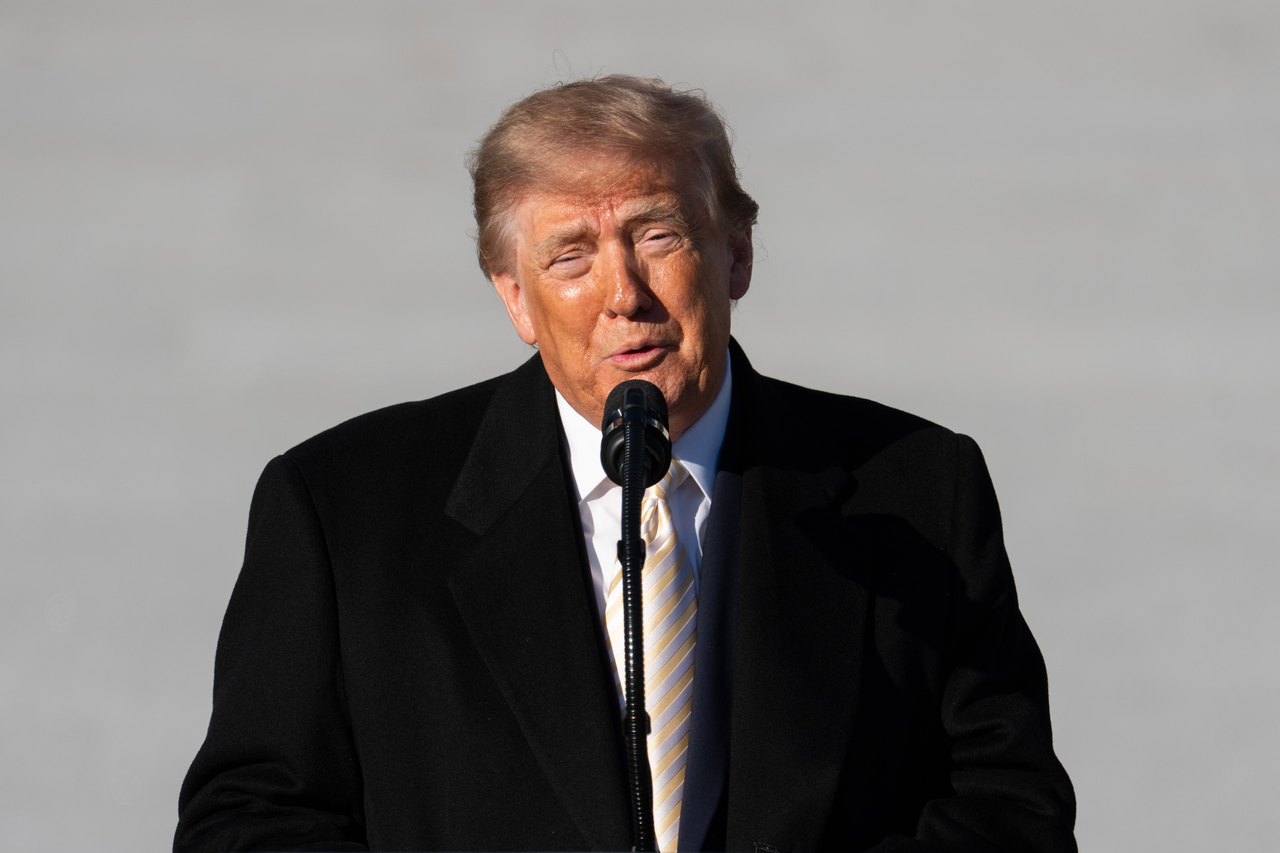
President Donald Trump has been touting the reinstatement of Nvidia CEO Jensen Huang as a personal achievement, but his closest aides have conspicuously held back from echoing his claims. Despite Trump's assertion that Huang has been cleared of any wrongdoing, neither the attorney general nor the secretary of state has publicly backed that position. With Congress signaling a bipartisan investigation, questions over political accountability for Huang's return are threatening to spread across the administration.
The official drawing the most scrutiny in the episode is Attorney General Todd Blanche. Trump has repeatedly argued that Blanche confirmed there was no evidence Huang engaged in any illegal conduct, citing that finding as the basis for the CEO's return to Nvidia.
In an interview with CNBC, Trump went further, suggesting the Justice Department had effectively cleared Huang, and defended the decision vigorously.
Blanche, however, has not publicly confirmed Trump's account. In a Fox News interview on Tuesday (local time), he sidestepped a direct question about whether Huang had been cleared of national security concerns or allegations of wrongdoing.
Asked whether any investigation into Huang had been closed, Blanche said only that "that question presupposes there was an investigation that was opened, and that is not something that has been publicly discussed."
That response leaves unanswered whether the Justice Department conducted a separate inquiry into Huang personally, and on what grounds it concluded there was no evidence of illegal conduct.
Should a congressional investigation uncover evidence that Huang was involved in the smuggling of advanced AI chips to China, the Justice Department could face accusations of having cleared him without adequate scrutiny.
Analysts see that risk as the likely reason Blanche — who has aggressively defended Trump in past controversies — is treading carefully this time.
Secretary of State Marco Rubio has similarly avoided making any public statement on Huang's reinstatement. At a public event on Tuesday, Rubio declined to answer reporters' questions on the matter.
Rubio was the official who personally briefed Trump in May, while the president was en route to China, on reports that Huang had been in an extramarital relationship with a woman suspected of being a Chinese spy. He also shared that information with a small number of senior White House and administration officials at the time.
Given that Rubio also serves as national security adviser, his portfolio overlaps directly with the security concerns surrounding Huang — yet he has offered no public support for Trump's decision to bring the CEO back.
Trump, for his part, has framed Huang's return as a success while deflecting questions about the national security allegations by pointing to the Justice Department's assessment. Some observers interpret this as a calculated move to insulate himself from accountability should a congressional inquiry produce damaging findings.
The administration faces additional pressure from the fact that both Republicans and Democrats have called for an investigation into the circumstances of Huang's reinstatement and the associated security risks. If evidence emerges that Huang was involved in the illicit export of advanced semiconductors to China, Trump — as the driving force behind the return — would find it difficult to escape criticism over a failure to vet the decision properly.
Critics have also raised a broader concern: that a sitting US president pressured a private company's board to reinstate a CEO who had resigned, a move some have characterized as state capitalism.
While Huang's return has resolved the leadership vacuum at Nvidia, the political costs for the Trump administration appear to be mounting. If the congressional investigation brings to light the full extent of the national security concerns and the White House's role in orchestrating the reinstatement, the fallout from the Jensen Huang affair could ultimately become a question of personal accountability for Trump and his inner circle.
sjy@heraldcorp.com




