
GM Korea's Boryeong plant marks 30th anniversary
Annual output tops 500,000 units — factory running at full capacity
Integrated production from raw materials to assembly
Precision machining automation rate at 81%
Cumulative output expected to reach 8 million units in first half of next year
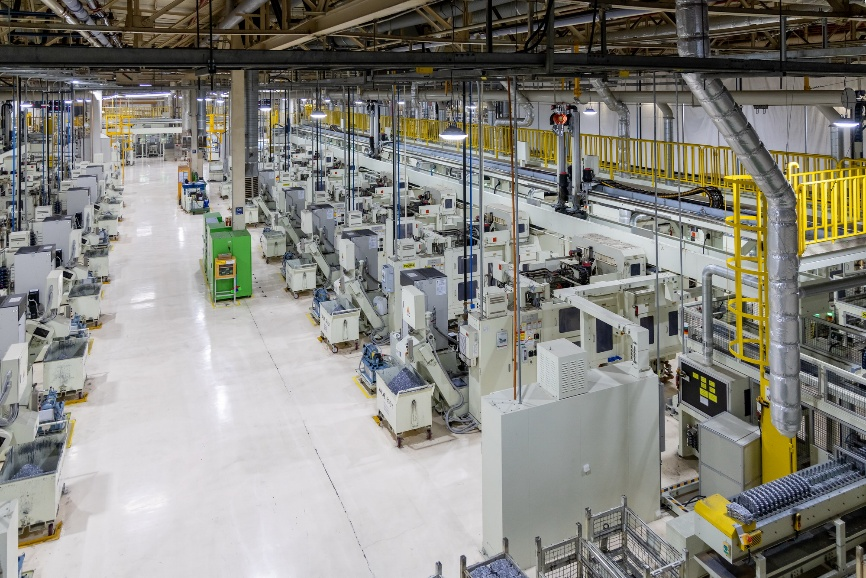
Aluminum transmission components roll off a massive die-casting line without pause, while robotic arms and automated equipment move briskly along the machining and assembly lines. Human workers are rarely in sight. At General Motors' Boryeong plant in South Chungcheong Province — visited Monday — nearly every stage of automatic transmission production runs on automated systems.
A completed six-speed automatic transmission, the GF6, rolls off the assembly line every 32 seconds — roughly 110 units per hour. Those transmissions are then fitted into key GM models, including the Chevrolet Trax Crossover and the Buick Envista, and shipped to markets around the world.
"The GF6 automatic transmission we produce here is Boryeong's signature product," said Kim Kyung-hyun, head of GM Korea's Boryeong plant, expressing confidence in the facility's manufacturing competitiveness.
The plant marks its 30th anniversary this year. Founded in July 1996, it began mass-producing four-speed automatic transmissions the following year and in 2007 became the first GM global facility to produce a six-speed automatic transmission. Built on three decades of accumulated expertise, it has since established itself as a key production hub underpinning GM's global transmission supply chain.
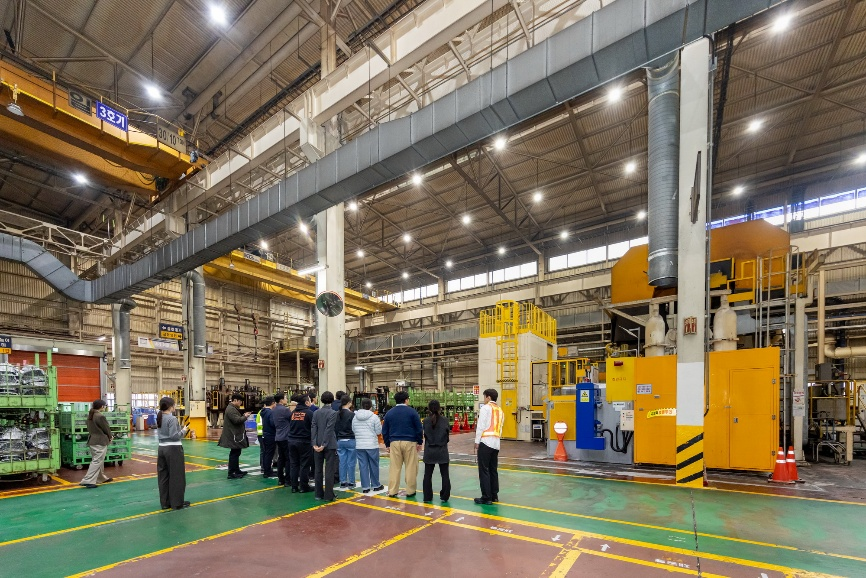
Output has remained consistently high. The plant has produced more than 500,000 units annually for four consecutive years from 2023 through this year, running in effect at maximum capacity. After surpassing a cumulative output of 7 million units in June last year, the plant expects to reach 8 million units in the first half of next year.
"We are making full use of our production capacity, and every process — from materials production through machining and assembly — is operating virtually without a day off," Kim said.
The plant's defining feature is its integrated production system, which handles all major processes — from raw material production and precision machining to assembly and quality control — within a single facility. By manufacturing core components in-house, the plant reduces its dependence on outside suppliers while managing both quality and cost internally.
Gear machining is one of the most representative processes. Gears, a critical transmission component, can undergo minute deformation during heat treatment. The Boryeong plant handles the entire sequence — pre-heat-treatment machining, heat treatment and post-processing — in-house, allowing it to manage such deformation with precision.
"Managing the process in one place allows us to respond quickly to any deviations that arise during machining," Kim said. This approach also helps reduce gear noise and quality issues while lowering production costs.
Production automation is another pillar of the plant's competitiveness. The precision machining process has an automation rate of 81 percent. From 2022 through this year, the plant invested about 90 billion won ($66.8 million) to build new valve body and transmission case machining lines and replace aging equipment. The Boryeong plant is also included in GM's domestic investment plan of approximately 880 billion won announced this year, with additional investment to follow.
Kim cited the high share of in-house production of core components and the efficient use of existing equipment as the keys to the plant's price competitiveness. "Some of the equipment we are still using today has been upgraded from machines installed 30 years ago," Kim said, adding that the integrated production system reduces exposure to fluctuations in external parts prices and helps keep production costs down.
Stable labor relations are another competitive advantage the plant highlights. In its 30 years of operation, the Boryeong plant has not lost a single unit of production to a strike. Its union is affiliated with the Korean Metal Workers' Union's South Chungcheong branch — separate from the GM Korea chapter — and conducts its own independent wage and collective bargaining negotiations. Kim attributed the record to close, ongoing communication between management and labor that resolves potential conflicts before they escalate.
The plant is also a major anchor of the local economy. As the largest private employer in the region, it employs more than 600 workers, and in 2024 converted about 150 contract workers to permanent positions. Its 218 partner companies employ more than 18,000 people, and procurement of parts and logistics services tied to the Boryeong plant totals approximately 339 billion won.
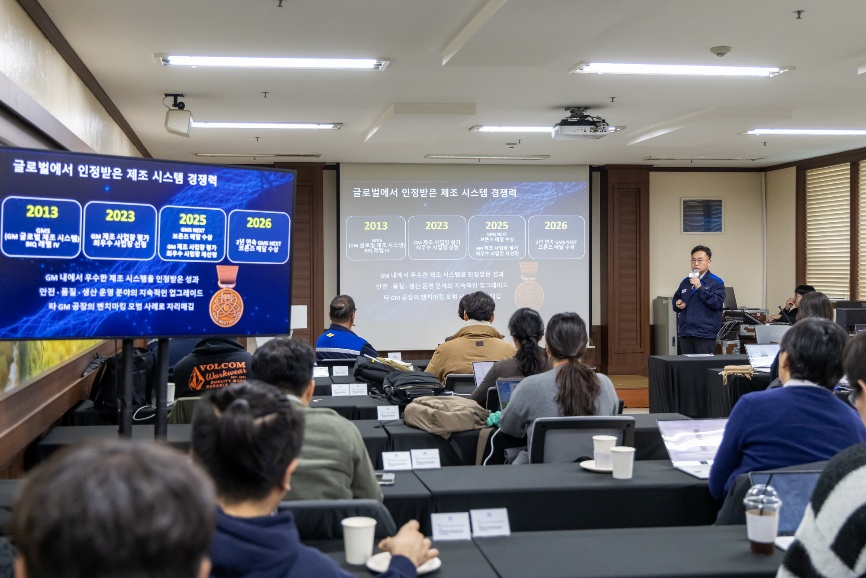
The plant's manufacturing competitiveness has earned recognition within GM's global supply chain as well. It was named an MVP plant in GM's global manufacturing facility evaluations in both 2023 and 2025. It was also the first GM global facility to reach the Bronze level under GMS Next, GM's manufacturing operations assessment framework.
About two-thirds of the transmissions produced at the Boryeong plant are fitted into vehicles assembled domestically — including the Chevrolet Trax Crossover at the Changwon plant and the Buick Envista at the Bupyeong plant. The remaining third is exported to South America and Central Asia for use in locally produced vehicles, with the Chevrolet Cobalt and Tracker built in South America among the notable examples. Transmissions destined for North America are supplied as part of finished vehicles assembled in Korea.
GM Korea believes it can sustain high output for now, given continued strong global demand for internal combustion engine vehicles. "Boryeong's quality and price competitiveness are strong enough that when GM allocates GF6 production volume, it fills Boryeong's capacity first before assigning the remainder to other plants," Kim said.
The spread of electric and hybrid vehicles, however, poses a long-term challenge for the Boryeong plant, which produces transmissions for internal combustion engines. As the electrification market grows, demand for the existing six-speed automatic transmission may have limited room to expand.
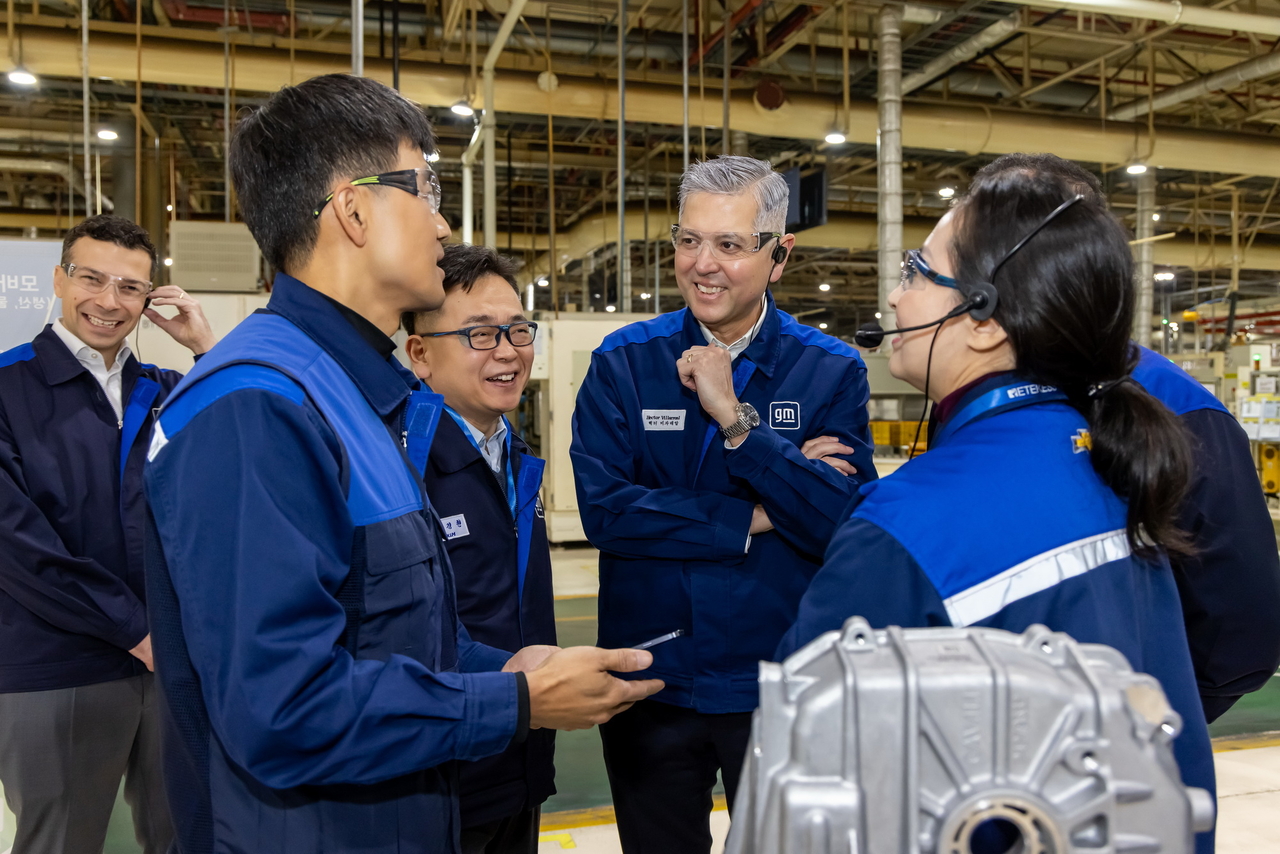
"The transmissions produced at the Boryeong plant support the driving experience of customers around the world," said Hector Villarreal, president of GM Korea. "The Boryeong plant is contributing to enhancing GM's competitiveness in the global market."
kwater@heraldcorp.com




