Gwangmyeong has unveiled a transportation blueprint for 2040 aimed at improving mobility and safety for residents, with Mayor Park Seung-won pledging to build a public-transit-centered city powered by AI and advanced technology.
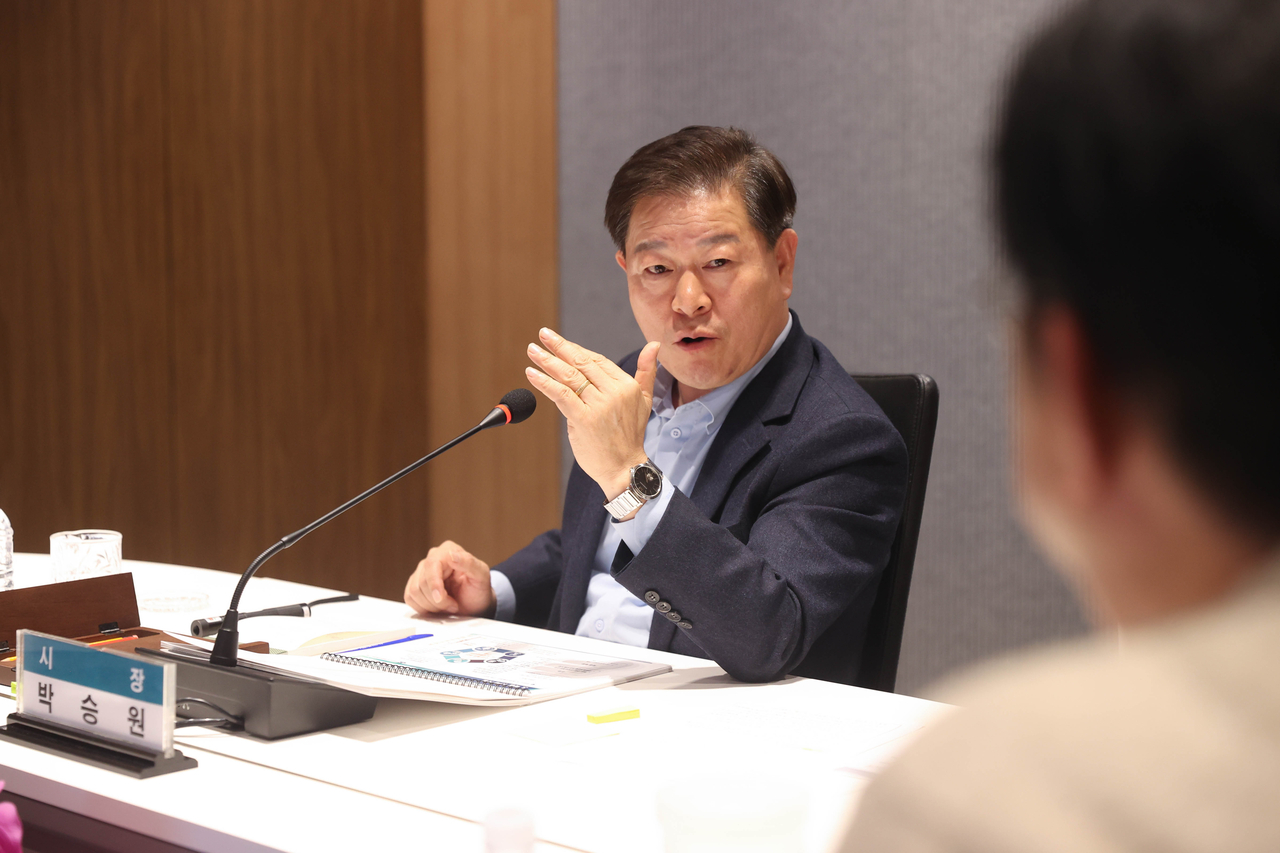
The city held a final briefing Thursday at the city hall conference room on a master plan revision and mid-term planning study for urban transportation, discussing policy directions and sector-by-sector improvement projects that account for the development of the Gwangmyeong-Siheung third-generation new town and projected population growth.
The plan focuses on delivering balanced transportation services between established neighborhoods and the new town, while strengthening the effectiveness of metropolitan traffic improvement measures.
The city set its vision as making Gwangmyeong "the premier transportation hub city where residents can live conveniently by public transit," and outlined five strategic directions: building a public-transit-centered transport system, achieving zero traffic fatalities, enabling seamless transfers between transport modes, introducing AI-based transportation services, and supplying new-town transport infrastructure on schedule.
To that end, the city set targets of raising the public transit modal share from 32 percent in 2024 to 50 percent by 2040, and reducing traffic fatalities from eight in 2024 to zero by the same year.
Through 2030, the city will prioritize improving the traffic system, deploying advanced traffic management technology, and encouraging greater use of public transit.
Plans include overhauling traffic flow along the chronically congested Ori-ro corridor, installing 16 smart intersections and four smart shelters to improve road conditions and the public transit environment, and building a new connector road between the Gwangmyeong Station interchange and Ori-ro to ease congestion around Gwangmyeong Station. The city also plans to establish an AI-based urban integrated center to manage traffic, safety, disaster and environmental data through an intelligent transport management system.
Unmanned operating systems and an integrated control platform will be introduced at public parking lots to boost operational efficiency. The city also plans to refund public transit fares for residents visiting public institutions, install bus-only lanes toward Seoul, and expand public transit supply in the Gwangmyeong-Siheung third-generation new town.
Through 2040, the city will gradually expand public transit infrastructure and metropolitan transport networks in response to urban growth driven by the Gwangmyeong-Siheung new town development and rising transport demand.
Public and multipurpose bus depots will be built to strengthen the operational foundation for public transit, while pedestrians and mobility-impaired residents will benefit from improvements to the walking environment around Gwangmyeong Sageori and upgrades to the senior protection zone at Haan Sageori.
The city also plans to incorporate metropolitan network expansion projects — including the Sincheon–Haan–Sillim line — to improve access to key destinations in Seoul and the greater metropolitan area, building out the transport infrastructure needed to match the city's growth.
"We will expand transport infrastructure in step with the city's growth and change, while creating a transport system that lets every resident move around conveniently and safely," Mayor Park said. "By 2040, we will establish a public-transit-centered transport environment and actively harness advanced technologies such as AI to realize a future transport city that transforms daily life for our residents."
fob140@heraldcorp.com