Key pledges including Gwanak S-Valley 3.0, 365 integrated care and Gwanaksan Sky Forest Trail to be finalized by year-end
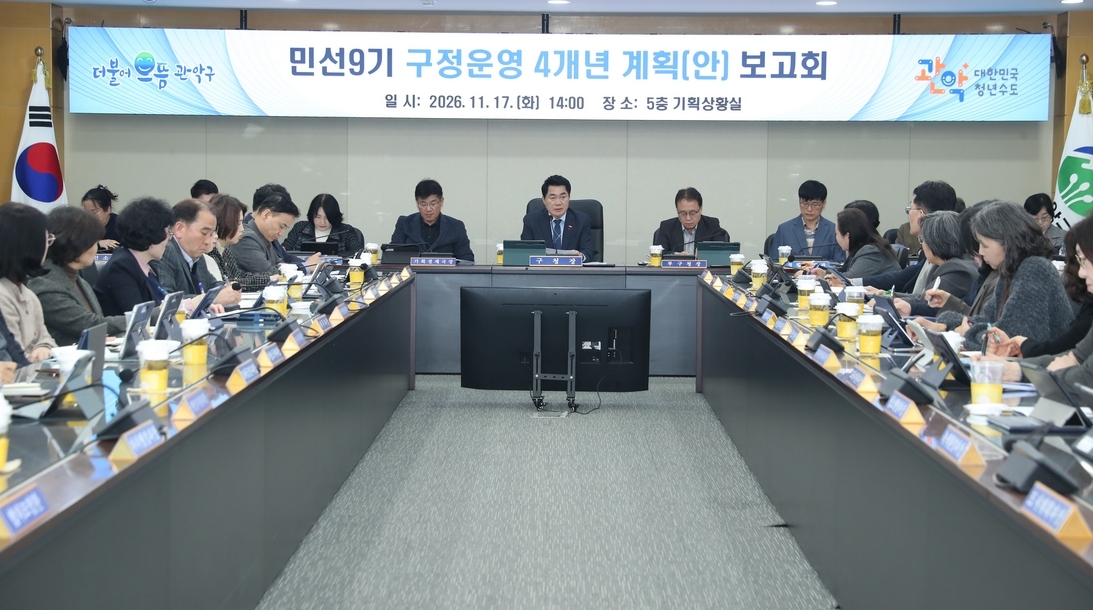
Gwanak-gu is moving to flesh out its administrative blueprint for the four-year ninth elected term and accelerate the implementation of its core campaign pledges.
The district held a briefing Tuesday on its draft four-year administrative plan for the ninth elected term, gathering department heads, neighborhood office directors and other senior officials to discuss the direction and action plans for six goals and 58 tasks.
Built around the vision of "a great leap for Gwanak, completing a greater Gwanak," the plan spells out implementation targets, timelines and funding strategies for the ninth-term campaign pledges. It draws on a pledge-execution plan drafted by the policy planning committee in July.
To strengthen the feasibility of the pledges and make their impact more tangible to residents, the district collected 51 proposals through subcommittee meetings of its policy advisory panel and gathered resident opinions and suggestions in September and October.
Priority projects focus on areas closely tied to residents' daily lives, including the economy, the environment, youth, housing and welfare.
To build an innovation-driven economy, the district will strengthen its venture and startup ecosystem centered on Gwanak S-Valley 3.0. Plans include establishing the Seoul Startup Hub Gwanak, designating a special development promotion zone and expanding startup hub spaces — all aimed at positioning Gwanak as a center for entrepreneurship and innovation. Tailored support for individual alley commercial districts will also boost the competitiveness of small business owners.
A "healing garden city" project to expand green recreational spaces will also get underway in earnest. The district plans to develop the Gwanaksan Sky Forest Trail and a nature recreation forest on Gwanaksan in phases, creating signature destinations where residents can enjoy nature close to home.
On youth policy, the district will introduce a youth participatory budgeting system that gives young people a direct role in shaping and executing policy, with the related budget to be expanded incrementally.
The district will also work to improve residential environments and ease traffic congestion. A rapid support team and a progress-promotion council for improvement projects will back redevelopment and reconstruction efforts, while expanded public parking lots and the opening and sharing of private parking facilities will address the chronic parking shortage.
In welfare, the district will provide tailored support across all 21 neighborhoods to prevent social isolation among single-person households and will strengthen the Gwanak 365 Integrated Care program to reduce gaps in care coverage. The aim is to build a community-centered integrated care system that allows residents to continue living healthy, stable lives where they already are.
The district will incorporate feedback from Tuesday's briefing to refine the plan, then finalize and release it by year-end after full meetings of the policy advisory panel and the innovation and governance committee in December.
Gwanak-gu recorded a 99.8 percent pledge fulfillment rate at the close of the eighth elected term and received the top SA rating for three consecutive years in a national assessment of pledge fulfillment and information disclosure among basic local government heads.
"The four-year administrative plan is the blueprint for delivering on our promises to residents," Gwanak-gu District Mayor Park Jun-hee said. "We will push ahead with our campaign projects without a hitch and create real, tangible change that residents can feel in their everyday lives."
seouldream01@heraldcorp.com