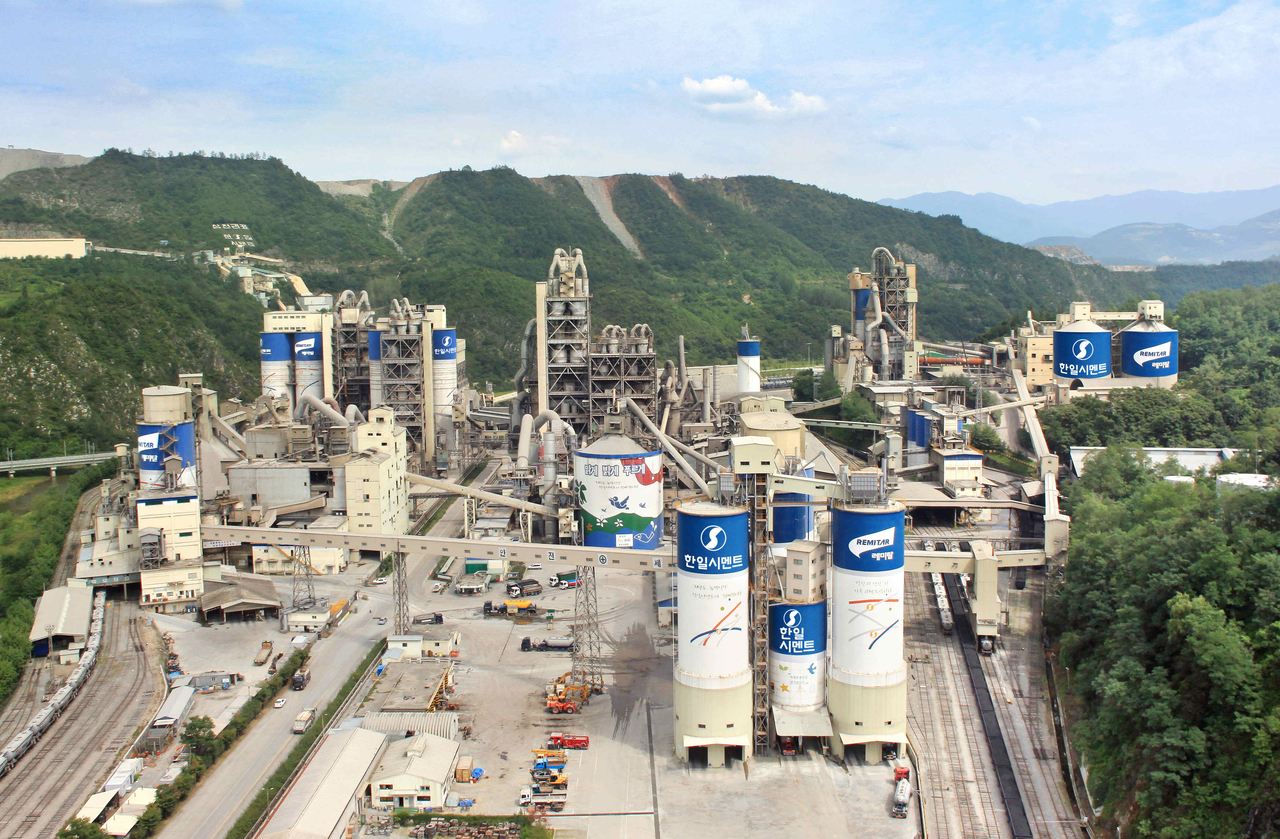
A sprawling factory visible from 1 km away — 5.22 million square meters, six kilns
Replacing coal with waste plastics and recycled fuel, with 651.4 billion won invested through 2028
Next-generation cooler arriving this month to recover waste heat and generate electricity
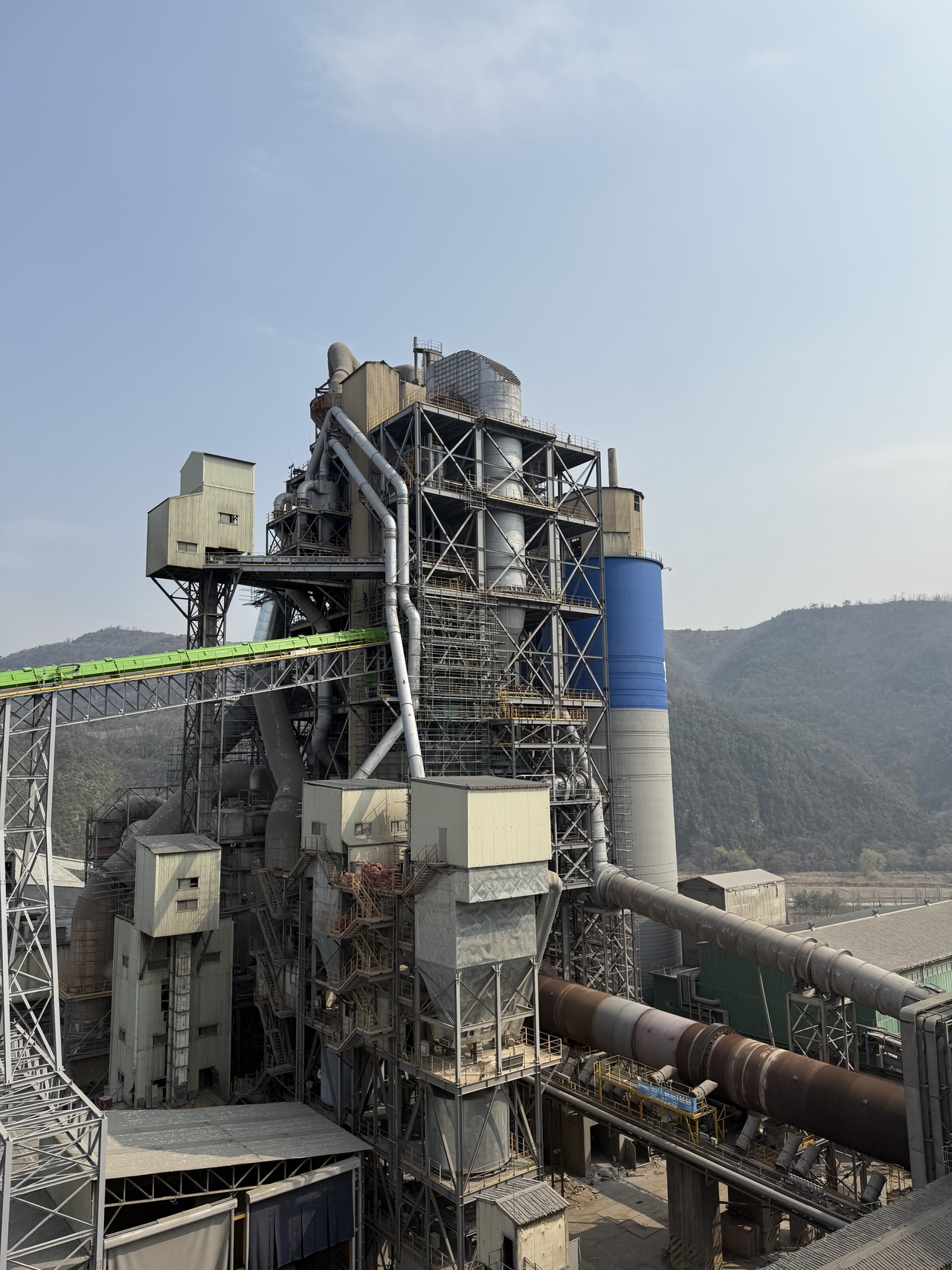
DANYANG, North Chungcheong Province — Winding along a mountain road toward Udeok-ri in Mapo-eup, Danyang-gun, towering steel structures come into view long before the factory itself. A preheater tower pierces the sky and a conveyor belt cuts across the ridgeline — all still about 1 kilometer from the main gate of Hanil Cement's Danyang factory, which has been producing what the construction industry calls "the rice of building" for more than 60 years.
At the limestone quarry adjoining the plant, freshly blasted rock moves along a sealed conveyor to a vast dome-shaped storage hall. Dust collectors installed throughout the transfer route draw in airborne particles before they can escape. At a facility where cement is fired at 1,450 degrees Celsius, the most striking change on a recent visit was, paradoxically, a push toward environmental sustainability.
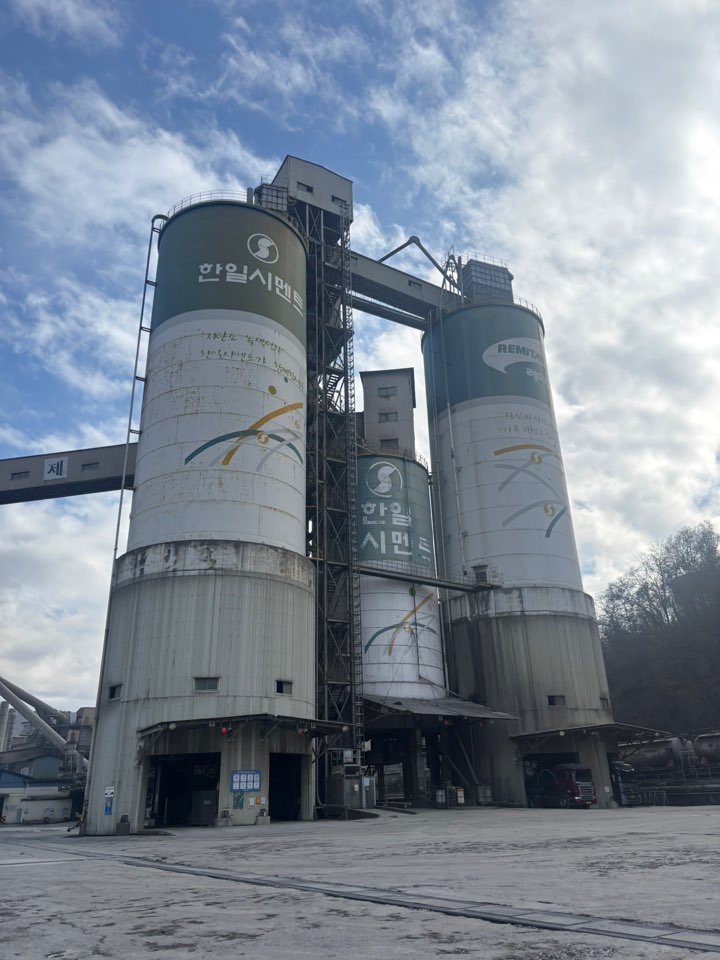
Cylindrical storage silos of overwhelming scale dominate the factory floor — so large that the bulk cement trailers parked beside them look almost miniature. Heavy steel pipes crisscross overhead, and a low mechanical hum rises from massive rotating equipment. A company official noted that the plant is currently in its off-season due to a construction slowdown, though nothing about the scale of the machinery or the noise suggested any kind of lull.
Heat felt from 20 meters away — kilns hotter than volcanic lava
The most intense piece of equipment is the kiln — the heart of any cement plant. Standing 20 meters away, the radiant heat is immediately felt on the face. Large cooling fans spin around the cylindrical structure to prevent the outer shell from warping under the extreme internal temperatures. "If the external temperature of the kiln gets too high, the casing deforms," a plant official explained. "We blow air from outside to cool it down and prevent that." The raw materials inside are fired at around 1,450 degrees Celsius — hotter than typical volcanic lava, which ranges from 800 to 1,200 degrees. Under that intense heat, ordinary powdered rock is transformed into clinker, the essential ingredient of cement.
The Danyang factory, completed in 1964, was Hanil Cement's first production facility. Now in its 62nd year of operation, the site — including the quarry — covers 5.22 million square meters, enough to fit more than 700 full-size soccer pitches and 1.8 times the area of Yeouido. Six kilns are currently in operation, supported by 10 cement grinding mills. Annual clinker production capacity stands at approximately 7.1 million tons, with cement production capacity reaching 8.1 million tons.
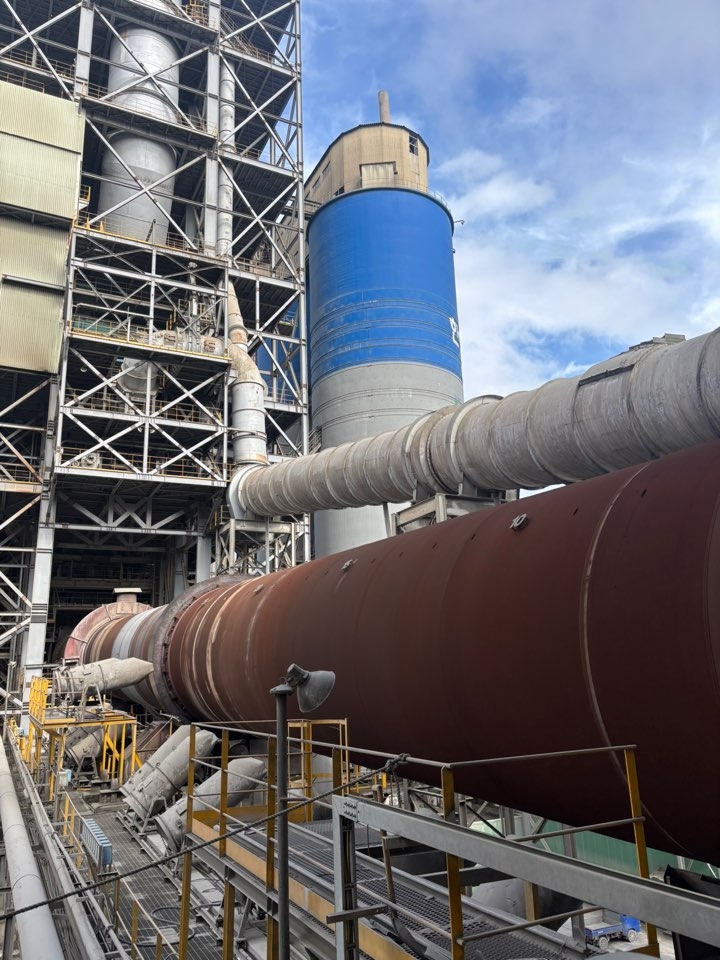
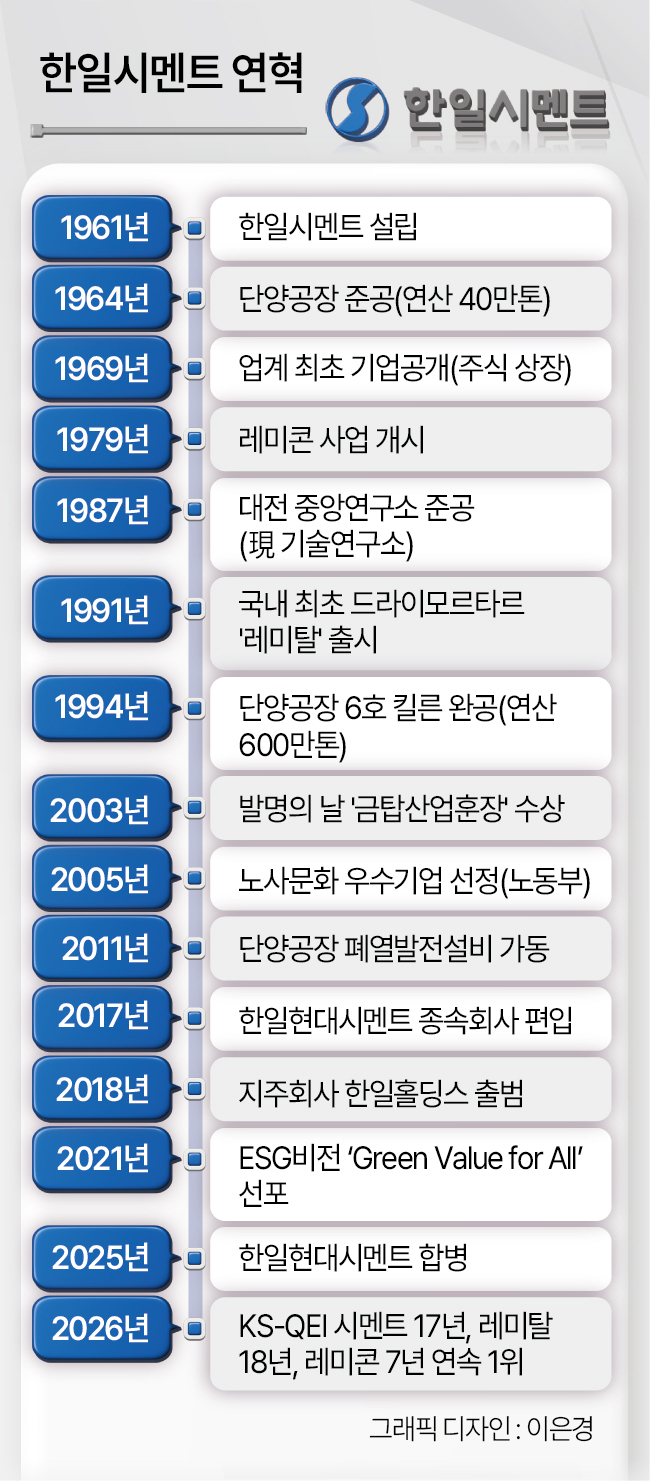
What began in 1964 with two kilns and an annual clinker capacity of 400,000 tons has grown over six decades into one of South Korea's largest cement production complexes. In November last year, Hanil Cement absorbed Hanil Hyundai Cement, integrating the Yeongwol and Samgok factories into its production network. The combined annual clinker capacity across all three plants now stands at approximately 14 million tons.
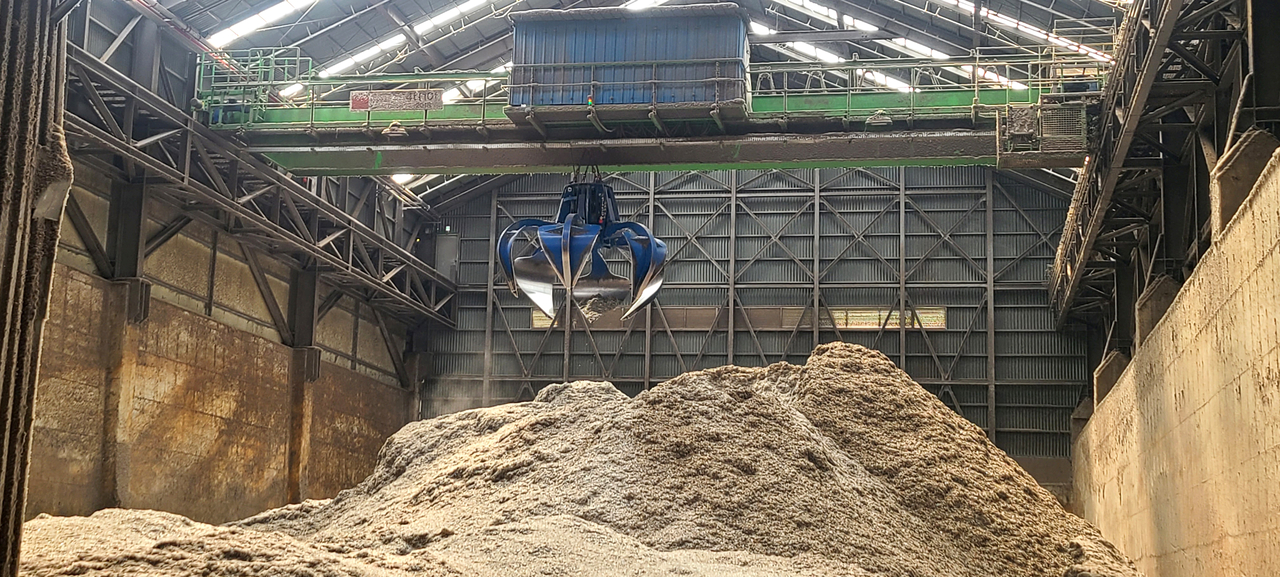
The cement-making process can be summarized in three steps: grind, fire, grind again. Limestone extracted from the quarry arrives in chunks roughly the size of a small car. It is crushed repeatedly until reduced to small stones, then fed into the kiln along with iron-bearing and other raw materials for firing — the most critical stage of cement production.
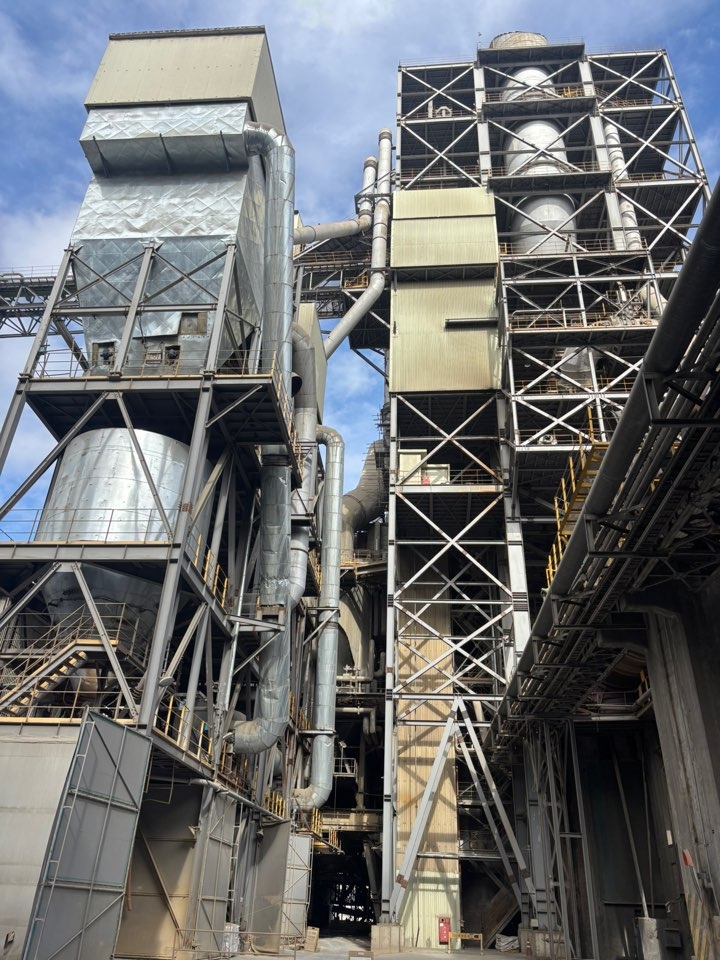
Inside the kiln, raw materials and fuel combust together at around 1,450 degrees Celsius. Before entering the kiln, the raw mix passes through a preheating stage, since raising temperatures above 1,000 degrees in a single step is not feasible. The preheater tower — typically the tallest structure visible at any cement plant — receives the limestone and additives at the top, applies heat in successive stages, and delivers the material to the kiln entrance already at high temperature.
Once inside the slowly rotating kiln, the raw mix melts into a flowing mass at around 1,450 degrees Celsius. The various materials fuse together, and the chemical structure and mineral composition of the limestone undergo a fundamental change, forming entirely new mineral compounds. The resulting lumps are clinker — the core ingredient of cement. After rapid cooling, clinker is ground together with gypsum and other additives to produce finished cement. "The kiln rotates slowly, and the material flows from the higher end to the lower end," a company official said. "Once the material exits the kiln, it is rapidly cooled with air to produce clinker pellets about 1 to 2 centimeters in diameter."
Another competitive advantage of the Danyang factory is the direct adjacency of the limestone quarry to the plant. The enclosed conveyor system that carries quarried limestone to the factory minimizes dust emissions along the way. "The competitive strength of the Danyang factory lies in its integrated large-scale production system — from raw material extraction through crushing, firing and storage," a plant official said.
Hanil Cement has described the founding decision to locate the factory here in its own records. "Founder and Chairman Heo Chae-gyeong discovered Gaeksan in Udeok-ri, Mapo-eup, Danyang-gun, North Chungcheong Province — a site with high-quality limestone in abundant quantities, convenient transport links and ample water supply, incomparably superior to any other candidate site," the company wrote. Gaeksan refers to a mountain that stands apart, unconnected to surrounding ridges.
Cutting coal, using waste plastics — 651.4 billion won in green investment
The greatest challenge facing this vast factory is heat. Firing limestone at around 1,450 degrees Celsius consumes enormous amounts of energy, and the cost of bituminous coal and electricity is the single biggest variable in cement production costs. The hottest spot in the plant is also the center of both cost competitiveness and carbon emissions.
That is precisely where Hanil Cement has been focusing its efforts. The company is working to transform a factory that has produced cement for more than 60 years into a facility with lower energy consumption and greenhouse gas emissions. From 2021 through 2028, Hanil Cement has committed approximately 651.4 billion won ($488 million) to eco-friendly equipment upgrades at the Danyang factory and other major sites. Of that total, approximately 500.5 billion won had already been spent by the end of last year.
The core objective is reducing the use of bituminous coal. Existing kilns are optimized for coal combustion, and switching to recycled fuels such as waste synthetic resins requires equipment modifications to ensure complete combustion.
Hanil Cement completed preheater tower retrofits and auxiliary combustion equipment installations on Kiln No. 5 in March 2023 and on Kiln No. 6 in April last year. The upgrades route recycled fuel through a separate auxiliary combustion unit before it enters the preheater tower, extending burn time. Enclosed storage and transfer facilities for the recycled fuel were also constructed.
The company expects the Kiln No. 5 and No. 6 retrofits to cut bituminous coal consumption by more than 30 percent, with an estimated annual greenhouse gas reduction of approximately 36,000 tons. The recycled fuel's share of thermal energy at the Danyang factory currently stands at around 40 percent, with a long-term target of 65 percent or more.
Across all of Hanil Cement's operations, the shift away from coal is even more pronounced. The recycled fuel share of thermal energy rose from 35.9 percent in 2023 to 41.3 percent in 2024, and reached 48.8 percent last year. The target for this year is 53.1 percent — meaning waste synthetic resins and other recycled fuels would supply more than half of the thermal energy needed for the firing process, displacing coal.
"About once a year, we shut down equipment for roughly a month to clean and inspect the interior," a company official said. "We check whether the internal insulation is properly bonded and repair any damaged sections. In the past we did maintenance every six months or so, but as refractory and insulation materials have improved, the maintenance interval has lengthened."
Generating electricity from waste heat — next-generation cooler arrives this month
Another piece of equipment that drew attention during the visit was the clinker cooler. Clinker produced at around 1,450 degrees Celsius cannot be sent directly to the grinding mill — it must be rapidly cooled to stabilize quality and allow the subsequent grinding process to proceed smoothly.
Hanil Cement completed the replacement of an existing kiln cooler with a next-generation unit this month. The new cooler chills the hot clinker while simultaneously recovering the heat generated in the process. The recovered hot air is fed back into the kiln for reuse in combustion, and a portion of the residual waste heat is routed to a power generation unit to produce electricity.
The company's expectations for the upgrade are significant. The goal is to raise the heat recovery rate from the current approximately 65 percent to between 70 and 80 percent, while lowering the temperature of clinker discharged from the cooler from 250 degrees Celsius to around 100 degrees. The company estimates this will reduce thermal energy consumption by about 6 percent and cut greenhouse gas emissions by approximately 16 kilograms per ton of clinker.
The new cooler is also expected to boost power generation. By utilizing the additional waste heat it recovers, the company says it can produce an extra 450 MWh of electricity annually — heat captured while cooling high-temperature equipment fed back directly into production.
"Initially, the residual heat from the kiln was sent to the preheater to warm the raw materials," a plant official said. "Now we use that heat to generate steam, spin a turbine and produce electricity. The electricity we generate is used directly in the factory. Because our power consumption is so high, we don't sell it externally — we consume it all ourselves."
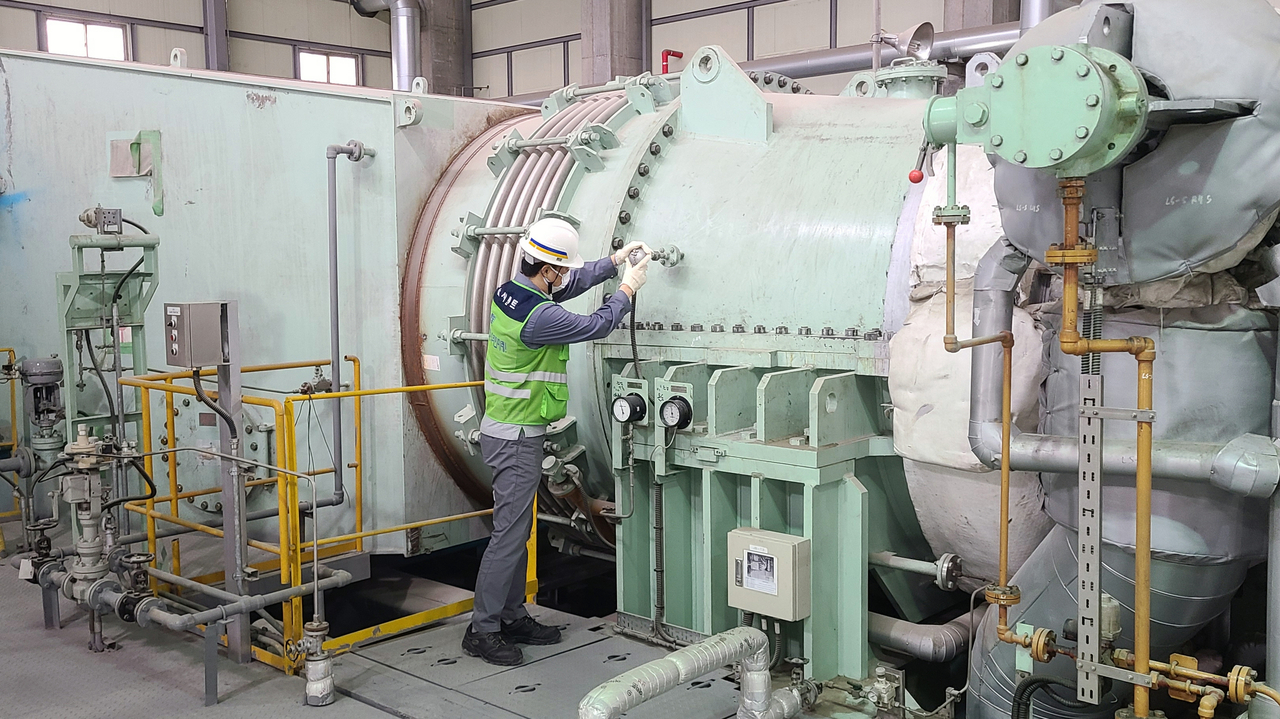
Energy recycling is already under way across the Danyang factory. The flagship installation is the ECO power generation facility. Even after passing through the preheater tower, exhaust gases from the cement production process still carry heat of 300 to 400 degrees Celsius. Hanil Cement routes that heat to a boiler to produce steam, which then drives a turbine to generate electricity.
Built in 2011 at a cost of 80 billion won, the ECO power generation facility currently produces approximately 120,000 MWh of electricity per year — enough to cover about 20 percent of the Danyang factory's annual power needs. By converting waste heat generated inside the plant back into electricity, the facility also reduces the amount of power the factory must purchase from the grid.
Cutting nitrogen oxide emissions and trimming electricity costs
Reducing pollutant emissions is another major investment priority. Hanil Cement invested 3.5 billion won to upgrade the selective non-catalytic reduction, or SNCR, system at the Danyang factory — equipment that injects urea solution into the high-temperature firing process to reduce nitrogen oxide emissions. The upgrade improved nitrogen oxide reduction efficiency by more than 40 percent, and the company says nitrogen oxide emissions in 2023 were 30 percent lower than in 2019.
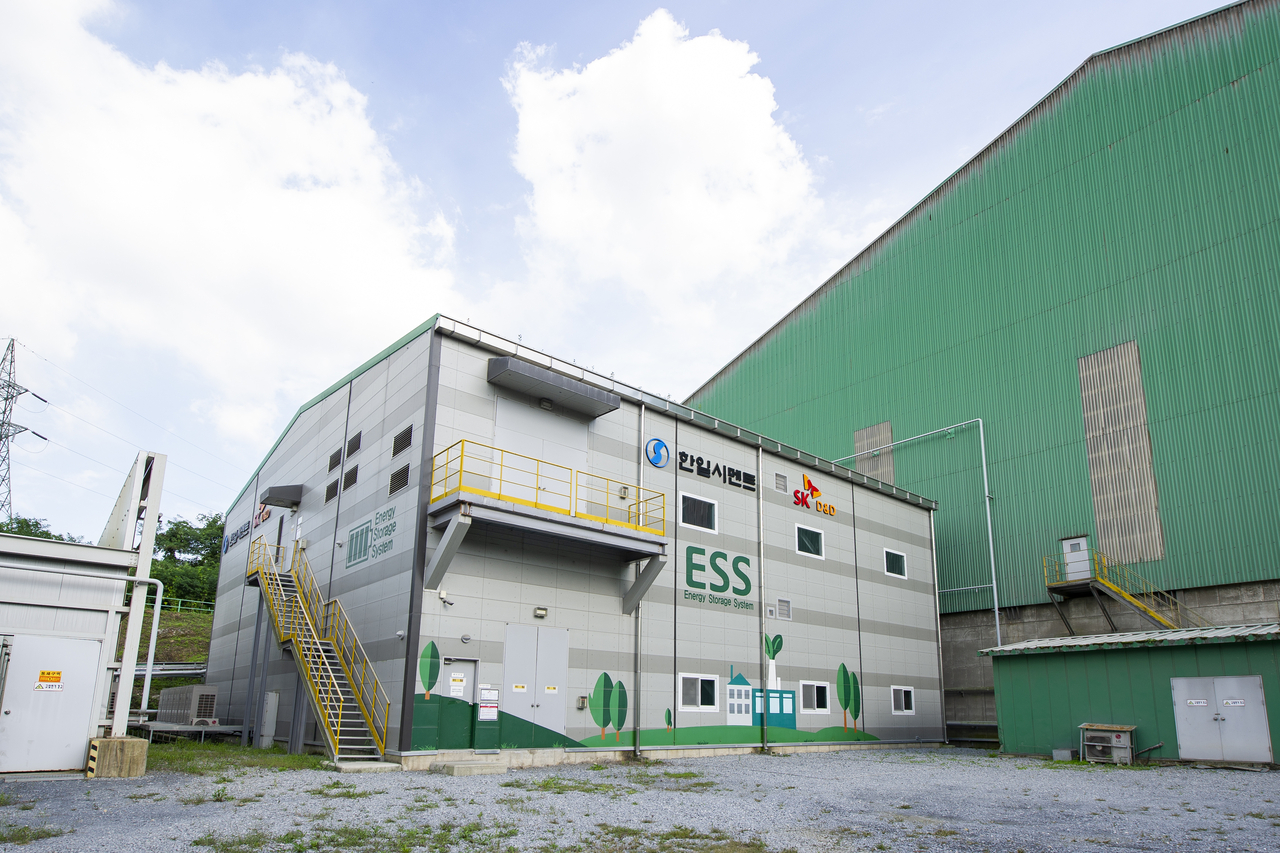
The factory is also improving electricity efficiency. Using an energy storage system, or ESS, the plant stores power during off-peak hours when electricity rates are lower and draws on it during peak periods, saving approximately 600 million won in annual electricity costs. Work is also ongoing to expand the use of recycled raw materials — including coal ash, steelmaking byproducts and lime sludge — in the cement manufacturing process.
"Energy costs account for roughly 50 to 60 percent of cement production costs," a Hanil Cement official said. "Recently we have been using recycled resources to help with environmental regeneration — as they do in Europe — while also cutting costs. Capital investment continues because reducing carbon emissions from the production process and recycling waste resources are two sides of the same coin: both lower costs."

hong@heraldcorp.com