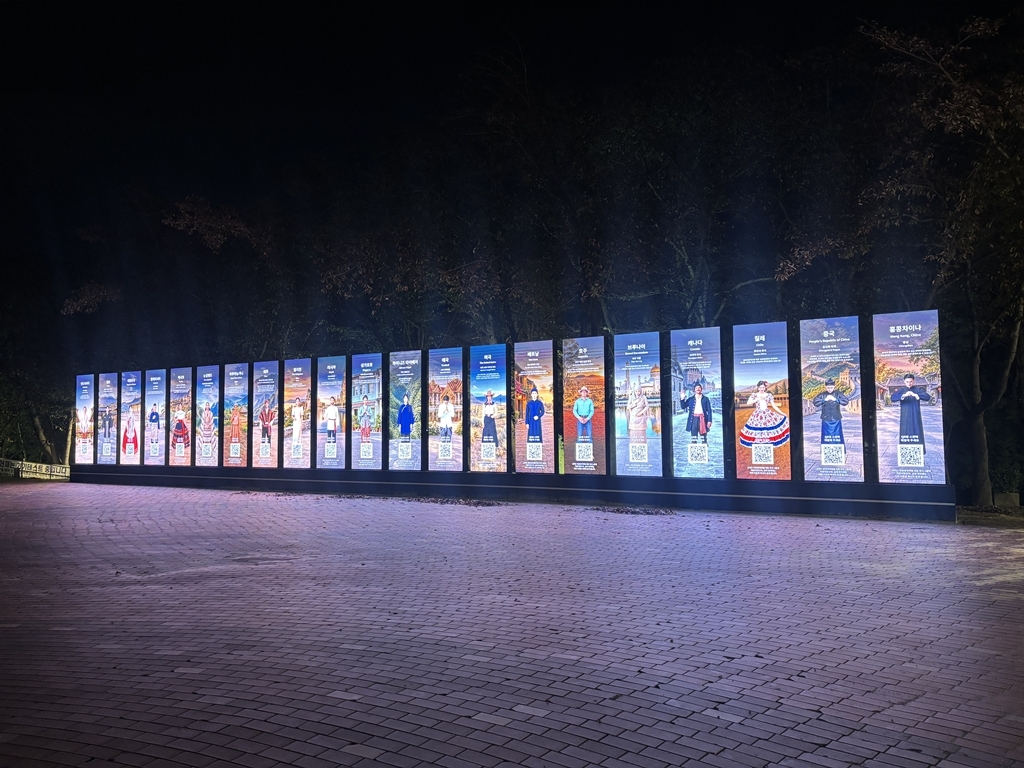
Gyeongju city in North Gyeongsang Province announced Monday it will permanently operate a "Post-APEC Media Wall" in front of the Bomun Aquatic Performance Hall, converting a temporary installation that drew strong public interest during the 2025 APEC summit into a standing facility.
The project aims to keep the legacy of the summit alive as an everyday cultural attraction for residents and tourists, building on the media wall that was set up temporarily during the leaders' meeting.
The centerpiece of the display is a video featuring a flame-shaped glass bottle unearthed from the Hwangnam Grand Tomb. Believed to have traveled from Persia along the Silk Road before reaching the Silla kingdom, the artifact illuminates the ancient kingdom's history of international exchange and highlights Gyeongju's global character as the APEC host city.
Interactive content is also on offer. Visitors can use a program that superimposes their face onto traditional costumes from each of the 21 APEC member economies, while separate displays show major landmarks, local times and weather conditions for each member economy.
Five types of content rotate on the media wall in alternating screenings. The city plans to develop the installation into a new tourism landmark that showcases Gyeongju's historical depth and international profile.
Gyeongju Mayor Ju Nak-young said the city would ensure the media wall — which captures both Silla's legacy of international exchange and the achievements of hosting APEC — becomes a cultural space enjoyed by residents and tourists alike.
kbj7653@heraldcorp.com